High-Performance Fitness & Health Wearable Platforms
Direct from our Shenzhen ISO-compliant facilities: production-proven platforms engineered for white-label, OEM branding, and enterprise ODM deployments.
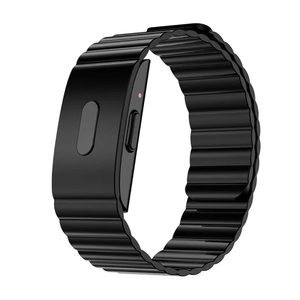
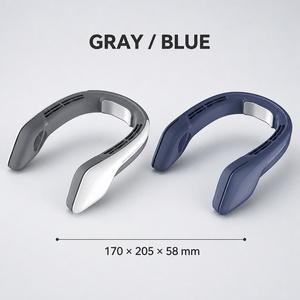
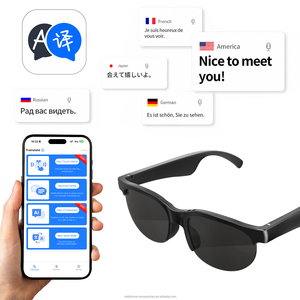
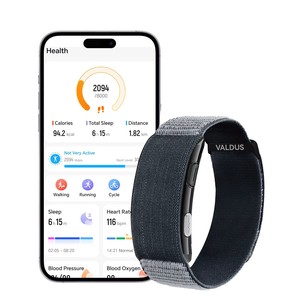
The Paradigm Shift in Smart Fitness Tracking Manufacturing
The global connected wellness ecosystem is undergoing unprecedented structural realignment. Professional B2B buyers, distributors, and consumer brand owners are navigating a shift from superficial step-counting gadgets to clinical-grade, biometric analytical engines. Navigating the competitive landscape of the top 10 fitness tracking smart watch manufacturer & exporters requires looking beyond basic price-per-unit metrics and evaluating deep hardware-firmware integration, supply chain sovereignty, sensor calibration algorithms, and localized compliance architectures.
As consumer expectations converge around continuous metabolic monitoring, cardiovascular health risk prevention, and frictionless data export, wearable hardware must deliver signal-to-noise ratios (SNR) that rival dedicated medical diagnostic peripherals, while maintaining consumer aesthetic profiles and sub-15-day standby profiles. Achieving this technical equilibrium demands manufacturing partners possessing comprehensive in-house Surface Mount Technology (SMT) capabilities, cleanroom optical assembly protocols, and validated embedded DSP (Digital Signal Processing) engineering competencies.
Strategic Procurement Imperative: In modern OEM/ODM contracts, true competitive advantage is governed by algorithm ownership. Manufacturers relying purely on generic turn-key chipsets suffer from severe battery drain, high warranty return rates, and inconsistent PPG baseline stability across diverse skin tones and high-intensity workout conditions.
Multi-Spectral Optical Biosensing
Transition from discrete single-wavelength green LEDs to multi-channel optical arrays incorporating 525nm (Green), 660nm (Red), and 940nm (Infrared). Enables concurrent photoplethysmography (PPG), arterial peripheral oxygen saturation (SpO2), heart rate variability (HRV), and microvascular peripheral perfusion monitoring with motion artifact mitigation.
Ultra-Low Power Dual-Core SoCs
Integration of bleeding-edge heterogeneous architectures (e.g., ARM Cortex-M33 paired with dedicated RISC-V micro-engines). Low-power coprocessors maintain continuous background sensor sampling at sub-15µA current draws, delegating high-load UI rendering and Bluetooth LE 5.3 audio transmission strictly on demand.
Total Lifecycle Data Governance
With stringent enforcement of GDPR, HIPAA compliance scopes, and California CCPA, exporters must provide clean-slate SDK architectures, end-to-end TLS 1.3 AES-256 cloud encryption pipelines, and customizable white-label server endpoints residing within authorized regional jurisdictions.
Next-Generation Technology & Purchasing Trends
Market requirements for fitness and wellness tracking platforms over the next 24 to 36 months.
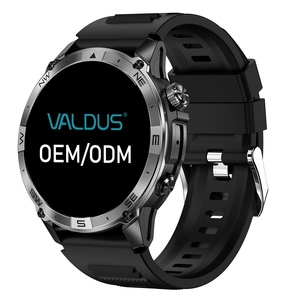
International procurement specialists are recalibrating their vendor selection scorecards. Where procurement teams once focused almost entirely on upfront unit BOM costs, institutional procurement strategies now calculate Total Landed Quality Cost (TLQC), software lifecycle maintenance burdens, and RMA defect costs. Enterprise brands are consolidating their vendor matrices, focusing on agile Tier-1 original design manufacturers capable of serving unified form-factor ecosystems ranging from screenless bands and smart jewelry to full AMOLED smart watches.
| Vector Dimension | Legacy Sourcing Paradigm (Past Era) | Emerging Paradigm (2026+ Strategic Horizon) | B2B Operational Impact |
|---|---|---|---|
| Sensor Integration | Discrete basic PPG + generic 3-axis accelerometer | ECG dual-lead electrodes, PPG multi-wavelength arrays, EDA stress sensors, skin temperature thermistors | Unlocks predictive wellness indexes; elevates consumer perceived value and product stickiness. |
| Display Technology | TFT-LCD 240x240, 250 nits, high reflectance | Full-color AMOLED, On-Cell capacitive touch, 60 FPS refresh rates, 1000+ nits peak outdoor brightness | Dramatically improves daytime legibility and perceived UI fluidity, reducing immediate refund rates. |
| App Ecosystem | Generic public third-party apps with invasive ads | Custom white-label iOS/Android SDKs, dedicated enterprise tenant isolation, private cloud API webhooks | Protects brand identity, eliminates unauthorized third-party telemetry, enables recurring SaaS subscriptions. |
| Mechanical Enclosure | Glued ABS plastic shells, IP65/IP67 ingress ratings | Aviation-grade aluminum, CNC stainless steel, double-shot LSR silicone, 5ATM / IP68 acoustic-rated seals | Supports high-velocity water sports, swimming telemetry, and premium retail hand-feel. |
| Supply Chain Lineage | Fragmented assembly brokers with sub-contracted lines | Direct source manufacturing, 100% in-line automated optical inspection (AOI), controlled batch traceability | Guarantees multi-year supply chain continuity, component obsolescence management, and regulatory compliance. |
Crucial Hardware Architecture Trends
Screenless Metabolic Trackers
Screen-free form factors engineered for 24/7 continuous recovery tracking, eliminating distraction while maximizing battery life up to 14 days on a single inductive charge cycle.
On-Device Edge AI Models
Micro-TinyML neural networks executing directly on low-power MCUs. Automates real-time swimming stroke classification, fall detection alerts, and dynamic arrhythmia screening without requiring constant smartphone tethering.
Multi-Form Factor Ecosystems
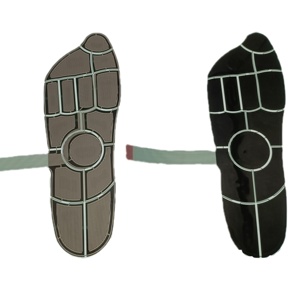
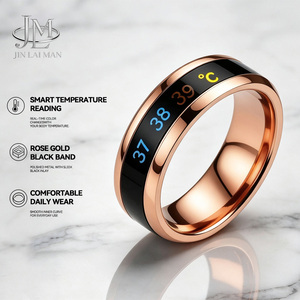
Expanding telemetry beyond the wrist. Smart rings, biometric smart insoles, and smart audio glasses cross-validate kinetic metrics to assemble comprehensive physiological profiles.
Circular Design & RoHS Compliance
Modular battery fastening architectures, halogen-free recycled polycarbonate housings, and bio-compatible fluoroelastomer bands engineered to comply with strict EU WEEE and battery passport standards.
Engineering Scale, Precision Infrastructure & Quality Control
Shenzhen Sww Industrial Development Co., Ltd (Smart Wear Works) merges full-spectrum ODM innovation with disciplined mass-manufacturing capacity.
Independent Assembly Facilities
Operating our dedicated 1,000 m² cleanroom manufacturing facility in Pingshan District, Shenzhen. By handling assembly, ultrasonic bonding, and packaging in-house rather than brokering through third parties, we safeguard client IP and guarantee strict QA oversight.
Dedicated Engineering & Firmware Teams
Over 50 dedicated specialists covering Industrial Design (ID), Mechanical Engineering (MD), PCB schematic layout, RF antenna tuning, and custom embedded RTOS firmware optimization. Complete support for private-label bootloaders, SDK integrations, and white-label mobile companion apps.
Comprehensive Export Testing
Every single mass-production lot undergoes rigorous automated environmental stress screening: 5ATM hydrostatic submersion, salt spray chamber testing, thermal shock cycles (-20°C to 60°C), micro-drop impacts, and RF wireless sensitivity verification.
Frequently Asked Questions: Smart Watch Sourcing & Compliance
Comprehensive technical and commercial clarification addressing critical supplier evaluation criteria.
What is the distinction between your Wholesale Catalog, Private-Label OEM, and Full ODM contracts?
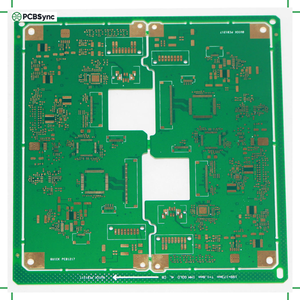
Our Wholesale Catalog tier provides off-the-shelf, standardized models with established firmware, enabling lower initial order quantities and accelerated dispatch for market testing. Private-Label OEM utilizes our field-proven hardware shells and PCBA platforms while customizing external housing finishes, Pantone strap colors, CNC laser-etched caseback logos, customized bootloader sequences, localized retail packaging, and customized companion app UI. Full ODM involves greenfield development starting from conceptual industrial sketching, dedicated tooling fabrication, bespoke multilayer PCBA architecture, custom algorithm tuning, and turnkey white-label cloud server deployments.
How are biological sensor measurements validated and legally framed for export markets?
All smart watches, fitness bands, and smart rings produced within our standard catalog are classified as lifestyle wellness and consumer recreational fitness devices. Readings such as heart rate variability, SpO2 blood oxygen, sleep stage scoring, and trend-based ECG recordings are calibrated for wellness reference using clinical benchmarking devices (such as certified medical Holter monitors), but are strictly not intended to diagnose, cure, or mitigate pathological cardiovascular disease. Marketing copy, user packaging, and software terms of service must maintain compliant wellness disclosures to comply with regional consumer protection frameworks.
What international regulatory certifications do your manufacturing lines maintain?
Our core manufacturing platforms are engineered to conform directly with international RF radiation and environmental safety benchmarks. Standard documentation suites include CE (RED Directive for European Union radio compliance), FCC Part 15 (for United States electromagnetic interference limits), RoHS 2.0 (Restriction of Hazardous Substances), and TELEC certification (Japan Radio Act compliance). For private-label programs, we supply full technical construction files (TCF), electrical schematics, and test bench support to facilitate rapid certification transfer under the client's corporate brand name.
What are your standard Minimum Order Quantities (MOQs) and lead time schedules?
For standard wholesale catalog stock, initial trial orders typically start at low quantities with multi-model consolidation. For OEM private-label production runs involving custom silkscreen branding, customized packaging, and localized manuals, initial runs typically begin around 500 to 1,000 units per colorway depending on the chassis configuration. Bespoke ODM projects requiring dedicated plastic injection molds, magnesium die-casting, and ground-up firmware development require higher volumes. Lead times average 7 to 12 business days for pre-production golden samples, and 25 to 35 business days for high-volume production following final sample approval.
How are mobile software companion applications, firmware updates, and user privacy maintained?
We offer multiple tiers of software support: clients may utilize our battle-tested white-label application ecosystems (re-skinned with proprietary color themes, typography, and company identities), or they can interface directly with our hardware via raw Bluetooth LE communication protocols using our comprehensive Android and iOS SDKs. All companion apps are engineered with GDPR and local privacy mandates at the forefront: user biometrics are never stored, transmitted, or commercialized without explicit user opt-in, and cloud sync APIs employ TLS 1.3 encryption with client-specified regional data residency options.
Can your facility support multi-device cross-ecosystem synchronization (Watches, Rings, Inserts)?
Yes. One of our primary competitive advantages is our unified embedded software stack. A single companion application can be configured to bind simultaneously with an optical smart watch, a screenless biometric ring, and our pressure-sensing smart insole sensors. The application layer handles time-stamped multi-sensor fusion, correlating gait kinetic pressures with real-time cardiovascular exertion metrics to provide unified athletic and biomechanical performance dashboards.
Initiate Your OEM/ODM Wearable Program Today
Connect directly with our Shenzhen senior engineering team. Review complete technical datasheets, request evaluation samples, or schedule an in-depth design consultation for your custom brand launch.