Production-Ready Portfolio
High-Performance Smart Glasses & Wearable Hardware
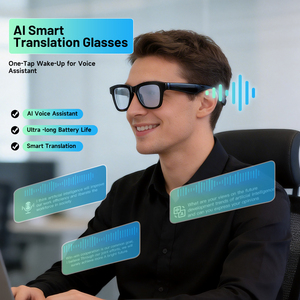
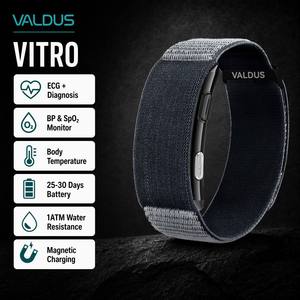
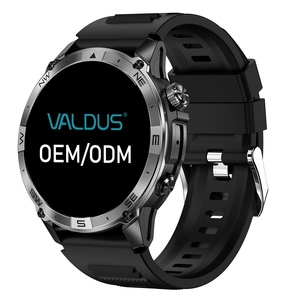
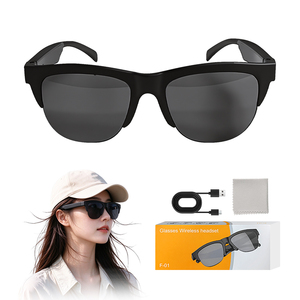
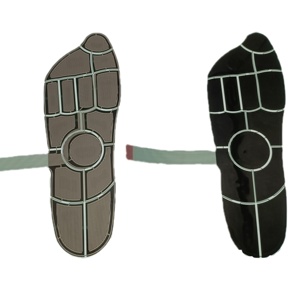
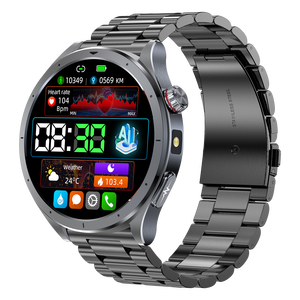
Explore production-validated platforms spanning open-ear directional audio, on-device AI voice translation, precision biometric telemetry, and high-frequency edge sensor architectures.
Industrial Manufacturing Standard
End-to-End Smart Glasses Engineering & Factory Capability
Shenzhen Sww Industrial Development Co., Ltd brings complete vertically integrated manufacturing to international distributors, lifestyle consumer brands, and enterprise optics integrators.
Turnkey SMT & Flexible Circuitry
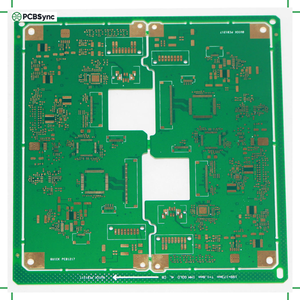
Micro-architected rigid-flex PCB fabrication optimized for ergonomic glasses temples. Our surface-mount technology ensures multi-sensor, Bluetooth Low Energy (BLE 5.3/5.4), and acoustic integration within sub-30-gram frame envelopes without heat throttling.
Global Compliance Certification Scope
Comprehensive testing protocols pre-configured for CE, FCC, RoHS, and TELEC (Japan Radio Law) validation. In-house EMC anechoic testing, SAR absorption calculation, and electrical static discharge (ESD) protection minimize certification turnaround time for international markets.
Acoustic Beamforming & ENC Isolation
Dual-microphone beamforming arrays equipped with advanced ambient noise cancellation (ENC) algorithms. Reverse-phase sound leakage cancellation maintains clear voice fidelity during calling in outdoor gale conditions while securing private conversational audio.
Optical CMF & Tooling Customization
High-grade TR90 ultra-memory frames, acetate hand-finished temples, and aircraft-grade aluminum hinges. Our tooling workshop executes custom mold design, polarization coatings (UV400, photochromic, anti-blue light), and specialized IP67 waterproof nano-coatings.
Proprietary Firmware & SDK Architecture
Customized embedded firmware, over-the-air (OTA) update infrastructure, and white-label mobile companion applications (iOS and Android). Support for edge AI wake-word deployment, personalized multi-touch tactile gestures, and localized cloud LLM translation APIs.
Scalable Low-MOQ to Tier-1 Mass Production
Flexible manufacturing schedules accommodating pilot evaluation runs from 500 units up to scalable monthly volume runs exceeding 30,000 units. Direct supply-chain control protects supply consistency, bill-of-materials integrity, and component pricing stability.
Industry White Paper Analysis
Smart Glasses Sourcing Trends & Next-Generation Technology Roadmap
A rigorous strategic analysis for procurement executives, consumer brand leaders, and electronics distributors preparing product portfolios for the 2026–2030 smart wearable horizon.
The international smart wearable market is undergoing a structural paradigm shift. The convergence of edge artificial intelligence, micro-acoustic transducer miniaturization, and low-power spatial compute chips has moved smart eyewear from an experimental novelty into an indispensable consumer electronic category. Global procurement teams can no longer view smart glasses purely as standard audio eyewear; they are now multi-modal edge sensor hubs capable of perceptual context, contextual translation, and ambient productivity.
1. Procurement Trajectory: What Global Buyers Demand in 2026
Enterprise procurement data across North America, Europe, and Asia-Pacific reflects significant evolution in technical selection criteria:
Multi-Modal On-Device AI Integration
B2B buyers are prioritizing hardware that communicates seamlessly with large language models (LLMs) and real-time speech translation engines. OEM devices must integrate ultra-low-power DSPs dedicated to voice recognition, multi-language streaming, and bi-directional conversational translation across 160+ languages.
Biocompatible Ultralight Frames
The consumer acceptance threshold requires complete frames to weigh less than 35 grams. Procurement programs demand TR90 memory polymers, titanium memory alloys, and sculpted temple ergonomics that match non-smart designer eyewear aesthetics while resisting cosmetic degradation from sweat and sun oils.
Modular Acoustic & Lens Architectures
Distributors require modular SKU designs that allow quick front-frame swapping, enabling retailers to stock unified acoustic temple cores alongside diverse prescription, polarized sunglass, and photochromic blue-light blocking lens varieties, significantly reducing warehouse carrying costs.
2. Technological Evolution: Acoustic Engineering & Optical Convergence
The technological delta between commodity wholesale goods and high-margin tier-1 smart eyewear centers on three critical hardware domains:
| Architecture Layer | Legacy / Commodity Spec | Next-Gen OEM Factory Standard (2026+) | Procurement & Commercial Impact |
|---|---|---|---|
| Micro-Acoustic Drivers | Standard open micro-speakers (High sound spill) | Directional dipole acoustic cavities with phase cancellation | Eliminates eavesdropping; permits office & transit use |
| System-on-Chip (SoC) | Single-core generic Bluetooth 5.0 | Dual-core BLE 5.3/5.4 with dedicated NPU / audio DSP | 40% battery reduction, sub-80ms audio latency, edge AI wake |
| Battery Architecture | Single heavy temple battery (Weight imbalance) | Dual-split Li-Po cells (110–180mAh total balance) | Natural 50:50 center of mass, extended 8–12h continuous talk |
| Sensor Telemetry | Basic single-axis tap sensor | Capacitive slide strip + 9-axis IMU + Optical wear detection | Auto-pause on removal, intuitive swipe-volume UI |
| Environmental Ingress | Basic IPX4 sweat splash resistance | Precision sonic-welded IP67 submersible nano-coating | Dramatically reduces warranty return and RMA rates |
3. Overcoming Thermal, Spatial, and Acoustic Engineering Constraints
Smart glasses engineering represents the most demanding spatial packing exercise in contemporary wearable consumer electronics. Unlike smartwatches where the wrist provides substantial thermal dissipation and interior volume, eyewear temples must house battery power, acoustic sound chambers, RF antenna strips, and charging controllers within a cross-section often under 4.5 mm. Shenzhen Sww Industrial Development utilizes specialized structural simulation software to model thermal dissipation gradients across high-frequency RF communication cycles, ensuring skin contact temperatures never exceed 38°C under continuous audio streaming.
Procurement Knowledge Base
Frequently Asked Sourcing & Manufacturing Questions
Essential answers regarding MOQs, tooling timelines, proprietary branding, app white-labeling, and export compliance protocols.
Factory Status Are you a direct manufacturing facility or an intermediary trading firm?
Smart Wear Works is the dedicated wearable manufacturing arm of Shenzhen Sww Industrial Development Co., Ltd, founded in June 2019. We operate our own dedicated clean-room assembly plant spanning roughly 1,000 m² in Pingshan, Shenzhen, supported by over 50 skilled technical workers, structural engineers, and in-house SMT coordination specialists. We handle R&D, firmware tuning, and final quality control directly under one roof.
MOQ Matrix What are your Minimum Order Quantities for OEM custom production?
Our MOQ is tailored to your customization depth. For catalog-ready wholesale stock requiring laser logo engraving and localized custom gift box packaging, MOQ starts at 200–500 units. For complete ODM custom frame injection molding, custom CMF colors, proprietary optical prescription tooling, or white-label iOS/Android app integration, project runs typically start at 1,000 to 3,000 units.
Private Label Can we rebrand hardware, firmware, and companion mobile apps?
Yes. Private-label OEM/ODM is our foundational capability. We offer laser-etched frame logos, custom Bluetooth device broadcast IDs (SSID), tailored boot sound chimes, silk-screened leather travel cases, and fully white-labeled iOS and Android companion applications customized with your company branding, cloud infrastructure, and localized translation features.
Compliance What certifications and compliance documentation do you provide?
Our production platforms are engineered to conform with rigorous international import standards. We provide complete technical construction files and test reports for CE (RED), FCC ID, RoHS 2.0, REACH, and TELEC certification for the Japanese market. We also provide UN38.3, MSDS, and drop-test documentation for smooth air and ocean lithium battery customs clearance.
Lead Times What is the standard production schedule from evaluation sample to mass shipment?
Rapid functional evaluation samples from existing hardware stock ship within 3–5 working days. Customized branded golden samples with logo application and sample packaging require approximately 10–14 business days. Scaled mass production runs (500–10,000 units) maintain a predictable 25–35 day lead time following master engineering sample approval.
Acoustic Privacy How does your open-ear acoustic engineering prevent sound leakage?
Our smart glasses incorporate dual inverted dipole acoustic cavity structures. High-precision micro-speakers direct audio waves precisely into the wearer’s ear canal, while secondary exterior venting ports emit opposite-phase acoustic signals that cancel sound propagation laterally, ensuring complete privacy during telephone calls in office environments.
AI Integration How are cloud AI translation engines and user data privacy managed?
AI translation operates via secure encrypted Bluetooth tunneling to our companion mobile SDK. We support leading global LLM APIs and translation neural networks covering 163+ languages. Voice data is processed transiently in real time without unauthorized cloud storage, fully compliant with EU GDPR and California CCPA privacy regulations.
Quality Control What quality assurance testing does every glasses production lot undergo?
Every finished unit undergoes 100% functional testing, including 20,000-cycle temple hinge fatigue testing, acoustic frequency sweep analysis, RF antenna power calibration, IP67 waterproof chamber testing, salt spray anti-corrosion verification, and continuous 4-hour battery charge/discharge cycle burns before packaging.
Direct Factory Turnkey Service
Scale Your Smart Eyewear Brand with Shenzhen Sww
Initiate your OEM/ODM program with our Shenzhen engineering and assembly team. Share your product specifications, annual volume targets, and target market requirements for a direct factory quotation and project viability audit.