Verified Audio & Smart Wearable Hardware Solutions
Export-grade platforms ready for private-label customization, turnkey firmware flashing, and global regulatory deployment.
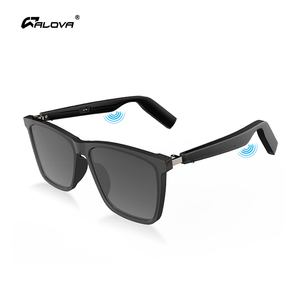
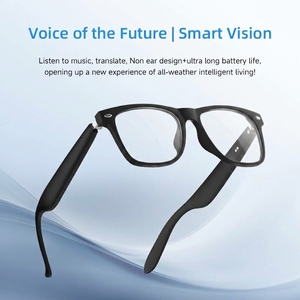
Engineering the Modern Hearable: Silicon Platforms & Acoustic Physics
The operational reality of China’s Tier-1 electro-acoustic manufacturing corridor in Shenzhen.
Advanced SoC Heterogeneous Computing
B2B audio procurement hinges on SoC selection. High-tier architectures leverage Bestechnic (BES2600/BES2700 series) and Qualcomm QCC5100/QCC308x platforms featuring dual-core ARM Cortex-M4F coprocessors coupled with dedicated dual-core Tensilica HiFi 4 DSPs. These micro-architectures execute complex sub-band active noise cancellation algorithms and AI neural network speech extraction concurrently within a microscopic thermal and electrical envelope (<5mA current draw in continuous playback).
Driver Transducer & Diaphragm Materials
Acoustic fidelity is governed by transducer engineering. Modern Chinese factories implement custom 10mm to 13mm dynamic moving coil drivers utilizing diamond-like carbon (DLC), beryllium-plated alloys, or composite polyether ether ketone (PEEK) bonded with polyurethane (PU). By combining high internal damping with structural stiffness, harmonic breakup modes are suppressed across the high-frequency register, restricting Total Harmonic Distortion (THD) below 0.3% from 20 Hz to 20,000 Hz.
MEMS Microphones & Hybrid ANC Topologies
State-of-the-art TWS earphone ODM projects mandate a 6-microphone array architecture (3 microphones per earpiece). Dual high-SNR (>65dB) Knowles or Goertek MEMS microphones serve feedforward and feedback paths for hybrid Active Noise Cancellation, canceling acoustic anomalies up to 48dB–52dB across a 3.5 kHz bandwidth. An internal voice pickup unit (VPU) bone-conduction sensor measures skull vibrational cadence to eliminate 99% of ambient aerodynamic wind flutter.
Next-Generation TWS Technology: Bluetooth LE Audio & Edge AI Hearables
Strategic foresight for enterprise importers, high-volume consumer brands, and OEM procurement managers.
Bluetooth LE Audio & Auracast Broadcast
The standard migration from legacy Bluetooth Classic A2DP to Bluetooth 5.3/5.4 Low Energy Audio is transforming commercial procurement. Utilizing the Low Complexity Communication Codec (LC3), our OEM earphone architectures cut bitrate overhead by 50% relative to legacy SBC while delivering superior perceived perceptual audio quality (MOS scores >4.2). Auracast location-based audio sharing creates multi-channel assistive listening directly across commercial transport, hospitality, and educational sectors.
Edge AI Translation & Large Language Model Hookups
Hearables are evolving into edge AI client interfaces. By porting lightweight quantized neural networks to the audio DSP, earbuds execute real-time acoustic scene classification, localized whisper detection, and bi-directional conversational translation across 163 dialects via paired smartphone APIs. Sww Industrial provides open SDK/API protocols, enabling private brand holders to integrate proprietary enterprise LLMs, custom wake words, and sovereign voice assistant platforms.
Non-Invasive Biosensors in Acoustic Cavities
The auditory canal is uniquely suited for cardiovascular telemetry. Our high-tier earbud reference platforms incorporate micro-photoplethysmography (PPG) sensors from ams OSRAM and Valencell, utilizing infrared (940nm) emitter-detector pairs to track continuous heart rate, blood oxygen saturation (SpO2), and core body temperature via micro-thermopile sensors. Data streams integrate via standard Bluetooth GATT profiles into wellness and remote patient monitoring ecosystems.
B2B Engineering Tiers: Component BOM & Performance Benchmarks
Direct cost, platform architecture, and certification matrix for consumer and enterprise deployments.
| Platform Tier | Primary Silicon (SoC) | Acoustics & ANC Performance | Battery Life (Bud / Case) | Latency (Gaming/Audio) | Target Compliance Scope | Typical B2B Application |
|---|---|---|---|---|---|---|
| Value Commercial Tier | JL (Jerry) AC700x / Actions ATS301x | 10mm Dynamic (PU+PEEK), ENC Dual-Mic Uplink Noise Filter | 4 - 5 hrs / 20 hrs total (300mAh Case) | <100ms standard | CE (EMC/LVD), FCC Part 15B, RoHS | E-commerce mass retail, bundled promotional gift runs |
| Mid-Market Performance Tier | Airoha AB1562 / Realtek RTL8773 | 12mm DLC composite driver, Feedforward ANC (-35dB depth) | 7 - 8 hrs / 32 hrs total (450mAh Case) | <60ms low-latency mode | CE-RED, FCC ID, TELEC, UN38.3, MSDS | Private label consumer electronics, regional distributor brands |
| Audiophile & Spatial Tier | Qualcomm QCC3084 / BES2600YP | Coaxial Dual Driver (DD + BA Knowles), Hybrid ANC (-48dB) | 8 - 10 hrs / 40 hrs total (Qi Wireless) | <40ms aptX Adaptive / LC3 | CE-RED, FCC ID, TELEC, IC, WEEE, REACH | Established audio brands, high-fidelity enthusiast channels |
| Smart AI & Biosensing Tier | BES2700 + dedicated NPU / Sensor Hub | Bone Conduction VPU + 6-Mic Beamforming, In-Ear PPG Sensor | 6 - 7 hrs / 28 hrs total (IPX5 - IP68) | Ultra-low isochronous BLE | Full global certification + ISO 13485 (Scope) | Sports biomechanics, enterprise voice translation, healthcare |
Why Tier-1 Global Importers Anchor Their Wearable Sourcing With Us
Direct manufacturing transparency from our Pingshan, Shenzhen facility — no intermediary trading layers.
In-House Tooling & Mold Integrity
Unlike trading brokerages that repurpose generic open-market shells, we operate dedicated structural engineering and CNC tooling facilities in Shenzhen. From mechanical ingress sealing (IPX4 to IP68) to multi-cavity injection molding using optical-grade polycarbonates and liquid silicone rubber (LSR), your brand owns and safeguards distinct industrial property.
Electro-Acoustic Anechoic Validation
Every audio product line is tuned and verified using Audio Precision APx525 acoustic analyzers, B&K Type 4128-C Head and Torso Simulators (HATS), and specialized RF anechoic chambers. We guarantee batch-to-batch phase coherence, left-right channel matching within ±0.8dB, and target curves matched rigorously to the Harman In-Ear Target.
Firmware SDK & White-Label Ecosystems
Customization extends beyond laser etching your logo. Our software engineering team develops custom Bluetooth device names (Broadcast ID), custom firmware EQ curves, specialized battery telemetry curves, and multi-language boot voice prompts. Furthermore, we deliver fully brand-customized companion apps on iOS and Android with white-label server integration.
Regulatory Compliance & Dangerous Goods Export
Lithium-ion cells require stringent safety architectures. All battery assemblies integrate SEIKO or Mitsumi IC protection boards defending against over-voltage, deep discharge, and thermal runaway. Every export shipment is certified with genuine UN38.3 test summaries, 1.2-meter drop test certifications, and comprehensive MSDS documentation for seamless sea/air logistics.
Frequently Asked B2B Procurement & Manufacturing Questions
Direct technical and commercial answers addressing MOQ, tooling ownership, regulatory testing, and production lead times.
What are the standard Minimum Order Quantities (MOQ) across wholesale versus full ODM custom projects?
For existing catalog models with private-label customization (laser-engraved logo on charging case, branded packaging, custom boot pairing name, and multi-lingual manuals), our standard MOQ begins at 1,000 units. For full ODM projects requiring custom structural industrial design, proprietary PCB layout, new plastic injection tooling, and bespoke companion app architecture, our baseline starts at 3,000 to 5,000 units per program to absorb amortized NRE and tooling investments.
How does the factory resolve Bluetooth RF antenna attenuation and body shielding issues?
TWS earphones face severe body-loss attenuation when seated inside the human concha. We resolve this by integrating custom Laser Direct Structuring (LDS) or flexible printed circuit (FPC) monopoles positioned along the outer stem or bezel, simulated in CST Microwave Studio before mold freezing. This guarantees Total Radiated Power (TRP) >+6dBm and Total Isotropic Sensitivity (TIS) <-90dBm, ensuring uncompromised 15-meter omnidirectional line-of-sight connectivity without signal dropout.
What is the standard engineering and mass production timeline from initial PO sign-off?
For OEM branding on existing tooling platforms, golden engineering samples require 7 to 10 working days; subsequent mass production finishes within 25 to 30 calendar days following sample sign-off. For ground-up ODM developments, the typical development cycle spans 90 to 120 days: 20 days for ID/MD engineering, 35 days for high-precision steel tooling fabrication, 15 days for SMT/PCB prototyping, followed by T1/T2 pilot runs and final regulatory compliance verification.
Which regulatory certifications are pre-cleared, and how does factory support work for regional export approvals?
Our core platforms maintain compliance architectures aligned with CE-RED (Europe), FCC ID (United States), TELEC/MIC (Japan), KC (Korea), and RoHS/REACH environmental directives. During your program onboarding, our compliance engineers supply complete circuit schematics, block diagrams, PCB component placements, and antenna test reports directly to accredited ILAC-MRA testing laboratories (SGS, TUV, Intertek) to expedite local market certification at minimal customer expense.
How are defective rates managed under international export contracts?
We execute strict AQL 0.65 Major / 1.0 Minor standards across all outgoing shipments, maintaining an empirical RMA field return rate below 0.3%. To insulate international distributors from logistical turnaround delays, we provide 1% to 2% complete FOC (Free of Charge) buffer units and auxiliary spare accessories (charging cases, ear tips, silicon flex ribbons) alongside each production lot.