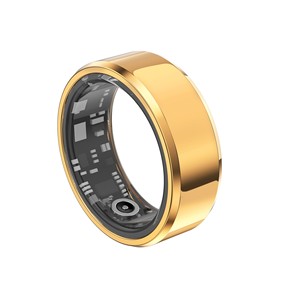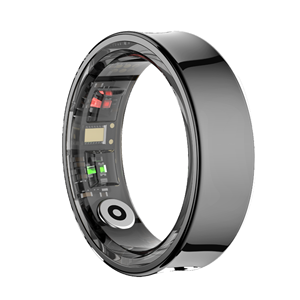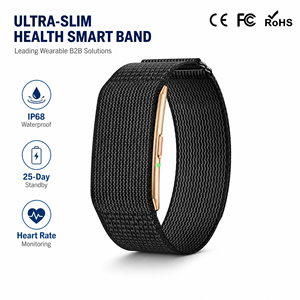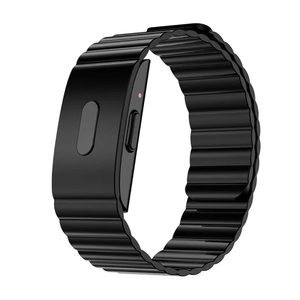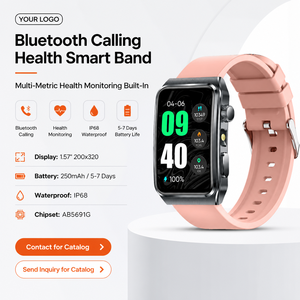
Wholesale Silicone Smart Band Calling IP68 Waterproof Custom Logo
- Clear HD Bluetooth Calling via Realtek Audio
- IP68 Dust & Submersion Ingress Protection
- 14-Day Power Topology for Power-Grid Variations
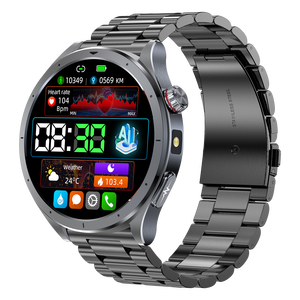
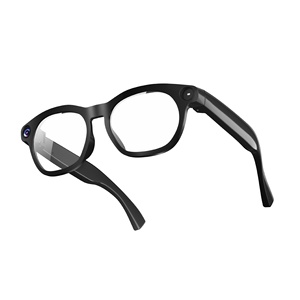
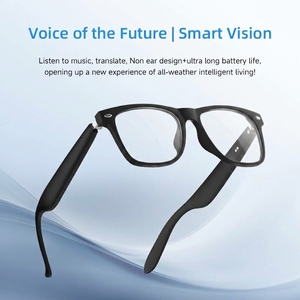
From high-durability fitness trackers engineered for outdoor altitude resilience to multi-language AI translation glasses, explore our primary OEM hardware platforms ready for commercialization in Ethiopia.
Driven by telecommunications liberalization, mobile money expansion, and a median age below 20 years, Ethiopia represents one of Africa's fastest-growing frontiers for connected consumer electronics.
With Ethio Telecom surpassing 74 million subscribers and Safaricom Ethiopia expanding aggressive low-band 4G and urban 5G coverage across Addis Ababa, Hawassa, and Dire Dawa, the cellular gateway barrier has collapsed. Low-power Bluetooth (BLE 5.2/5.3) accessories represent the dominant entry point for consumers entering the digitized personal ecosystem without incurring primary handset replacement costs.
The pervasive adoption of Telebirr and Commercial Bank of Ethiopia (CBE Birr) mobile payment architectures is transforming personal wearables from simple chronometers into commercial interfaces. Localized OEM firmware capable of displaying payment QR credentials or interfacing with secondary NFC tokenization represents a critical product differentiation vector for forward-thinking brand importers.
Rooted in a legendary distance-running culture, Ethiopian youth and urban professionals exhibit an exceptional affinity for biometric tracking. Consumer intent metrics indicate surging demand for continuous heart rate zones, altitude-adjusted SpO2 monitoring, and recovery algorithms that endure the rugged training terrains of Bekoji, Sululta, and Mount Entoto without mechanical failure.
Deploying hardware into Ethiopia requires rigorous engineering compromises addressing altitude pressures, power grid volatility, multilingual typography, and network caching realities.
Standard off-the-shelf microcontrollers frequently truncate or fail to render the complex syllabary of the Ge'ez script used in Amharic, Oromo, and Tigrinya communication. Our factory-level firmware development team embeds custom bitmap and vector font renderers directly into the device ROM. This guarantees that notifications, SMS alerts, system dialogs, and application push notifications from platforms like Telegram and local banking apps display flawlessly without broken unicode glyphs or UI overflow.
In urban centers outside Addis Ababa or during seasonal hydro-electric load-shedding cycles, end-users require wearables that do not necessitate daily recharging cycles. We implement dynamic CPU clock frequency scaling and ultra-low quiescent current BLE chipsets (e.g., JL, Realtek, Nordic topologies) combined with high-density pure cobalt polymer lithium cells. This ensures genuine 7 to 14-day operational battery life even with active 24/7 background biometric monitoring.
Addis Ababa sits at an elevation of roughly 2,355 meters, creating distinct air pressure gradients, intense ultraviolet radiation, and fine airborne volcanic soil during dry seasons. Our structural designs integrate ultrasonic acoustic welding, double-layer silicone gasket rings, and oleophobic UV-cured glass coatings that meet genuine IP68 and 5ATM standards. This prevents casing seal degradation under heavy barometric variations and continuous dust exposure.
Given intermittent mobile data connectivity in peri-urban regions, our wearable companion apps feature local SQLite buffer databases. Health telemetry—such as resting heart rates, sleep architectures, and step data—is cached locally on the device's internal NOR flash memory for up to 30 days. When cellular or Wi-Fi data connects, the application utilizes differential binary compression to synchronize data to central cloud instances without consuming excessive consumer mobile bundles.
Shenzhen Sww Industrial Development Co., Ltd (Smart Wear Works) bridges cleanroom engineering with rigorous export-grade accountability. We eliminate trading intermediaries to secure distributor profitability.
Our manufacturing protocols operate strictly within verified CE, FCC, RoHS, and TELEC compliance frameworks. For Ethiopian importers navigating the Ethiopian Conformity Assessment Enterprise (ECAE) or Information Network Security Administration (INSA) radio frequency homologations, our direct engineering team supplies complete test reports, schematics, and Declaration of Conformity (DoC) paperwork.
Unlike typical broker operations that purchase hardware boards and white-label external apps without code access, we develop firmware, iOS/Android companion software, and hardware in parallel. If an Ethiopian brand owner requires customized UI styling, local server hosting within regional data centers, or bespoke SDK integrations, our internal software engineers execute directly on source repositories.
Our anchor brand partners in Europe, Japan, and the emerging African digital economies have maintained uninterrupted supplier relationships with our facility for more than four consecutive years. We enforce strict batch-to-batch component discipline, preventing unannounced sub-tier BOM component swaps that often compromise screen color temperatures or battery reliability.
Aligning production models with National Bank of Ethiopia (NBE) foreign exchange prioritization, Letter of Credit (L/C) allocations, and retail margin expectations.
| Evaluation Vector | Wholesale Catalog Stock | Private-Label OEM Program | Full ODM Custom Build / CKD |
|---|---|---|---|
| Customization Scope | Standard factory housing, generic UI, factory-branded packaging. | Laser logo, custom boot screen, Amharic packaging, custom straps. | Custom structural molds, custom PCB layout, dedicated app repository. |
| Minimum Order Quantity (MOQ) | Low (50 – 200 units) | Moderate (500 – 1,000 units) | Volume (3,000 – 10,000+ units) |
| Foreign Exchange ROI (NBE L/C) | Rapid capital turn; ideal for quick-sell commercial importers. | High brand equity build; superior gross margin across Bole retail outlets. | Maximum value capture; potential customs duty reduction via SKD assembly. |
| Lead Time to Mojo Dry Port | 2–3 weeks ex-factory + shipping transit. | 3–4 weeks for tooling/printing sign-off & production. | 8–14 weeks prototyping, validation, pilot run, mass production. |
| Best Suited For | Merkato wholesale traders, test marketing, quick bundles. | Established telecom chains, regional retail brands, e-commerce sellers. | Enterprise health operators, national telecom hardware tenders. |
Clear, definitive answers addressing customs clearance, currency regulation, language firmware, warranty buffers, and homologation compliance.
We understand that importing electronics into Ethiopia requires strict adherence to the directives of the National Bank of Ethiopia (NBE). We routinely assist corporate clients and licensed importers with compliant Proforma Invoices, precise HS codes (typically HS 8517.62 for connected smart bands/watches), and transparent packing lists required by commercial banks (such as CBE, Awash, or Dashen Bank). We accept formal irrevocable Letters of Credit for qualified mass production runs, alongside CAD (Cash Against Documents) or TT terms structured to match currency allocation approvals.
Yes. We specialize in non-Latin typography rendering. Our firmware engineers build and compile custom Ge'ez script bitmap libraries directly into the microcontroller's display memory. This ensures that incoming phone notifications, text alerts, and localized application strings render cleanly with proper line wrapping, preventing the hollow boxes ("tofu" characters) typical of low-tier generic market wearables.
All our production platforms carry comprehensive CE (RED, LVD, EMC), RoHS, and FCC compliance certificates validated by accredited international testing laboratories. These test dossiers meet the importation inspection standards of the Ethiopian Conformity Assessment Enterprise (ECAE) and satisfy the RF emission and telecom safety evaluations conducted by the Information Network Security Administration (INSA) or Ethiopian Communications Authority (ECA).
Given the transit logistics involved in clearing cargo through Djibouti Port and transit via the Ethio-Djibouti Railway to Mojo Dry Port or Addis Ababa Bole International Cargo, returning individual units to China for repair is economically impractical. Therefore, we provide an agreed 1% to 2% spare finished units or critical sub-assemblies (displays, strap clasps, batteries, charging cables) free of charge with mass production shipments to cover localized customer replacements.
No. In strict adherence to international trade guidelines and Google quality frameworks, our smart wearables, fitness rings, and sensor wristbands are classified strictly as lifestyle and sports wellness instruments. Biometric indicators such as ECG heart rhythm snapshots, SpO2 blood oxygen estimation, and sleep patterns are consumer references. Packaging, user guides, and companion app interfaces explicitly display wellness disclaimers, avoiding regulatory entanglements with medical device registrations.
Yes. Under Ethiopian industrial tariff policies, importing finished electronic goods incurs significantly higher import duty and surtaxes compared to component kits assembled in local industrial parks (such as Bole Lemi or Hawassa Industrial Park). For qualified institutional buyers seeking to establish domestic assembly lines, we supply tested SKD component kits, custom calibration jigs, and assembly SOP training to lower landed tax burdens.
Connect directly with our Shenzhen engineering and OEM program directors. Share your target retail tier, local language requirements, and volume expectations to receive complete technical data sheets, compliance dossiers, and sample dispatch schedules.