BT 5.4 Sport
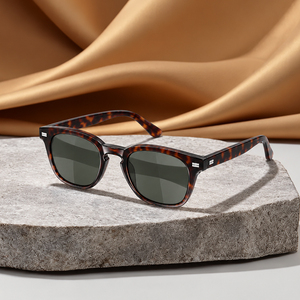
Export-ready smart eyewear architectures integrating advanced directional acoustic beamforming, low-latency Bluetooth 5.3/5.4/6.0 platforms, AI micro-code integration, and polarized UV400 optometric frames configured for Nagoya importers and global electronics distributors.
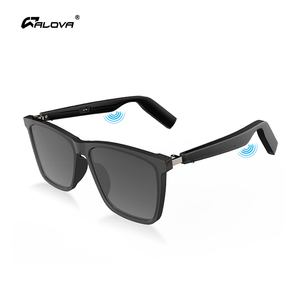
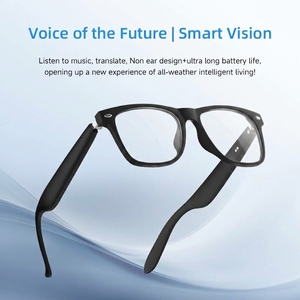
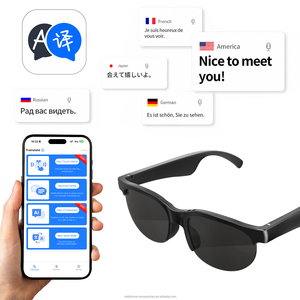
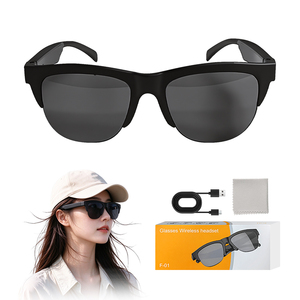
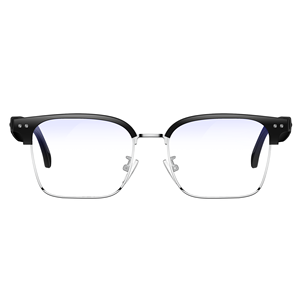
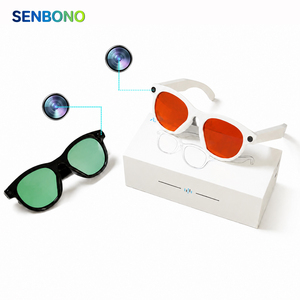
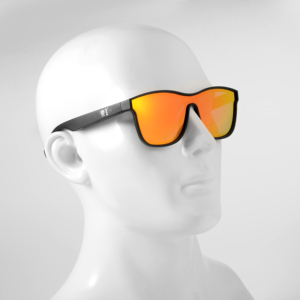
Direct from our Shenzhen industrial line (Shenzhen Sww Industrial Development Co., Ltd), our open-ear smart eyewear systems satisfy the highest optoelectronic standards of the Chubu industrial heartland.
Pre-certified for European CE (RED/EMC/LVD), RoHS hazardous substance restriction, FCC RF standards, and full TELEC (MIC Giteki) testing pathways essential for legal distribution across Nagoya and greater Japan.
Reverse sound wave cancellation and acoustic dipole chamber structures minimize sound leakage to under 12dB at 0.5 meters. Users can enjoy crystal-clear conference calls in quiet Japanese office environments without eavesdropping.
In-house industrial design, mold injection tooling, custom PCB layout with Nordic and Realtek Bluetooth microchips, embedded firmware tuning, and white-label companion mobile applications for iOS and Android.
Ultralight EMS TR90 memory nylon frames engineered for standard Japanese/Asian face ergonomics (wider pantoscopic tilt and custom bridge pads). Accommodates prescription lenses, photochromic transitions, or UV400 polarized shades.
Every frame undergoes drop testing, 10,000-cycle temple flex stress tests, salt-spray anti-corrosion screening for sweat resistance (IPX4-IP67), and computerized acoustic chamber balancing before leaving our factory.
Rather than dealing with layered trading middlemen, your procurement leads communicate directly with Shenzhen hardware architects, acoustic DSP programmers, and bilingual export compliance specialists.
As the fourth most populous metropolitan zone in Japan and the anchor of the country’s manufacturing core (Aichi Prefecture), Nagoya represents a distinctive, highly discerning commercial theater for wearable technology. Known internationally as the hub of Toyota Motor Corporation, aerospace engineering, machine tooling, and heavy robotics, Nagoya’s consumer base and industrial workforce hold strict standards for structural reliability, build finish, and battery optimization.
Open-ear Bluetooth audio glasses—which merge eye protection, ambient acoustic transparency, hands-free micro-communications, and AI-driven spatial audio—are transitioning rapidly from a niche consumer gadget to an everyday essential for logistics, commuting, manufacturing oversight, and outdoor recreation across the Tokai region.
Understanding regional adoption patterns is essential for retail distributors, electronics department buyers (e.g., Bic Camera, Yodobashi, and Yamada Denki Nagoya flagships), and B2B corporate provisioning planners. Our manufacturing configurations directly address four dominant regional use cases:
Procuring smart eyewear for Japanese commercial distribution requires navigating precise regulatory boundaries. While CE certification confirms strict electromagnetic compatibility (EN 301 489), low-voltage battery safety (EN 62368-1), and radio frequency emission thresholds (EN 300 328) for the European Union, Japanese customs and regulatory authorities mandate parallel compliance with TELEC (Radio Law Article 38-24):
| Evaluation Parameter | Export Standard (CE RED / EU) | Japan Market Requirement (TELEC / MIC) | Smart Wear Works Factory Standard |
|---|---|---|---|
| RF Output & Spectrum Band | 2402–2480 MHz ≤ 20 dBm EIRP | Article 2 Section 1 No. 19 (Giteki Marking) | Factory calibration with Rohde & Schwarz testers; pre-mapped TELEC ID profiles |
| Acoustic Leakage Attenuation | EN 50332 Sound Pressure Protection | Discretionary / Ambient Courtesy (Meiwaku prevention) | Reverse-phase dipole cancellation architecture; <14dB leakage at 60% listening volume |
| Lithium Polymer Cell Safety | IEC 62133-2 / UN38.3 Shipping Spec | METI PSE Ordinance Confirmation | Pure cobalt micro-cells with dual-protection ICs against overcharge, short-circuit, and thermal runaway |
| Ingress Protection Rating | EN 60529 (Water & Dust Ingress) | JIS C 0920 Compliance Benchmarks | Dual-cavity acoustic nanotech coating; certified IPX4 sweatproof to IP67 full immersion |
| Frame Material & Toxicity | REACH & RoHS 2.0 (Directive 2011/65/EU) | Japan Food Sanitation Law (skin contact tier) | Virgin Swiss Grilamid TR90 / skin-neutral biocompatible PC-ABS frame options |
The wearable audio glasses market is undergoing three disruptive engineering inflections that purchasing directors in Nagoya should factor into upcoming merchandise portfolios:
With operational roots established in June 2019, Shenzhen Sww Industrial Development Co., Ltd (Smart Wear Works) bridges the gap between visionary product concept and mass production reliability. Operating our dedicated 1,000 m² clean-room facility in Pingshan, Shenzhen, our 50-person specialized team balances agile prototyping with a monthly output of over 30,000 wearable units.
Unlike trading entities that outsource production to third parties, we maintain total oversight across SMT surface mounting, acoustic driver impedance pairing, frame ultrasonic welding, and computerized parametric testing. This single-source responsibility guarantees that your custom private-label branding, customized packaging, bilingual firmware boot-loaders, and custom Companion Apps (iOS/Android) are produced with high precision and batch-to-batch consistency.
Key technical, regulatory, and logistics answers for sourcing smart eyewear from our Shenzhen assembly plant.
Yes. We regularly supply Japanese electronics brands and cross-border distributors. We provide complete technical construction files (TCF), test reports, and factory support to register formal TELEC (MIC) certification or utilize pre-approved Bluetooth RF modules, ensuring legal distribution across Nagoya and all Japanese prefectures.
We incorporate dual acoustic dipole engineering. Each temple features an primary output port aimed directly at the auditory canal and a secondary out-of-phase cancellation port. The escaping sound waves collide and neutralize each other in the free field, restricting acoustic leakage to undetectable levels at normal conversational distances.
For catalog-standard wholesale orders, our MOQ is flexible (starting as low as 100–200 units). For custom OEM branding—including laser-etched logos, Japanese-language retail packaging, custom Bluetooth pairing names, and tailored Japanese user manuals—MOQ typically starts at 500 to 1,000 units per model.
Yes. Most of our TR90 optical and casual sunglasses frames are designed according to universal optometric standards. Retail optical stores across Nagoya can remove the standard demo or polarized lenses and mount single-vision, bifocal, blue-light blocking, or progressive prescription lenses directly.
We provide flexible Incoterms including EXW, FOB Shenzhen/Hong Kong, and DDP Nagoya. For rapid replenishment, express air freight via DHL/FedEx reaches Chubu Centrair International Airport (NGO) in 3–5 business days. Bulk containerized ocean freight routes through the Port of Nagoya with complete customs paperwork and battery declarations.
Models like the W100 and M88 connect seamlessly to our companion smartphone app via low-energy Bluetooth. Dual noise-canceling microphones filter shop-floor acoustic noise, allowing real-time bi-directional conversation translation across 160+ languages and regional dialects with latency under 500ms.
Connect directly with our engineering and commercial project directors in Shenzhen. Request complete technical spec sheets, compliance documentation (CE/TELEC/RoHS), or schedule an initial prototype sample run for your brand.
Contact Us