Featured AI & Smart Wearable Platforms for Korean Enterprise Deployments
Our dedicated assembly facility bridges cutting-edge embedded sensing platforms with localized cloud services. From real-time multilingual translation glasses to clinical-grade telemetry rings and connected asset monitors, explore 8 turn-key models ready for customized firmware, localized white-label companion applications, and Korea Certification (KC) compliance.
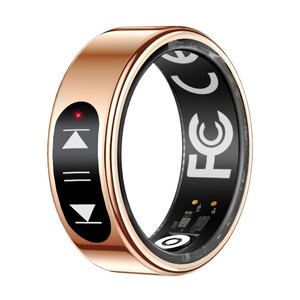
Precision Biometric Smart Ring
Continuous 25 Hz SpO2 sampling, heart rate variability (HRV), and clinical-grade sleep phase architecture built into a featherweight 5g titanium chassis. Tailored for corporate wellness and digital health integrators across Seoul.

Smart 4G GPS Pet & Asset Tracker Collar
Ultra-low power geofencing and real-time positioning with multi-GNSS tracking and integrated activity monitors. Certified for SK Telecom and KT LTE-M network bands with full IP66 ingress sealing.
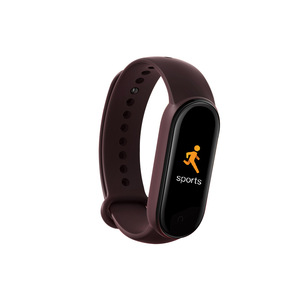
HT GRAND Premium ECG Smart Watch
Medical-grade ECG rhythm recording, body composition analysis, high-definition curved touch display, and Qi wireless induction charging. Backed by a 10-day battery runtime for elderly care initiatives in Gyeonggi-do.
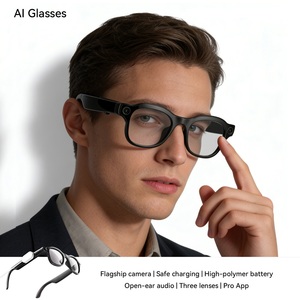
AI Smart Audio & Video Glasses
Directional open-ear acoustic chamber, real-time bidirectional translation supporting Korean voice models, integrated camera for live capture, and frictionless Bluetooth dual-link pairing.
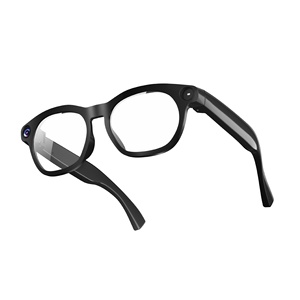
8MP HD AI Translation Smart Eyewear
Equipped with a high-resolution 8MP optical sensor, privacy recording LED, real-time voice translation, and high-bitrate streaming for field inspections, digital journalism, and Seoul content creators.
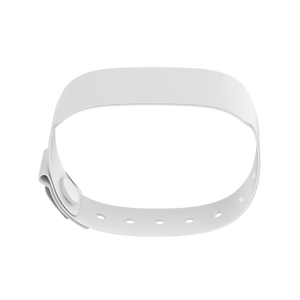
Wearable BLE Beacon & RFID Wristband
Engineered for smart hospital patient tracking, clinical asset monitoring, and access control. Features open Moko SDK compatibility, MQTT broker data streaming, IP67 waterproofing, and tamper-resistant straps.

Sports Open-Ear Audio Sunglasses
Ultra-low latency Bluetooth 5.4 connectivity, polarized UV400 protective lenses, and magnetic quick-charging contacts. Designed for cycling, running, and active commuting throughout the Han River trail networks.
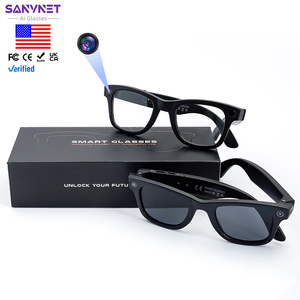
GS4 MAX AI Multimodal Camera Glasses
Equipped with 1080P video recording, multimodal AI vision models, and natural language translation. Seamlessly interfaces with private LLM endpoints for enterprise warehousing and field support operations.
Navigating the AI Wearable & Hardware Manufacturing Market in Seoul
The Seoul metropolitan territory represents one of the world's most sophisticated and demanding testbeds for edge computing, IoT connectivity, and artificial intelligence hardware. With hyper-dense telecommunication rollouts spanning nationwide 5G Standalone (SA) and emerging private network testbeds across Pangyo Techno Valley and the Gangnam Teheran Valley, enterprise procurement teams in South Korea are rapidly shifting their hardware evaluation criteria. Today, sourcing smart wearables is no longer a simple transactional purchase of consumer step counters. Instead, Korean corporations, telecom operators (SK Telecom, KT, LG Uplus), and smart city integrators require a hybrid architecture: hardware built with automotive-grade micro-soldering, biometric sensor clusters with high signal-to-noise ratios, and open firmware capable of executing edge AI inferences before offloading encrypted payloads to domestic Korean cloud services.
As a seasoned smart wearable OEM/ODM manufacturer established in Shenzhen in 2019, our enterprise operates an integrated 1,000 m² assembly facility housing 50 hardware, firmware, and quality assurance specialists. We maintain direct control over every structural, tooling, and RF layer, eliminating the costly friction of intermediary trading houses. In this technical overview, we examine how global hardware manufacturing capabilities directly align with Seoul's strict regulatory thresholds, rigorous software localization protocols, and specialized commercial application environments.
Teheran-ro Tech & Corporate Hubs
Multilingual cross-border commerce demands real-time, low-latency audio translation. Our dual-mic beamforming AI smart glasses and earbuds translate Korean, English, Japanese, and Mandarin on the fly, empowering executives and tech founders in Gangnam to conduct complex discussions with minimal latency.
Metropolitan Clinical & Silver Care
South Korea's rapid demographic shift toward a super-aged society has triggered municipal health tenders across Seoul, Incheon, and Gyeonggi-do. Our continuous PPG/ECG tracking wristbands and titanium smart rings integrate telemetry pipelines that transmit cardiac rhythm and nocturnal desaturation events directly to remote care platforms.
Smart Hospital Asset & Inpatient Safety
Institutions like Asan Medical Center and Seoul National University Hospital (SNUH) require reliable patient localization and contactless vital parameter tracking. Our IP67 BLE beacons and MQTT-compatible wristbands offer room-level tracking and automated nurse-call event triggers with zero signal interference.
Seoul Market Hardware Trends: Edge Computing & Regulatory Shifts
The intersection of edge artificial intelligence and physical wearable devices in Seoul is defined by three structural technological movements: on-device neural processing units (NPU), local privacy compliance, and deep integration with domestic digital infrastructure.
1. Transition from Cloud Offloading to Localized On-Device Intelligence: Traditional wearable devices historically served as mere passive telemetry conduits, streaming raw photoplethysmography (PPG) or accelerometer data to a paired smartphone via Bluetooth Low Energy (BLE). In the modern Seoul tech corridor, this paradigm creates unacceptable latency and battery consumption. Our engineering lines deploy power-efficient Nordic Semiconductor (nRF52840 / nRF5340) and Realtek BT5.4 low-energy audio platforms, paired with ultra-low-power DSPs capable of filtering motion artifacts and detecting arrhythmias directly at the firmware layer.
2. Strict Compliance with the Personal Information Protection Act (PIPA): South Korea enforces one of the world's most comprehensive and strictly policed data sovereignty frameworks under the Personal Information Protection Commission (PIPC). When AI smart glasses equipped with cameras (such as our 8MP Sony sensor platforms) or voice-recording smart watches are deployed, they must comply with legal visual recording notification mandates. Our optical hardware integrates tamper-proof physical LED status circuits that automatically illuminate during sensor activation, providing Seoul enterprise clients with immediate legal compliance out of the box.
3. Domestic App Ecosystem Compatibility (Kakao & Naver Integration): Western and generic consumer smart wearables frequently fail to capture meaningful market share in South Korea because their companion applications rely exclusively on Google Maps APIs or standard Western notification protocols. As an experienced ODM manufacturer, we provide white-label SDKs and source code packages engineered to link seamlessly with Naver Map APIs, KakaoTalk webhook notification bridges, and domestic payment architectures.
Hardware Architecture Matrix for Korean Commercial Procurement
To assist hardware procurement managers, systems integrators, and OEM brand buyers in Seoul, the matrix below details the structural components, compute platforms, and certification scopes across our primary product platforms.
| Wearable Platform | Processor / RF Chipset | Sensor Suite | Waterproofing | Battery / Autonomy | Target Seoul Application |
|---|---|---|---|---|---|
| Titanium Smart Ring | Nordic nRF52832 BLE 5.0 | Dual-wavelength PPG, NTC Skin Temp, 3-Axis Accel | 5ATM (50m dynamic) | 18-24 mAh (4-6 Days) | Corporate Wellness, Sleep Clinics |
| ECG Telemetry Watch | Realtek 8762D + TI AFE | Single-lead ECG, Bio-Z, Optical Heart Rate, SpO2 | IP67 / IP68 sealed | 280 mAh (7-10 Days) | Silver Town Elderly Telehealth |
| AI Voice Glasses | Qualcomm / BES Dual-Core | Dual MEMS Mics, Bone Conduction / Open-Ear | IP54 water/sweat resistant | 110 mAh x 2 (5h Talk) | International Trade, Gangnam Startups |
| 8MP Camera Smart Glasses | Quad-core ARM Cortex + NPU | 8MP Sony IMX Sensor, Gyro, Ambient Light | IP67 optical housing | Charging Case (3600 mAh) | Broadcast Media, Field Inspections |
| Clinical BLE Wristband | Nordic nRF52810 / nRF52833 | Active RFID / NFC Tag, BLE 5.0 Beacon | IP67 ultrasonic weld | CR2450 replaceable (18-24 mo) | SNUH/Asan Inpatient Localization |
| 4G GPS Pet/Asset Collar | ASR LTE Cat-1 + GNSS | GPS/BDS/GLONASS, Vibrational Geofencing | IP66 sealed silicone | 1000 mAh rechargeable | Urban Pet Safety, Fleet Logistics |
Enterprise Manufacturing Advantages: Direct Shenzhen Factory Accountability
When launching an electronics brand or procuring hardware for enterprise deployment in Seoul, supply chain instability is the single largest threat to project timelines. Intermediary trading brokers frequently lack direct access to firmware repositories, structural toolpaths, and surface-mount technology (SMT) quality control lines. At Shenzhen Sww Industrial Development Co., Ltd (Smart Wear Works), we solve this through end-to-end vertical integration:
In-House Embedded Firmware
We write and maintain our own C/C++ embedded firmware routines. Whether you require custom FOTA (Firmware-Over-The-Air) servers hosted in South Korea or custom BLE UUID structures to integrate with your existing mobile apps, our engineering team executes modifications within days, not months.
Certification & Pre-Scan Testing
Our assembly lines operate in full compliance with ISO9001 standards. We carry deep experience executing CE, FCC, RoHS, and Japanese TELEC certification suites. For Korean clients, we prepare complete schematic documentation, test scripts, and pre-screened RF performance data to ensure fast Korea Certification (KC) approval.
Agile Tooling & Prototyping
From CNC aluminum milling and medical-grade hypoallergenic silicone casting to custom retail packaging and laser-engraved Korean brand identifiers, we take programs from preliminary CAD design to production gold samples in as little as 3 to 4 weeks.
Frequently Asked Questions: Sourcing AI Wearables for the Seoul Market
Essential technical, regulatory, and logistics answers for procurement directors, product managers, and distributor partners evaluating our hardware lines.
FAQ 1 How do your smart wearable products navigate Korea Certification (KC Mark) compliance?
The KC (Korea Certification) framework is mandatory for all electronic products sold or deployed in South Korea, governed by the National Radio Research Agency (RRA) for electromagnetic compatibility (EMC/RF) and the Korean Agency for Technology and Standards (KATS) for battery safety. Because we engineer our RF front-ends, antenna matching networks, and battery protection circuits in-house, we provide our Korean partners with comprehensive circuit schematics, PCB layout files, bill of materials (BOM), and pre-scan chamber test reports. We routinely support clients during lab testing at certified Korean testing houses such as KTL (Korea Testing Laboratory) and KTR, ensuring smooth, predictable KC certification approvals.
FAQ 2 Can your smart rings and watches be integrated into proprietary Korean telehealth networks?
Yes. Unlike consumer-locked closed ecosystems, our platforms support full SDK and Bluetooth API integration. For models like the TK20 Smart Ring, HT GRAND Health Watch, and Clinical BLE Beacon Wristband, we provide structured BLE communication protocols, data parsing libraries, and raw sensor stream access (unfiltered PPG, accelerometer, and temperature data). This enables hospital software teams and telehealth operators in Seoul to stream encrypted physiological telemetry directly into their own AWS Korea or Naver Cloud-hosted EMR (Electronic Medical Record) systems without intermediary third-party cloud dependencies.
FAQ 3 Are physiological readings (ECG, SpO2, Heart Rate) considered medical-grade under South Korean MFDS regulations?
Our standard hardware models are calibrated as high-precision lifestyle and enterprise wellness telemetry instruments. Under South Korea's Ministry of Food and Drug Safety (MFDS) regulatory frameworks, consumer wearables intended for general wellness, fitness tracking, and occupational fatigue monitoring do not require medical device classification. However, if your program intends to make diagnostic or therapeutic medical claims, our engineering team can adapt the analog front-end (AFE) components, sensor calibration routines, and documentation packages to assist your organization in pursuing formal MFDS SaMD (Software as a Medical Device) or medical hardware approval.
FAQ 4 How is privacy compliance handled for AI camera smart glasses under Korean PIPA laws?
South Korea's Personal Information Protection Act (PIPA) strictly governs optical and audio recording in public and private commercial spaces to prevent non-consensual surveillance. Our AI camera glasses (including the 8MP Sony sensor models and GS4 MAX platforms) feature a hardware-interlocked recording indicator LED on the front frame. This LED illuminates continuously whenever the optical sensor or microphone array is active, preventing stealth recording. Additionally, firmware-level shutter sounds and localized companion app consent flows are natively supported to meet PIPC guidelines.
FAQ 5 What are your Minimum Order Quantities (MOQ) and production lead times for private-label OEM orders?
For standard catalog hardware requiring laser branding, customized packaging, and pre-flashed localized Korean firmware, our standard MOQ starts at 500 to 1,000 units depending on the model. For complete ODM development programs requiring bespoke industrial design (ID), custom injection mold tooling, and proprietary companion app deployment, MOQs typically range from 3,000 to 5,000 units. Prototype samples can be prepared and dispatched to Seoul within 5 to 7 business days, while standard mass production runs are completed in 25 to 35 calendar days following golden sample sign-off.
FAQ 6 Can the companion mobile application be fully white-labeled in Korean?
Yes. We offer complete white-label companion application engineering for both iOS and Android. Our UI/UX localization pipeline covers native Hangul typography, Korean server hosting configuration (complying with domestic data localization standards), Kakao social login integration, and Naver cloud storage routing. You receive a fully compiled, signed application package ready for direct publication under your own Apple Developer and Google Play corporate accounts.
FAQ 7 How do the AI translation glasses handle Korean syntax and business terminology?
Our AI translation glasses leverage an advanced hybrid dual-mic acoustic noise-cancellation array, isolating human speech up to 85 dB ambient noise. The paired mobile application bridges directly with state-of-the-art multilingual neural machine translation engines. The system supports bidirectional Korean-English, Korean-Japanese, and Korean-Chinese translation with high accuracy in business and technical colloquialisms, maintaining conversational latency under 800 milliseconds under standard 5G/LTE networks.
FAQ 8 What logistics channels do you utilize for shipments into Incheon and Seoul?
From our Shenzhen manufacturing hub, we operate expedited air freight and maritime shipping corridors directly into Incheon International Airport (ICN) and Incheon Port. Air freight shipments typically arrive in Seoul within 2 to 3 days, fully equipped with UN38.3 lithium battery safety dossiers, MSDS certifications, and export declaration documents to ensure swift clearance through Korea Customs Service (KCS).