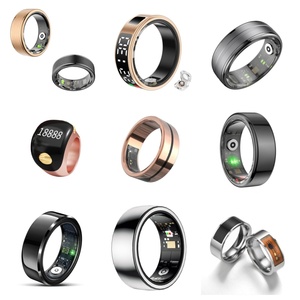
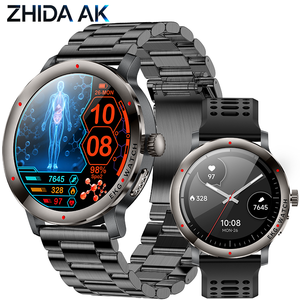
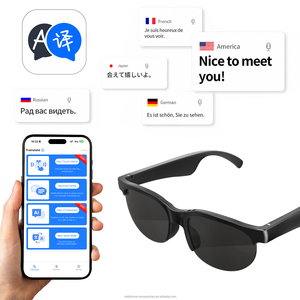
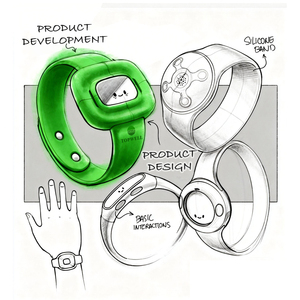
Featured Smart Wearable & Audio Glasses Hardware
Explore our engineered line-up ready for immediate white-labeling, brand customization, or bespoke ODM evolution. Fully backed by in-house firmware development and strict QA protocols.
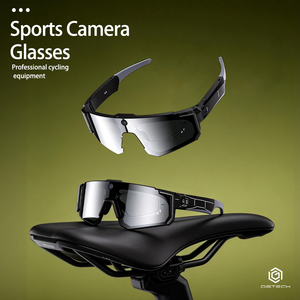
Future Sourcing & Procurement Trends for Smart Glasses
B2B procurement of smart eyewear has shifted from novelty electronic gadgets to precision-engineered lifestyle and enterprise solutions. Strategic buyers must adapt to architectural shifts in the supply chain to maintain margin defensibility and compliance integrity.
1. Modular CMF & Prescription Modularity
Procurement leaders are rejecting unibody locked frames. Future contracts favor suppliers providing modular front-frame chassis (TR90, aviation-grade aluminum, or Italian acetate) capable of accepting prescription lens swaps without stressing the acoustic cavities or temple arm electronics.
2. Edge-AI LLM Token Integration
B2B smart eyewear contracts now necessitate integrated mobile app architectures connected to Multimodal Large Language Models (LLMs). Optical procurement requires low-latency Bluetooth 5.3/5.4 pipelines transmitting real-time audio and high-resolution visual tokens without degrading battery duty cycles.
3. Strict Privacy & Sensor Compliance
Regulatory bodies in the EU (GDPR) and North America require physical hardware-level mitigation against clandestine recording. Sourcing protocols demand smart glasses featuring hardwired optical LED indicators that activate when cameras or mics are operational, preventing customs blockades.
| Evaluation Parameter | Legacy Sourcing Specification | Future-Proof 2026+ OEM Specification |
|---|---|---|
| Audio Transduction | Bone conduction (vibration-heavy, high leakage) | Directional Open-Ear Acoustic Cavities with Anti-Phase Leakage Cancellation |
| Power Management | Single 70mAh temple battery, tethered cable charging | Dual-balanced 110mAh temple cells + 3600mAh Magnetic Docking Case |
| Optical Camera Module | 720P interpolated CMOS, fixed focus | 8MP-12MP Sony IMX Sensor with EIS (Electronic Image Stabilization) |
| Software Ecosystem | Generic public APK, third-party server routing | White-Label SDK, Multi-LLM API Integration, Zero Data Retention Storage |
Industrial Development & Engineering Trajectory
As optical, acoustic, and silicon nodes converge, smart glasses are moving from audio-centric accessories to ubiquitous spatial computing nodes. Our engineering roadmap focuses on three definitive vectors:
Sub-35g Ultra-Lightweight Ergonomics
Through high-density interconnect (HDI) micro-PCB layouts and magnesium-aluminum temple cores, our industrial design team reduces wearable fatigue. Balancing center-of-gravity along the mastoid process allows day-long consumer retention without temple pressure points.
Micro-OLED & Waveguide Integration
Moving beyond pure audio, development channels are scaling monochrome and full-color diffractive optical waveguides. Achieving up to 1500 nits of outdoor eye-level brightness enables heads-up real-time dialogue translation, turn-by-turn navigation, and enterprise telemetry displays.
On-Device Edge Neural Processing
Next-phase smart eyewear incorporates low-power NPU coprocessors. This allows wake-word recognition, acoustic noise cancellation (ENC), and conversational translation algorithms to execute locally, reducing tether latency to below 40ms while safeguarding personal audio data.
Why Tier-1 Brands Partner with Smart Wear Works
Founded in Shenzhen in June 2019, Shenzhen Sww Industrial Development Co., Ltd. (Smart Wear Works) provides end-to-end turnkey manufacturing, bridging complex hardware engineering with rapid commercial scalability.
Self-Operated Shenzhen Production Plant
Unlike trading intermediaries, we operate a dedicated 1,000 m² assembly plant in Pingshan, Shenzhen. Supported by over 50 technical specialists and automated SMT lines, we guarantee full transparency, batch-to-batch consistency, and a monthly output of over 30,000 units.
In-House Embedded Firmware & App Engineering
We eliminate cross-vendor friction. Our in-house software engineers simultaneously develop hardware, board support packages (BSP), Bluetooth stacks, and white-label iOS/Android apps, enabling custom boot screens, localized voice prompts, and API cloud hooks.
Comprehensive Global Certification Scope
Our products are engineered to comply with global markets from board conception. We manage full testing and compliance reporting for CE (EMC/LVD), FCC ID (Part 15C), RoHS, REACH, and TELEC (MIC Japan), ensuring seamless customs entry across Europe, North America, and Asia.
B2B Private Label Procurement FAQ
Clear, technically rigorous answers addressing the core questions of supply chain directors, category managers, and hardware brand founders.
Q: What is the Minimum Order Quantity (MOQ) for custom private label smart glasses?
For existing frame platforms requiring laser-engraved branding, bespoke packaging, and custom Bluetooth pairing names, MOQ starts at 500 to 1,000 units. For full ODM builds requiring custom tooling, new frame molding, specialized PCBA architecture, and dedicated firmware, project tooling thresholds start at 3,000 to 5,000 units depending on CMF requirements.
Q: How do you manage acoustic isolation and prevent ambient audio leakage?
We utilize directional open-ear micro-speakers paired with precision acoustic wave-guiding cavities positioned on the underside of the temple arms. In addition, our firmware utilizes secondary out-of-phase audio cancelation wavelets delivered via secondary micro-ports, significantly reducing ambient voice spillage during confidential business phone calls.
Q: Can our engineering team customize the companion mobile application?
Yes. We offer three tiers of software integration: (1) Complete white-label deployment with your brand’s iconography, color palette, and server telemetry; (2) Open API and SDK access allowing you to integrate the hardware directly into your enterprise software; or (3) Custom feature integration, such as enterprise voice prompts, custom AI wake words, or specific health cloud synchronizations.
Q: What quality verification tests are performed prior to batch dispatch?
Every mass-production lot undergoes strict multi-stage quality assurance: 100% optical alignment testing, temple hinge cycle endurance (20,000 flex operations), high/low temperature operational stress (-20°C to 60°C), salt spray corrosion analysis for sweat resistance, drop testing, IPX5/IP67 ingress validation, and RF transmission efficiency calibration in an anechoic RF chamber.
Q: Are your camera smart glasses compliant with international privacy laws?
Yes. All camera-equipped smart glasses, such as our MSPG007 Ultra platform, integrate hardware-interlocked recording LEDs that illuminate whenever video capture is active. These circuits are hardwired directly into the image sensor power rail, making it impossible to defeat the warning indicator via software tampering, thereby complying with EU and North American consumer privacy laws.
Launch Your Custom Smart Glasses Line
Connect directly with our engineering and procurement team in Shenzhen. Request spec sheets, schedule working sample shipments, or discuss full-scale custom ODM wearable programs.