Featured Smart Hardware Platforms Ready for Private-Label OEM/ODM
Explore production-ready architectures engineered for seamless sensor integration, industrial durability, and custom companion application support.
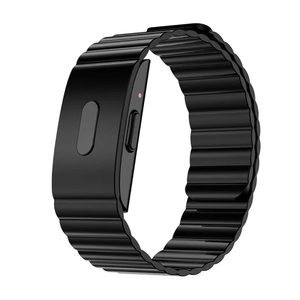
Wholesale Smart Wristband with Health Tracking SDK Support & Customizable App Development
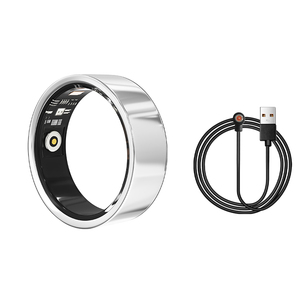
Custom Logo Smart Ring Manufacturer Waterproof Health Fitness Tracker Smart Ring With SDK
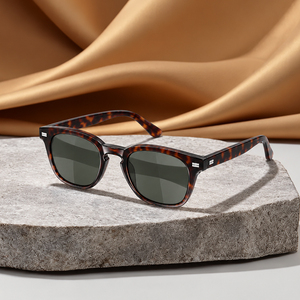
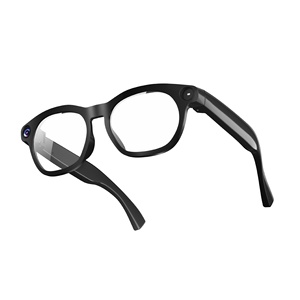
OEM Custom AI Smart Glasses 8MP HD Camera Real-Time Translation Voice Control Audio Eyewear
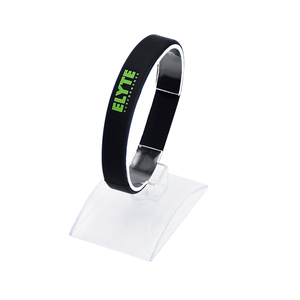
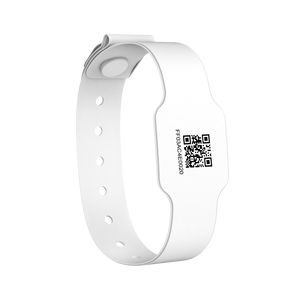
Wearing Comfortable Eco RFID Silicone NFC Medical Wristband Rubber Wristbands Suppliers
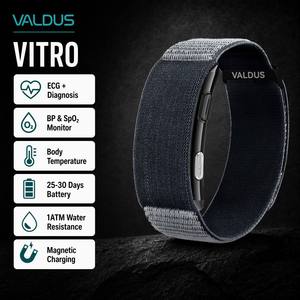
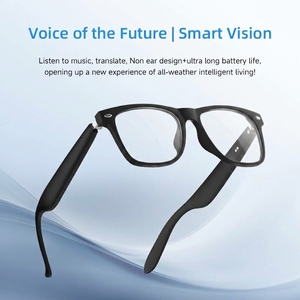
High-Integrity Stainless Steel Metallurgy in Connected Wristwear
Manufacturing an elite-tier stainless steel smart watch demands an interdisciplinary synthesis of traditional Swiss horological tooling and advanced RF wireless engineering. Unlike non-conductive polycarbonate, ABS, or zinc-alloy shells, an authentic austenitic stainless steel unibody acts as an electromagnetic Faraday shield. At our Shenzhen manufacturing facility (Shenzhen Sww Industrial Development Co., Ltd), we solve the physical paradox of encasing multi-band wireless transceivers (Bluetooth 5.4, Dual-Band GNSS, NFC, and Wi-Fi) inside high-density AISI 316L and 904L surgical stainless steel enclosures.
| Alloy Classification | Composition (Cr-Ni-Mo-C) | Tensile Strength (MPa) | Corrosion Resistance (PREN) | Biocompatibility (EN 1811) | Ideal Application Scenario |
|---|---|---|---|---|---|
| 304 Stainless Steel | 18% Cr, 8% Ni, 0.08% C | 515 - 620 | PREN ~18 - 20 | Commercial Grade (Trace Nickel) | Entry-level casing, internal mounting brackets |
| 316L Surgical Steel | 16-18% Cr, 10-14% Ni, 2-3% Mo, <0.03% C | 485 - 580 | PREN ~23 - 25 | Medical/Hypoallergenic (ISO 10993) | Luxury consumer smartwatches, sweat-resistant sports bands |
| 904L Superaustenitic | 19-23% Cr, 23-28% Ni, 4-5% Mo, 1-2% Cu | 520 - 650 | PREN ~34 - 36 | Ultimate Acid & Saline Immunity | Ultra-premium luxury timepieces, technical marine & dive wristwear |
5-Axis CNC Precision & PVD/DLC Surface Metallurgy
Every watch bezel and unibody case undergoes cold-forging under 400-ton hydraulic pressure followed by 28 individual high-speed 5-axis CNC computer-numerical-controlled milling passes. To ensure scratch resistance matching luxury analog chronometers, our automated vacuum chambers deposit 0.4μm to 2.5μm Physical Vapor Deposition (PVD) titanium carbide or Diamond-Like Carbon (DLC) crystalline films, boosting surface hardness up to HV 1,200–3,000 Vickers.
Zero-Attenuation Antenna Dielectric Windows
A solid metal chassis detunes RF trace resonance. We incorporate co-molded nano-injection molded (NMT) polyetheretherketone (PEEK) dielectric micro-slits alongside zirconium ceramic and sapphire crystal bottom lenses. This proprietary isolated antenna coupling topology delivers isotropic radiation patterns, ensuring ≥ -94 dBm Bluetooth receiver sensitivity and precise GPS TTFF (Time to First Fix) even in dense metropolitan environments.
Tier-1 Manufacturing Capabilities in Shenzhen
Direct factory throughput, in-house firmware development teams, and rigorous quality engineering without middleman markups.
Future Sourcing Trends for Stainless Steel Smart Wristwear
Strategic analysis for enterprise procurement teams, luxury timepiece licensors, and consumer electronics distributors planning 2026–2030 inventory cycles.
1. Shift to Clean-Cut Surgical Biocompatibility
Global regulatory bodies (REACH in Europe, Prop 65 in California) are tightening guidelines surrounding wearable skin contact. Enterprise buyers are abandoning zinc-die-cast and low-grade nickel-plated alloys in favor of pure 316L and titanium alloys to eliminate skin dermatological reactions and preserve high-end brand equity.
2. Integration of Continuous Micro-Spectrophotometry
Wearable procurement is moving beyond primitive step-counting into multi-wavelength PPG optical arrays and ECG dry-contact electrodes embedded directly into stainless steel watch bezels. Modern buyer specifications prioritize biometric optical clarity, high signal-to-noise ratios (SNR), and non-invasive blood composition tracking.
3. Firmware Autonomy & Private Cloud SDKs
Enterprise and health-tech clients are systematically avoiding unvetted public Chinese cloud platforms. Leading suppliers now offer independent SDKs, raw Bluetooth GATT endpoints, and unbranded, white-label iOS and Android apps hosted on dedicated regional AWS or Azure instances for complete GDPR and HIPAA compliance.
Next-Generation Engineering Horizons (2026–2028)
How cutting-edge Chinese assembly plants are reshaping smart wristwear performance.
Ultra-Hermetic 10ATM Laser Sealing
Transitioning from conventional vulcanized rubber O-rings to pulsed micro-laser welded chassis and hydrophobic nano-coatings. This allows true 100-meter hydrostatic pressure tolerance, enabling stainless steel smart chronometers to survive high-impact watersports and saturation diving scenarios.
Edge-AI Microcontrollers
Deploying low-power neural processing units (NPU) running on sub-microampere architectures (e.g., dual-core ARM Cortex-M55/Ethos NPUs). This permits localized, on-device anomaly detection for cardiac arrhythmias and sleep apnea without constant latency-heavy smartphone offloading.
Curved Micro-OLED & Sapphire Fusion
Synthesizing 2.5D and 3D sapphire watch crystals directly bonded to curved flexible active-matrix OLED panels. The result provides zero optical parallax, sunlight-readable 2000-nit luminance, and impervious Mohs 9 diamond-like scratch durability.
Why Global Brands Choose Smart Wear Works (Shenzhen Sww)
Direct supply-chain transparency, in-house electrical testing, and verified international compliance.
Comprehensive Compliance Scope
Full regulatory readiness across European (CE, RoHS, REACH), North American (FCC, IC, Prop 65), and Japanese (TELEC, PSE) jurisdictions. We supply accredited TÜV and SGS laboratory test reports with every OEM batch.
In-House Firmware & App Engineering
We do not outsource software. Our dedicated team of 50+ developers writes bare-metal C RTOS firmware, handles Bluetooth protocol stack tuning, and delivers turnkey, rebranded iOS and Android companion applications.
Rigorous 100% Multi-Stage QC
Every single piece undergoes a comprehensive 4-stage inspection regimen: SMT AOI optical PCB scanning, pneumatic air-leak pressure chamber testing, 48-hour continuous thermal burn-in, and automated RF spectrum analyzer calibration.
Low Minimums & Rapid Prototyping
Agile production lines support entry batches as low as 500 units for standard custom branding (laser logo, boot screen, custom gift box), with 7-day engineering samples and 25-day standard volume cycle times.
Dedicated Account Engineering
Work directly with an assigned bilingual hardware engineer rather than a commissioned intermediary. We streamline DFM (Design for Manufacturability) reviews to avoid costly mid-production tooling modifications.
Direct Shenzhen Supply Cluster Moat
Situated in Pingshan, Shenzhen, our assembly hub draws from the world’s most concentrated precision parts ecosystem, ensuring resilient component allocation, battery safety integrity, and stable wholesale pricing.
Frequently Asked Questions: Sourcing Stainless Steel Wearables
Technical, logistical, and commercial answers for professional procurement officers and brand creators.
Q1 How does your factory prevent galvanic corrosion between the stainless steel housing and internal components?
Galvanic corrosion occurs when dissimilar metals contact electrolyte solutions like human sweat. We mitigate this through an aerospace-grade insulating architecture: internal sub-frames are molded from non-conductive polycarbonate-fiberglass resins, isolating the 316L stainless steel shell from the multi-layer PCBA ground plane. Furthermore, all exposed charging pins utilize multi-layer gold over nickel electroplating (Au ≥ 3μ inch, Ni ≥ 50μ inch) tested to withstand > 96 hours of standard salt spray exposure (ASTM B117 standard) without degradation.
Q2 What is the true Minimum Order Quantity (MOQ) for custom stainless steel tooling versus standard OEM branding?
For existing tooling platforms (using our catalog stainless steel unibody dies), the MOQ for complete custom brand execution—including precision fiber-laser case-back engraving, custom branded software boot animations, localized user manuals, and customized gift-box packaging—starts at 500 units. For complete custom industrial ODM development involving bespoke forging dies, unique lug dimensions, and proprietary CNC tooling, our standard MOQ is 3,000 units to offset progressive tooling investments.
Q3 How is water resistance verified in your cleanroom assembly facility?
Unlike trading intermediaries that rely on statistical batch sampling, our Pingshan assembly line performs 100% dual-stage water resistance inspection. First, each empty case unibody is subjected to dry differential air pressure testing to detect micron-level seal imperfections. Second, fully assembled devices undergo pressurized chamber immersion testing up to 50 meters (5ATM) or 100 meters (10ATM) according to ISO 22810 standards. Finally, units are placed on heated hotplates to verify that zero internal condensation forms under thermal shock.
Q4 Can we integrate our proprietary enterprise healthcare app or cloud server?
Yes. We provide complete, well-documented Bluetooth Low Energy (BLE) communication protocols, GATT profiles, and native iOS and Android SDK libraries. If your organization prefers not to handle client-side mobile programming, our software engineering division can deliver a custom white-label app styled with your typography, color palette, and assets, configured to point telemetry packets directly to your private AWS, Google Cloud, or custom server endpoints without passing through any third-party gateway.
Q5 How do you address the RF shielding limitations inherent to stainless steel casings?
Steel absorbs wireless signals. To guarantee class-leading connection range and rapid GNSS triangulation, our mechanical designs feature discrete dielectric antenna decoupling slots back-filled via high-pressure Nano-Molding Technology (NMT). We also employ an inverted ceramic or sapphire crystal base cover that serves as a high-permeability RF transparent aperture. Each prototype iteration is tuned inside our anechoic chamber using Rohde & Schwarz network analyzers to maintain a Total Radiated Power (TRP) and Total Isotropic Sensitivity (TIS) well above carrier and Bluetooth SIG thresholds.
Q6 Are the biometric readings (ECG, PPG, SpO2, Blood Pressure) rated as medical diagnostic grade?
We emphasize compliance transparency: our standard smart watches and fitness rings are certified as consumer lifestyle and fitness monitoring devices. While they utilize premium photoplethysmography sensors (such as Goodix, PixArt, or Texas Instruments analog front-ends) and high-accuracy microvolt ECG sensing circuits, the resulting biometric outputs represent general health indicators rather than diagnostic measurements. For medical device licensing (e.g., FDA 510(k) or EU MDR Class IIa), we support enterprise clients with custom hardware lock-downs, biocompatibility dossiers, and traceable component supply chains necessary for independent clinical validation.
Q7 What lead times should buyers expect from engineering sign-off to container loading?
Existing platform OEM runs (with custom branding and retail packaging) typically ship within 20 to 28 business days following sample golden unit approval. For new ODM tooling, industrial design and prototyping take approximately 3 to 4 weeks, CNC die fabrication and tooling trial takes 4 weeks, followed by pilot production (T1/T2 verification runs) and mass production within 6 to 8 weeks. We maintain strategic buffer inventories of display panels, IC chipsets, and raw 316L bar stock to mitigate unexpected market disruptions.
Architect Your Next Stainless Steel Wearable Line With Us
Connect directly with our Shenzhen engineering specialists. Receive detailed CAD drawings, component specifications, DFM reviews, and a comprehensive project quotation within 24 hours.