Direct Factory Line
Precision Product Recommendations for Global Importers
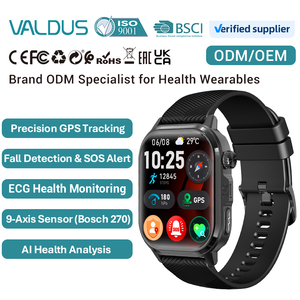
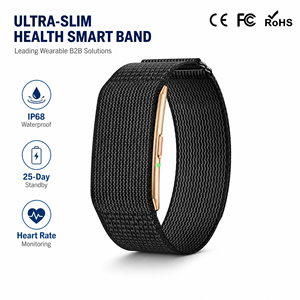
Engineered in our Shenzhen manufacturing center. All smart bands, audio wearables, rings, and ECG hardware are fully qualified for wholesale distribution or customized turnkey private-label programs.

Factory Advantages & Engineering Edge
Why Tier-1 Global Wearable Brands Rely On Our Shenzhen Plant
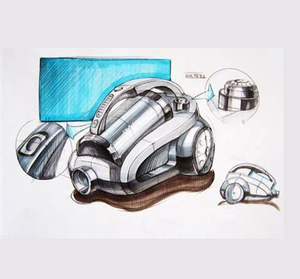
Operating under Shenzhen Sww Industrial Development Co., Ltd (Smart Wear Works), we eliminate the technical friction between conceptual industrial styling and large-volume medical-grade fabrication.
Clinical-Grade Electrodes & Biometrics
We utilize surgical 316L stainless steel, dry titanium contact pads, and vacuum PVD coating to deliver clean lead-I and bipolar ECG waveforms with high signal-to-noise ratio.
- High SNR reduction against baseline drift
- Multi-channel PPG integrated with VC9201/GH3011 ICs
- Customized real-time waveform filtering algorithms
Turnkey Firmware & White-Label Ecosystem
Our in-house firmware department delivers bare-metal micro-kernels, customized boot visuals, localized watch GUI languages, and dedicated iOS/Android cloud data synchronization.
- Proprietary standalone software libraries
- Zero vendor locking: direct AWS or Azure API integration
- Comprehensive SDK/Bluetooth API documentation
Rigorous International Regulatory Compliance
Full support for global target markets with verified CE-RED, FCC ID, RoHS, and Japanese TELEC certifications, protecting brand importers from costly customs holds.
- Strict SAR limit verification across frequencies
- Battery safety tests: UN38.3, MSDS, IEC62133
- Complete traceability down to the SMT component reel
Engineering Whitepaper & Market Insights
The Evolution of ECG Smart Watches: 2026–2030 Architecture
A strategic breakdown of how electrocardiogram monitoring is expanding from hospital clinical wards to ambient wrist biometrics, and what procurement teams must verify before signing supply agreements.
| Evaluation Parameter | Legacy Consumer Trackers (2020-2023) | Current Enterprise Generation (2024-2026) | Next-Gen Clinical Precision Wearables (2027+) |
|---|---|---|---|
| Sensor Modality | Single-channel basic PPG optical only | Bipolar Lead-I ECG + Dual-wavelength PPG | Tri-electrode ECG + Bioimpedance (BIA) + EDA |
| Electrode Chemistry | Raw nickel/copper coated alloys (Skin reactive) | Medical 316L Stainless Steel / Physical Titanium | Conductive ceramic + Carbon-nanotube thin film |
| On-Device Analysis | Rule-based heart rate thresholds | AFib detection + Heart Rate Variability (HRV) | Deep-learning Edge-AI neural network anomaly flag |
| Display & Ingress | TFT Glass, IP65/IP67 splash resistant | 1.95"-2.2" AMOLED, IP68 submerged 1.5m | LTPO Micro-OLED, True 5ATM/10ATM water immersion |
| Data Privacy & App | Third-party unencrypted shared servers | GDPR compliant, white-label custom server paths | Zero-knowledge proof biometric cloud architecture |
Procurement Trend 1: Signal Artifact Rejection
Procurement directors increasingly mandate dynamic noise canceling. Motion artifacts from wrist tremor or vascular motion degrade raw ECG signals. Our latest Cardigo & A2 firmware platforms integrate advanced bandpass digital signal processing (DSP) to normalize 50/60Hz AC electrical grid interference instantly.
Procurement Trend 2: The Multi-Sensor Ecosystem
Single-parameter monitoring is obsolete. Overseas distributors now require an interoperable health matrix: ECG rhythm verification combined with blood oxygen (SpO2) desaturation alerts, systolic/diastolic blood pressure estimation, and non-invasive blood glucose metabolic indices within a single wrist chassis.
Procurement Trend 3: Firmware Ownership & API
Hardware without secure software autonomy poses brand risk. Importers require turn-key white-label solutions, allowing regional brands to route raw health metrics directly to their national health records or dedicated insurance analytics portals without exposing telemetry to unknown cloud brokers.
Professional FAQ
Frequently Asked Questions on ECG Watch Manufacturing & Export
Direct technical answers addressing engineering verification, customization limits, order thresholds, and regulatory distinctions.
Q1: How does an ECG smart watch capture electrical heart rhythms from the wrist?
An electrocardiogram watch records microvolt electrical impulses created by the polarization and depolarization of cardiac tissue. To complete a Lead-I circuit, the user places their index finger from the opposite hand onto the watch's top-case side electrode, while the backplate electrode makes continuous contact with the wearer's wrist. The internal analog front-end (AFE) amplifier filters and digitizes the signal into an observable P-Q-R-S-T curve for arrhythmia analysis.
Q2: Are consumer ECG smart watches considered certified medical devices?
By standard international export definition, unless specific FDA 510(k), CE MDR Class IIa, or NMPA medical certification files are secured under your specific brand name, wearable wristbands and smartwatches are commercial wellness and lifestyle electronics. They provide reference estimates of heart rhythm and heart rate trends. As an OEM manufacturer, we supply clinical validation test logs, calibrated test jigs, and raw bio-signal access to streamline your regional medical registration process.
Q3: What is the standard Minimum Order Quantity (MOQ) for custom brand OEM projects?
For standard catalog configurations with custom laser-engraved case backs and custom software boot logos, our MOQ typically starts at 500 to 1,000 units. For full industrial design (ID) modifications, custom mechanical injection tooling, personalized strap molding, and proprietary white-label smartphone application compilation, MOQs generally start at 3,000 to 5,000 units depending on chip allocation.
Q4: How does your Shenzhen factory ensure waterproofing on watches with ECG metal contact rings?
Integrating exposed metal electrodes into an IP68 or 5ATM chassis is a core engineering challenge. We implement double-dispensing dispensing automation with specialized high-elasticity structural sealants, followed by automated vacuum negative-pressure leak testing on 100% of finished assemblies. Every single piece is subjected to positive air-pressure immersion testing before moving to final packing lines.
Q5: Can our engineering team access raw bio-data via your Bluetooth protocol?
Yes. For health-tech companies, university researchers, and telemedicine providers, we offer a dedicated developer program. Upon execution of mutual non-disclosure agreements, our team supplies Android and iOS Bluetooth Low Energy (BLE) communication protocols, raw hex data-parsing algorithms, and SDK modules to allow continuous logging of unprocessed ECG array packets directly into your private systems.