
The B2B Guide to Global Wireless Earbuds Manufacturing & Wholesale Supply
Evaluating contract manufacturing capabilities, true silicon economics, regulatory compliance matrices, and technological roadmaps for commercial buyers.
Executive Industry Overview: Shifting Global Supply Dynamics
The global wholesale landscape for True Wireless Stereo (TWS) earbuds and integrated acoustic wearables has crossed a definitive threshold. What was once a commodities market driven purely by superficial aesthetics and unit-cost suppression has transitioned into an engineering-intensive industry. Commercial buyers, enterprise retail distributors, and private label brands in 2026 must evaluate original equipment manufacturers (OEMs) and original design manufacturers (ODMs) on deep technological competencies: RF link resilience, Bluetooth Low Energy (BLE) Audio adoption, Active Noise Cancellation (ANC) tuning, on-device artificial intelligence, and end-to-end supply chain transparency.
Evaluating the Top 10 Wireless Earbuds Wholesale Manufacturers & Suppliers
When engineering an enterprise sourcing pipeline, B2B procurement managers must understand that not all manufacturers operate with the same cost structures or capabilities. Global production splits into distinct strategic tiers, each serving specific procurement scales and technical requirements:
1. Tier-1 Mega Contract EMS (e.g., Foxconn, Luxshare, Goertek)
Massive conglomerates serving hyper-scale consumer brands. They deliver peerless operational infrastructure, surface-mount technology (SMT) precision, and automated acoustic validation. However, for mid-tier brands and distributors, their multi-million-dollar tooling capital, rigid 100,000+ unit MOQs, and glacial engineering cycles make agile market entry impossible.
2. Agile High-Precision OEM/ODMs (e.g., Smart Wear Works)
Established, specialized manufacturers based in Shenzhen and Guangdong clusters. These facilities offer in-house tooling, SMT lines, acoustic chamber tuning, and modular PCBA architectures. They empower ambitious consumer audio brands with sub-1,000 unit baseline pilot runs, fully localized firmware engineering, custom companion apps, and verified direct-from-line quality controls.
3. Specialist Acoustic Innovators (e.g., Cosonic, Foster)
Engineering-heavy powerhouses focused heavily on planar-magnetic micro-drivers, audiophile balanced armatures, and proprietary spatial acoustic chambers. While providing class-leading frequency response profiles, their pricing structures target the high-end premium audiophile bracket rather than fast-moving consumer electronics retail.
4. High-Volume Value Assemblers
Facilities built around rapid, standardized assembly of pre-molded open-market shells paired with baseline Jerry or Actions chipsets. Ideal for entry-level mass promotional products, giftware programs, and budget retail shelves where unit cost overrides acoustic fidelity, IP ratings, and product longevity.
5. RF & Telecom Solution Integrators
Originating from wireless modem and telemetry engineering, these firms excel in long-range Bluetooth 5.4 transmission stability, dynamic antenna array tuning, and sub-40ms ultra-low latency algorithms essential for esports and wireless gaming audio peripherals.
6. Edge-AI & Smart Wearable Specialists
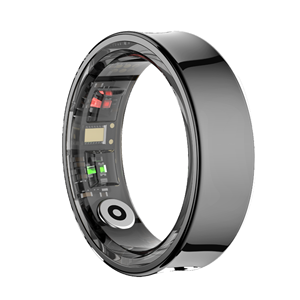
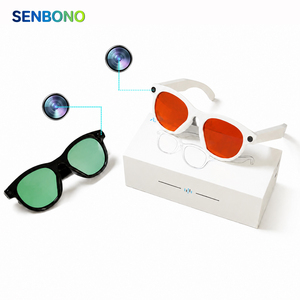
Pioneers bridging personal audio with edge compute. These manufacturers integrate multi-language neural translation engines, environmental computer-vision processing, open-ear directional audio waveguides, and embedded biometric biosensors into modular form factors.
Future Procurement & Sourcing Trends (2026–2030)
Where professional audio procurement is heading: Critical hardware developments that corporate supply chains must integrate to remain competitive.
1. LE Audio & Auracast
LC3 codec migration is replacing legacy SBC and AAC protocols. Procuring platforms with native BLE Audio lowers power draw by over 30%, unlocks multi-channel public broadcast reception (Auracast), and halves transmission latency down to sub-30ms thresholds.
2. Edge-AI & Real-Time Translation
Moving AI computation from external apps to localized Neural Processing Units (NPUs). Advanced TWS models now support multi-language real-time bi-directional conversation translation, smart contextual noise attenuation, and on-board voice biometric recognition.
3. Open-Ear (OWS) Form Factors
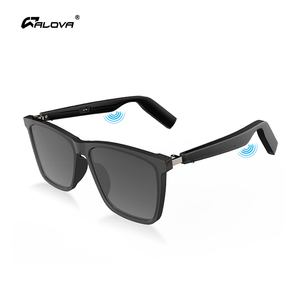
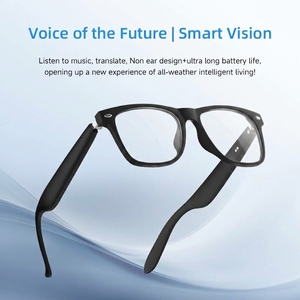
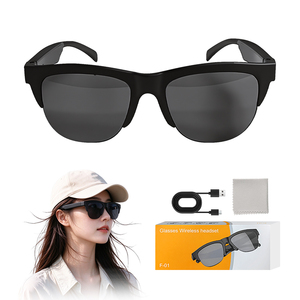
Air-conduction and bone-conduction audio glasses and directional hook earbuds are expanding market share. Corporate and active lifestyle users demand situational awareness and zero ear-canal fatigue without sacrificing acoustic privacy or dynamic bass performance.
4. Sustainable CMF & Battery Circularity
Driven by stringent EU battery pass regulations, modern B2B buyers mandate post-consumer recycled (PCR) plastics, modular snap-fit construction for automated disassembly, and ethically sourced, high-density lithium cobalt oxide cells with extended charge cycles.
Technological Development & Acoustic Engineering Paradigms
The transition across hardware nodes has reshaped audio engineering. The shift from classical dual-core DSPs to integrated heterogeneous System-on-Chips (SoCs) such as Qualcomm QCC-series, Bestechnic BES2700, and Realtek solutions has merged Bluetooth baseband, PMU, and neural coprocessors into a single wafer.
1. Hybrid Active Noise Cancellation (ANC): State-of-the-art platforms utilize a 6-microphone array across both earbuds: two Feed-forward external mics to sample ambient wavefronts, two Feedback internal mics located near the acoustic nozzle to measure residual inner-canal error, and dual bone-conduction voice pick-up (VPU) sensors to eliminate wind resistance during high-velocity outdoor transit.
2. Acoustic Transducer Innovations: Traditional mylar diaphragms are being supplanted by multi-layer composite diamond-like carbon (DLC) coatings and titanium-sputtered liquid crystal polymer (LCP) membranes. Paired with customized dual-chamber Helmholtz acoustic cavity designs, our wholesale platforms achieve flat frequency curves across 20Hz–40kHz, fully compliant with Hi-Res Audio Wireless and LDAC certification parameters.
Factory-Direct Advantages: Shenzhen Sww Industrial Development Co., Ltd
Consolidate your procurement pipeline with our unified design, engineering, and manufacturing capabilities.
Proprietary Shenzhen Assembly Facility
Established in Shenzhen in June 2019, our factory encompasses over 1,000 square meters of static-free cleanroom assembly lines, staffed by 50+ experienced technicians, delivering a reliable monthly throughput of 30,000+ units. Your account deals directly with line engineers, not intermediaries.
Full-Stack Regulatory Certification Scope
Eliminate customs bottlenecks. Our manufacturing processes and component pipelines are rigorously tested and certified for CE (RED), FCC ID, RoHS 2.0, REACH, and Japan TELEC radio compliance. We supply complete technical construction files (TCF) for immediate global market clearance.
Unified Hardware, Firmware & White-Label App
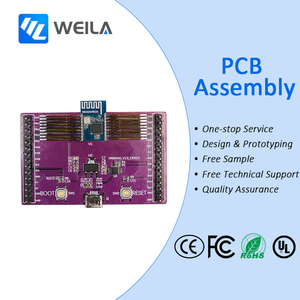
From PCB schematic trace design and RF antenna matching to customized Bluetooth boot strings, bespoke EQ presets, and dedicated white-label iOS/Android companion applications, we manage every tier under one accountable roof.
Flexible Modular OEM/ODM Engagements
Avoid restrictive 50,000-unit minimums. We support growing enterprise brands with low-risk pilot orders, rapid laser engraving, custom Pantone CMF anodization, tailor-made magnetic charging cases, and localized multi-language retail packaging.
Precision Acoustic & Environmental Quality Control
Every finished batch undergoes incoming component validation (IQC), automated optical inspection (AOI) for SMT assemblies, SoundCheck acoustic sweep testing in anechoic chambers, drop tests, and salt-spray corrosion chamber exposure for sweat-proof durability.
Multi-Year Enterprise Partner Retention
Our tier-1 brand clients across Western Europe, North America, and Japan have partnered with us for over four consecutive years. We prioritize batch-to-batch structural integrity, warranty claim minimization, and long-term hardware support.
Frequently Asked Questions for B2B Audio Buyers
Clear answers regarding MOQs, tooling timelines, private-label branding, and international compliance standards.
What is the typical Minimum Order Quantity (MOQ) for custom private-label orders?
For established standard catalog models requiring laser logo engraving, custom packaging, and branded Bluetooth pairing IDs, our baseline MOQ begins at just 500 to 1,000 units per colorway. For full-scale custom ODM projects requiring dedicated plastic injection tooling, proprietary motherboard layouts, and custom-tooled charging enclosures, MOQs generally start at 3,000 to 5,000 units to amortize initial NRE (Non-Recurring Engineering) and tooling capital.
Are your manufacturing processes compliant with CE, FCC, RoHS, and Japanese TELEC mandates?
Yes. Every export product assembled within our Shenzhen facility is engineered to pass rigorous international electromagnetic compatibility (EMC) and radio frequency (RF) standards. We maintain continuous partnerships with accredited testing laboratories (SGS, TUV, Intertek) to supply official CE-RED certificates for the European Union, FCC ID certification for the United States, RoHS 2.0 / REACH hazardous substance screening, and TELEC certifications required for Japanese commercial importation.
How are warranty, Defective On Arrival (DOA) rates, and RMA pipelines handled?
Our industrial factory yield standard maintains an overall defect rate below 0.3%. All wholesale commercial contracts include a standard 12-month factory hardware warranty. For high-volume sea and air freight shipments, we provide 0.5% to 1.0% fully assembled spare units (FOC - Free of Charge) alongside modular replacement components (ear cushions, driver drivers, battery cells, and charging contacts) to facilitate rapid local RMA resolution without costly international return transit.
Can you provide custom Bluetooth companion apps and proprietary firmware configurations?
Yes. In addition to hardware CAD and acoustic cavity modeling, our software engineering division develops custom companion applications for both iOS and Android platforms. Features include customized graphic equalizers, active noise cancellation mode switching, over-the-air (OTA) firmware update pathways, customizable touch-sensor gesture remapping, and proprietary GPS-based device location tracing, all hosted on secure, GDPR-compliant cloud servers.
What is the standard production cycle for prototypes versus full mass production?
Initial rapid 3D prototyping and functional mockups with standard silicon platforms require 7 to 10 working days. Pre-production engineering validation test (EVT) samples with your customized logo, Pantone-matched coloration, and custom packaging require approximately 15 to 20 days. Once the Golden Sample is officially approved by your engineering team, mass production execution typically takes 25 to 35 calendar days, contingent upon raw component supply chain conditions.
Initiate Your Commercial Audio Procurement Project Today
Connect directly with our senior hardware engineers and account directors in Shenzhen. Receive an itemized factory bill of materials (BOM), full CMF specifications, and immediate sample availability within 24 hours.