Featured ECG & Dynamic Heart Rate Monitoring Smartwatches
Engineered for brand distributors, digital health integrators, and clinical research platforms. Below are eight production-ready, CE, FCC, RoHS, and TELEC compliant configurations available for private-label customization.
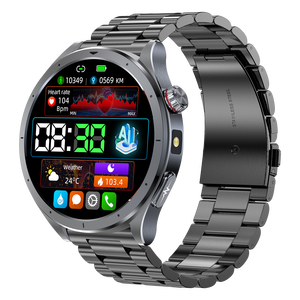
ET472 ECG Smart Watch Heart Rate Blood Oxygen Blood Sport Watch
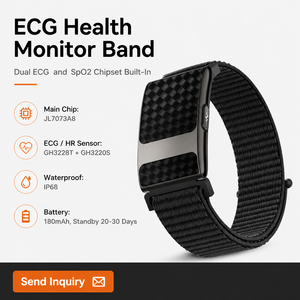
Health Tracker Band Screenless Design with ECG Smart Watch Features
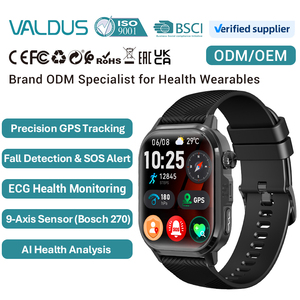
VALDUS 2026 Custom Logo ODM/OEM AMOLED ECG GPS Smart Watch
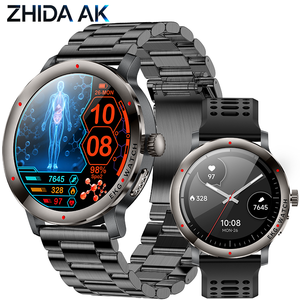
KC102 AMOLED Health Monitoring Smart Watch ECG+PPG
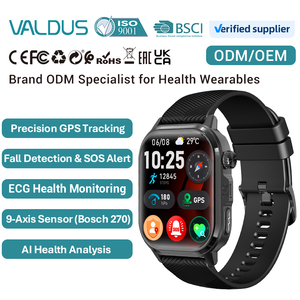
VALDUS CARDIGO AMOLED ECG Heart Rate Monitoring IP68 Watch
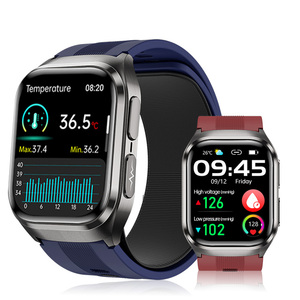
VS17 Amoled ECG PPG Smart Watch with Air Pump Air Bag
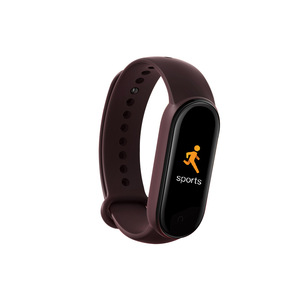
HT GRAND OEM ODM Premium Smart Health Watch Touch Screen
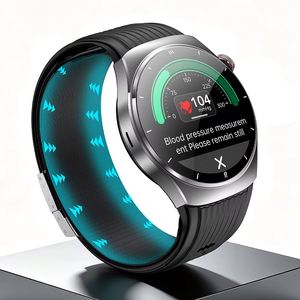
ERON TK68 Smart Watch With Air Pump Blood Pressure ECG HRV
Clinical-Grade ECG vs. Optical Heart Rate Monitoring: Engineering Architecture
For international medical distributors, private-label consumer tech brands, and clinical trial sponsors, distinguishing between electrocardiography (ECG) and photoplethysmography (PPG) represents the core technical hurdle in product specification. While both metrics capture cardiovascular activity, their underlying physical principles, sensor arrays, signal conditioning pipelines, and regulatory implications diverge radically.
1. The Bio-Potential Frontier: Single-Lead Lead-I ECG Implementation
Our smartwatches utilize an advanced three-electrode design (typically two dry-contact electrodes integrated into the stainless steel or titanium bottom chassis, paired with a third titanium/PVD electrode situated on the rotating bezel or side case). When the wearer completes the circuit by touching the lateral electrode with their contralateral index finger, the system establishes a standardized Einthoven Lead-I bio-potential vector. The analog front end (AFE) amplifies microscopic microvolt-level (µV) cardiac depolarization signals, filtering baseline wandering caused by thoracic respiration through multi-pole digital bandpass filters (0.05 Hz to 40 Hz). This enables algorithmic detection of:
- P-Wave Morphologies: Vital for atrial depolarization confirmation and early-stage Atrial Fibrillation (AFib) screening.
- QRS Complexes: High-precision R-peak timestamps generating beat-to-beat (RR) intervals down to 1-millisecond resolution for rigorous Heart Rate Variability (HRV) analysis.
- ST-Segment Shift Tracking: Highlighting potential myocardial ischemia risks or ventricular repolarization anomalies.
2. Multi-Wavelength Optical Photoplethysmography (PPG)
Continuous dynamic heart rate monitoring operates continuously via high-efficiency green (525 nm) and infrared (940 nm) multi-emitter LED arrays coupled with silicon photodiodes. By measuring volumetric blood volume changes in the microvascular bed of the dermis, dynamic optical tracking maintains real-time monitoring across resting, anaerobic exercise, and slow-wave sleep phases. However, ambient light pollution, skin melanin variance, and motion artifacts (transient wrist acceleration) introduce significant optical noise. To preserve signal integrity, our firmware employs real-time 6-axis IMU accelerometer vector compensation and proprietary Kalman adaptive filtering, isolating dynamic cardiovascular pulse waves even during high-intensity interval training (HIIT).
| Biometric Metric | Sensor Modality | Sample Rate (Hz) | Primary Clinical Application | Power Profile |
|---|---|---|---|---|
| Lead-I ECG Rhythm | Dry Titanium/Ag-AgCl Electrodes | 250 Hz - 512 Hz | Arrhythmia, AFib, Sinus Tachycardia/Bradycardia | On-Demand (Active: ~3.2 mA) |
| Dynamic Heart Rate (PPG) | Green LED Photodiode Pair | 25 Hz - 100 Hz | Resting HR, Zone-Based Training, Caloric Burn | Continuous (Duty: ~0.8 mA) |
| HRV / Autonomic Tone | ECG R-Peak / Optical Pulse Wave | 100 Hz - 250 Hz | Sympathetic/Parasympathetic Stress, Recovery | Periodic / Sleep Stage Synced |
| True Oscillometric BP | Micro-Piezo Air Pump & Cuff Bladder | Dynamic Sampling | Physical Systolic & Diastolic Pressure Profiling | On-Demand (Pump Active: ~120 mA) |
By pairing physical air pump bladders (such as in model VS17 and ERON TK68) with medical-grade ECG boards, our platforms achieve dual-validation: true oscillometric mechanical pressure measurement combined with bio-electric rhythm surveillance, setting an unprecedented benchmark for consumer-accessible chronic hypertension and cardiovascular screening.
Global Wearable Sourcing Trends: 2026-2030 Procurement Forecast
The global connected health and preventive cardiovascular monitoring device ecosystem is undergoing a seismic paradigm shift. B2B enterprise buyers, telemedicine providers, and consumer electronics brands can no longer rely on cosmetic step-counters. Sourcing strategies are rapidly pivoting toward actionable biometric intelligence, medical compliance readiness, and open SDK interoperability.
1. Inflatable Cuff Oscillometrics Displacing Optical PTT
Early consumer watches utilized optical Pulse Transit Time (PTT) calculations to estimate blood pressure, but high variance across arterial stiffness resulted in high return rates. Procurement is now decisively migrating toward physical micro-airbags embedded inside dual-layer watch straps (as seen in our VS17 and TK68 platforms). These micro-diaphragm pumps inflate to 200+ mmHg, capturing true physical oscillometric vibrations identical to clinical brachial cuffs, dramatically enhancing enterprise credibility.
2. Edge-AI On-Chip Arrhythmia Classification
Legacy devices transmitted raw waveform data to external smartphones for post-processing. Next-generation procurement requires low-power Edge-AI microcontrollers capable of running quantized neural network models locally on the wearable chipset. Immediate vibration alerts flag premature ventricular contractions (PVCs) and sinus pauses in real time without continuous Bluetooth synchronization, saving battery and expediting emergency response.
3. White-Label Cloud & Open FHIR/HL7 Data Pipelines
Enterprise clients no longer tolerate closed companion apps. Corporate procurement mandates full ownership over the data chain. From custom iOS/Android source code to secure AWS/Azure HIPAA-compliant cloud endpoints, our factory provides private-label software engineering with open APIs. Wearable ECG files export directly as multi-page PDF medical reports or uncompressed raw CSV formats ready for telemedicine integration.
Our Manufacturing Moat: Shenzhen Sww Industrial Development Co., Ltd
Operating under our specialized brand Smart Wear Works from our 1,000-square-meter facility in Pingshan District, Shenzhen, we combine end-to-end hardware development, precision tool engineering, cleanroom SMT assembly, and proprietary firmware flashing under a unified management structure. Rather than acting as a brokering trading company, our 50+ dedicated production and engineering personnel safeguard your IP and brand reputation through every stage of production.
In-House Firmware & Companion App R&D
Unlike competitors who outsource app code to third-party software brokers, our internal software team directly programs RTOS microcode, custom boot animations, Bluetooth LE stacks, and fully branded iOS/Android applications with zero third-party licensing baggage.
Rigorous 5-Stage Biometric Calibration
Every single ECG and PPG smartwatch undergoes strict automated optical lux calibration, artificial wrist phantom reflection analysis, electrical skin-contact impedance simulation, and 100% pneumatic pressure leak testing on air pump models prior to casing hermetic sealing.
Multi-Tier Environmental Stress Testing
To ensure true IP67/IP68 and 5ATM ingress protection, units pass through positive and negative air pressure chambers, thermal shock cycling (-20°C to 55°C), 48-hour continuous saline corrosion salt spray (protecting metal electrode bezels), and automated button actuation cyclers.
Certified Global Export Readiness
Full documentation pipelines for CE (RED, LVD, EMC), FCC ID certification for North American distribution, RoHS 2.0 eco-compliance, and TELEC MIC certification for the Japanese retail market. We provide comprehensive test lab reports with your brand name.
Agile Customization & Low Tooling MOQ
From initial CMF (Color, Material, Finish) physical prototypes to laser-engraved case backs, custom PVD bezel coatings, Pantone-matched hypoallergenic silicone straps, and multi-language retail unboxing experiences—we lower the barrier to private-label entry.
Long-Term Supply Chain Stability
With strategic semiconductor partnerships across Nordic Semiconductor, Realtek, Goodix, and PixArt, we secure guaranteed multi-year component sourcing, protecting our active enterprise clients against sudden mid-cycle chip deprecations or redesign costs.