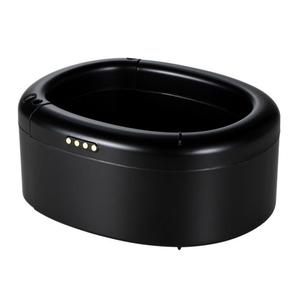
2024 Smart Bracelet with External SIM Card Slot
Dedicated standalone 4G/LTE cellular wrist terminal engineered with low-profile nano-SIM tray, active GPS positioning, and standalone data pipeline.
Product SpecificationsDirect from our Pingshan, Shenzhen assembly lines: medical-trend estimation sensors, micro-battery packaging, and full white-label companion integration ready for international brand deployment.
Dedicated standalone 4G/LTE cellular wrist terminal engineered with low-profile nano-SIM tray, active GPS positioning, and standalone data pipeline.
Product Specifications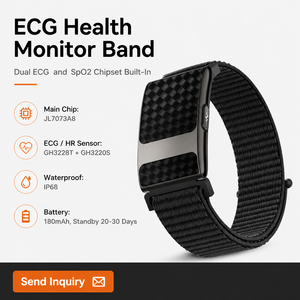
Continuous biometric strain monitor featuring discrete lead I dry-contact ECG electrodes, EDA galvanic stress detection, and zero-distraction telemetry.
Product Specifications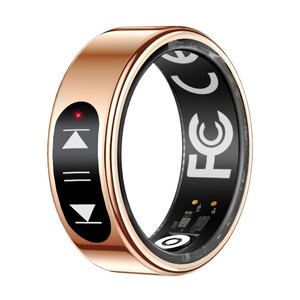
Polished aerospace titanium alloy ring featuring dual-wavelength PPG photoplethysmography, 25 Hz dynamic SpO2, sleep staging, and 5ATM water ingress seal.
Product Specifications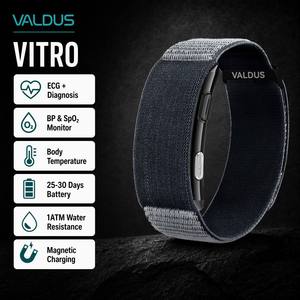
Next-generation Nordic BLE architecture with ultra-deep sleep states delivering 14-day tracking cycles, continuous arrhythmia alerts, and athletic telemetry.
Product Specifications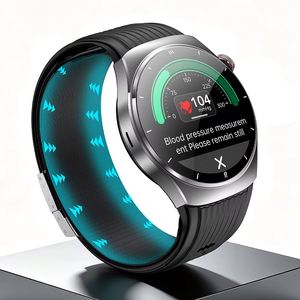
Integrated mechanical micro-airbag cuff providing physical oscillometric systolic and diastolic blood pressure measurements with clinical reference correlation.
Product Specifications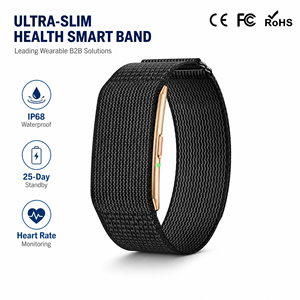
Sub-8mm slimline ergonomic form factor featuring anti-microbial woven fabric band, high-accuracy pulse oximetry, continuous sleep monitoring, and IP68 rating.
Product Specifications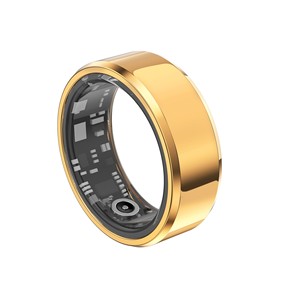
Precision ceramic inner casing with outer PVD metallic coating, integrated touch surface for media scrolling, flip-to-shoot camera gestures, and magnetic charging cradle.
Product Specifications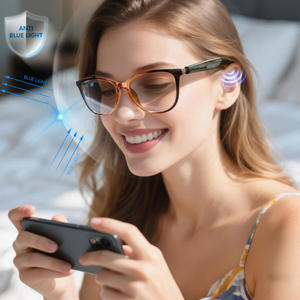
Open-ear directional acoustic transducers with dual beamforming microphones, native cloud LLM voice querying, UV400 polarized optics, and IP67 weather sealing.
Product SpecificationsA rigorous comparative structural analysis of tier-1 micro-wearable original design manufacturers, precision assembly hubs, and packaging foundries across East Asia.
The miniaturization of wearable electronics from smartwatches (1.4–2.0 inch form factors) to smart rings (sub-3mm thickness, inner diameters ranging from 16.5mm to 22.3mm across US sizes 6 to 13) has radically bifurcated the global manufacturing ecosystem. Consumer electronics brands seeking reliable ODM/OEM partners must navigate three distinct organizational models: mega-cap electronics manufacturing services (EMS) conglomerates, dedicated high-precision micro-wearable foundries, and integrated hardware-firmware vertical solution providers.
Unlike smartwatch assembly, which utilizes standard surface mount technology (SMT) onto rigid FR4 printed circuit boards followed by ultrasonic plastic welding or gasket screwing, smart ring manufacturing demands 3D flexible printed circuits (FPC) curved around cylindrical resin mandrels, vacuum resin potting to achieve 5ATM/10ATM water resistance without mechanical fasteners, and non-destructive battery soldering. The table below delineates the operational capabilities of the leading 10 manufacturing archetypes dominating smart ring production in Shenzhen, Huizhou, Taiwan, and Southeast Asia.
| Manufacturer Archetype | Core Micro-Engineering Capability | Encapsulation & Water Ingress | Firmware / BLE Architecture | Typical Production MOQ |
|---|---|---|---|---|
| Smart Wear Works (Shenzhen Sww Industrial) | Vertical in-house 3D-FPC potting, titanium/ceramic hybrid CMF, medical PPG calibration | 5ATM / IP68 Seamless medical-grade epoxy encapsulation | Proprietary Nordic nRF52/53 BLE stack + White-label customizable iOS/Android App | 500 – 1,000 pcs (Flexible pilot to mass scale) |
| Tier-1 Mega EMS (Foxconn / Luxshare Scale) | Automated ultra-high volume SMT, proprietary micro-coaxial laser assembly | Industrial multi-shot injection molding with automated optical inspection | Custom client-developed silicon and proprietary OS stacks | 50,000 – 100,000 pcs per production run |
| Specialized Optical Medical Wearable Hubs | Clinical multi-wavelength PPG array tuning, micro-ECG contact engineering | Biocompatible medical elastomer overmolding | FDA Class II / CE MDR clearing data pipelines with local processing | 5,000 – 10,000 pcs with validation audits |
| Ceramic & Jewelry Luxury Foundries | Zirconia (ZrO2) micro-sintering, diamond-like carbon (DLC) PVD coatings | Hermetic vacuum epoxy bonding with zero air-bubble tolerance | Standard BLE peripheral stacks with primary focus on industrial CMF | 2,000 – 5,000 pcs |
| Audio & Micropump Precision Assemblers | Sub-miniature mechanical air valves, tactile micro-switches, piezoelectric buzzers | O-ring micro-mechanical sealing with structural silicone seals | Real-time oscillometric blood pressure algorithm engines | 3,000 – 5,000 pcs |
| Rapid White-Label Turnkey Wholesalers | Standard off-the-shelf plastic chassis, generic sensor integration | Standard UV-curable resin bonding with basic splash resistance (IPX7) | Generic public companion applications (shared multi-brand servers) | 100 – 500 pcs (Stock catalog configuration) |
| Taiwanese Micro-Semiconductor Packaging Labs | System-in-Package (SiP) wafer micro-dicing, die-level wire bonding | Parylene nano-coating and thermoset transfer molding | Bare-metal RTOS microkernel firmware integration | 20,000+ pcs for bespoke silicon tooling |
| Automotive & Industrial Sensor Foundries | Heavy-duty thermal and galvanic shock-tested sensor assemblies | Rugged polyurethane casting resistant to industrial chemical exposure | Industrial telemetry with proprietary encrypted mesh options | 5,000 pcs |
| NFC Payment & Secure Element ODMs | Ferrite shielding integration, EMVCo certified ring antenna coils | High-pressure injection molding preventing RF de-tuning | Java Card OS, secure element (SE) tokenization firmware | 5,000 – 10,000 pcs (Subject to banking approvals) |
| Gesture & IMU Spatial Tracking Specialists | 6-axis sub-micro IMU integration with low-latency touch capacitive layers | Ultrasonic weldable poly-carbonate structural rings | Machine-learning gesture recognition algorithm cores running at edge | 3,000 pcs |
Miniaturization requires trade-offs between tooling amortization and design flexibility. SiP encapsulates the MCU, BLE radio, PMIC, and accelerometer into a single epoxy puck under 6x6mm, but requires six-figure tooling outlays. Advanced 3D-FPC bending around cylindrical ring formers offers agile modification of antenna traces and optical sensor geometry at viable mid-tier MOQs.
Standard prismatic lithium-ion batteries cannot conform to finger radiuses without dangerous mechanical stresses. Modern smart ring foundries utilize curved lithium polymer cells ranging from 14 mAh to 22 mAh. Maintaining high discharge cycle efficiency and preventing thermal runaway within 0.3mm of human tissue demands proprietary battery protection circuitry (BPC) architectures.
Fingers present dense capillary micro-vascularization superior to the wrist for pulse oximetry, but finger movement and skin contact impedance fluctuate wildly. Foundries must utilize multi-spectral green (525nm for heart rate/HRV) and red/infrared (660nm/940nm for SpO2) LED-photodiode topologies driven at adaptive frequency rates to balance clinical accuracy with sub-milliamp battery conservation.
Essential market transitions, technological disruptions, and strategic supply chain pivots brand owners must factor into multi-season product planning.
By 2027, over 40% of smart ring RFQs will require passive NFC transaction capability. Procurement teams must verify that factories have certified cleanrooms capable of embedding micro-coaxial antenna loops alongside metallic titanium shells without detuning RF resonance across Visa, Mastercard, and EMVCo standards.
The consumer wellness market is aggressively shifting from basic pedometers to predictive metabolic insights. Sourcing managers are prioritizing ODM platforms that feature skin temperature thermistors (±0.05°C precision) and advanced PPG algorithms capable of tracking relative peripheral blood volume trends and nocturnal glucose volatility estimation.
Skin irritation liabilities remain a critical return driver in wearable hardware. Procurement trends show a decisive exit from cheap electroplated alloys toward bio-inert medical resins (USP Class VI), diamond-polished monocrystalline ceramic inner rings, and grade-5 titanium vacuum physical vapor deposition (PVD) outer sleeves.
Global privacy regulations (GDPR, CCPA, HIPAA-adjacent wellness data rules) mean buyers can no longer rely on unbranded public apps that funnel client biometrics to unknown overseas servers. Brands require full-stack ODM partners who provide white-label client applications with multi-tenant AWS/Azure data sovereignty.
A technological review mapping component transitions from legacy first-generation rings to the cognitive, self-charging nodes of 2030.
Rigid architectures, single-color green optical sensors, 3-axis basic accelerometers, and 2-day battery lifetimes. Encapsulation relied on mechanical seals susceptible to water degradation upon hot shower steam exposure. Firmware was restricted to basic step and raw heart rate logging.
Multi-spectral PPG arrays, high-frequency continuous sleep staging (REM, Deep, Light), medical-grade temperature sensing, capacitive touch outer surfaces for media/camera control, 5ATM seamless resin potting, and ultra-compact magnetic charging cradles reaching 5 to 7 days per charge cycle.
Edge micro-neural networks (tinyML) embedded on 1nm BLE silicon for on-device gesture spatial typing for AR glasses, continuous micro-galvanic stress monitoring, sub-dermal acoustic vascular pressure sensing, and thermal energy harvesting eliminating weekly manual cord charging.
Shenzhen Sww Industrial Development Co., Ltd: Over seven years of dedicated smart wearable research, industrial precision tooling, and global regulatory compliance.
From 3D structural mechanical design and mold tooling to proprietary firmware flashing and optical tuning, we manage every production phase under one roof in Pingshan, eliminating the communication friction and IP leakage associated with fragmented broker networks.
Our production pipelines strictly adhere to European CE (RED, LVD, EMC), United States FCC Part 15 subpart C RF regulations, RoHS hazardous substance restrictions, and TELEC certifications for Japan, ensuring hassle-free customs clearance and compliant market distribution.
Unlike factories relying on generic public apps, we engineer dedicated white-label companion mobile applications for iOS and Android, offering customized UI themes, proprietary algorithm tuning, localized language translations, and sovereign cloud server integration.
Crucial commercial, technical, and regulatory clarity to accelerate engineering sign-offs and purchase order execution.
Minimum order quantities depend entirely on customization depth. For standard catalog models (such as our TK20 platform) with laser-engraved branding, bespoke packaging, and custom user manuals, production begins at 500 to 1,000 units. Full ODM developments requiring custom physical chassis tooling, proprietary SiP architecture, or unique CMF alloy finishes typically commence at 3,000 to 5,000 units to amortize specialized precision molds.
Human finger diameters require varied tooling. Standard smart ring product lines cover US sizes 6 through 13. Each size requires an independent internal resin mandrel and curved battery capacity variant (typically 14 mAh for size 6 to 22 mAh for size 13). We supply custom-branded plastic sizing kit boxes to your distribution centers, allowing retail customers to confirm fit prior to final hardware shipment.
No. In accordance with FDA and CE MDR regulatory boundaries, our smart rings, bracelets, and watches are classified as general lifestyle and fitness wellness products. Metric outputs—including heart rate variability, SpO2 blood oxygen trends, sleep architectures, and micro-temperature fluctuations—are calibrated for wellness reference and trend monitoring. They are not intended to diagnose, treat, or prevent clinical diseases.
Smart rings cannot use mechanical O-rings or screws due to strict sub-3mm wall thickness limits. Our Pingshan factory employs a specialized vacuum-assisted low-pressure liquid resin injection process. The inner electronics core and 3D-FPC are encapsulated in medical-grade biocompatible epoxy, achieving complete hermetic sealing certified for 5ATM hydrostatic submersion (50 meters equivalent static pressure).
For pre-engineered catalog platforms customized with laser-etched branding and packaged in bespoke retail boxes, working functional samples dispatch within 7 to 10 business days; mass production completes in 20 to 28 calendar days. Bespoke ODM projects involving custom structural industrial design, new injection tooling, and dedicated Bluetooth companion software typically require 60 to 90 days from industrial brief sign-off to golden sample verification.
Yes. More than 60% of our multi-year brand partners initiated their sourcing programs via wholesale trial orders of catalog-ready platforms to test regional consumer demand. Once sales velocity was validated, we transferred their account to private-label OEM, integrating customized CMF outer sleeves, proprietary packaging, and independent cloud software without changing hardware supplier or re-auditing factory quality.
Connect directly with our Shenzhen engineering and procurement directors to evaluate 3D tooling files, micro-electronic BOM options, and custom companion app architectures.