The Paradigm Shift in Sleep Telemetry: From Wristbands to Digital Rings
Why modern hardware brands, digital health providers, and consumer electronics distributors are transferring capital from display-heavy smartwatches to screenless, unobtrusive biomedical smart rings.
The global sleep health market has reached an inflection point. While initial consumer wearables focused on actigraphy-derived wrist tracking, modern clinical sleep research demonstrates that the palm-side digital arteries of the proximal phalanx (fingers) yield a significantly higher signal-to-noise ratio for Photoplethysmography (PPG) than the dorsal wrist. With the radial artery at the wrist shielded by dense muscle, tendon bundles, and dynamic skin layers, motion artifacts corrupt nocturnal pulse wave analysis. Conversely, the digital arteries of the finger are superficial and surrounded by capillary-rich vascular beds, enabling sub-millivolt optical telemetry capable of clinical-grade Heart Rate Variability (HRV), Peripheral Capillary Oxygen Saturation (SpO2), and autonomic stage differentiation (REM, Deep, Light, Wakefulness).
For electronic sourcing directors, private-label brands, and OEM enterprise buyers, entering the smart ring category requires navigating dense structural engineering hurdles: 3D conformal battery geometries, high-density flexible printed circuits (FPC), hypoallergenic resin/titanium hermetic encapsulation, and strict Bluetooth Low Energy (BLE 5.2/5.4) RF tuning within an all-metal annular shell. This procurement report breaks down the top 10 global manufacturers, analyzes underlying hardware architectures, and provides a turnkey sourcing roadmap.
Compound Annual Growth Rate (CAGR) for biometric smart rings through 2030.
Average aerospace-grade chassis weight demanded by modern sleep consumers.
Target water-resistance standard achieved via seamless epoxy-resin potting.
Shenzhen factory automated assembly output powering international OEM deliveries.
Catalog Ready & Custom OEM/ODM Production Models
Explore our cross-category smart wearables engineered for global retail, private labeling, and custom enterprise deployments.
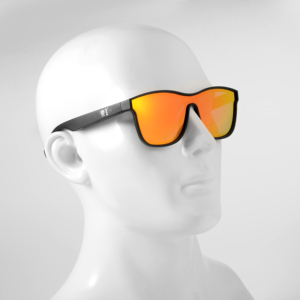
Fashion IP5 Waterproof Open Ear Bone Conduction Audio Sunglasses
Polarized UV protection paired with bone conduction transducers. Ergonomic acoustic architecture for active outdoor audio.

Open Ear Sports Audio Glasses BT5.4 Magnetic Charging
Low-latency Bluetooth 5.4 connectivity, UV400 lenses, and dual directional acoustic chambers optimized for running and cycling.
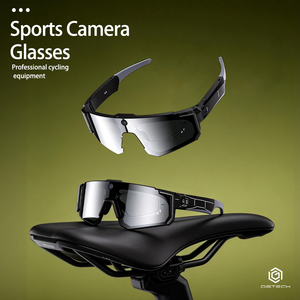
Custom Logo Smart AI Glasses 1080P HD Video Assistant
Full-function voice AI assistant integration with integrated 1080P CMOS camera module. IPX5 water resistance for enterprise programs.
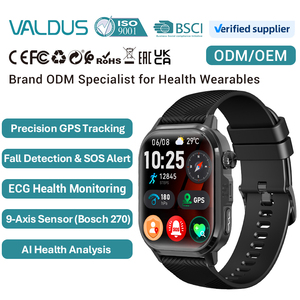
VALDUS 2026 Private Label AMOLED ECG GPS Smart Watch
Medical-inspired ECG waveform capture, PPG continuous cardiac tracking, integrated multi-constellation GPS, and IP68 enclosure.
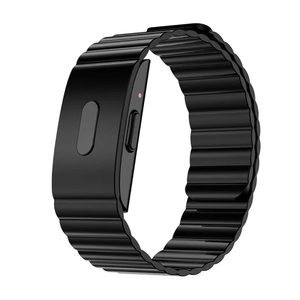
Smart Wristband with Open Health Tracking SDK Support
Turnkey firmware with comprehensive BLE API/SDK documentation for proprietary corporate wellness and clinical telemonitoring platforms.
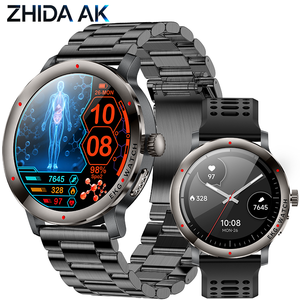
KC102 AMOLED Sleep & Blood Oxygen Smart Watch
Scientific polysomnography-modeled sleep stage classification, continuous blood oxygen saturation tracking, and stress index scoring.
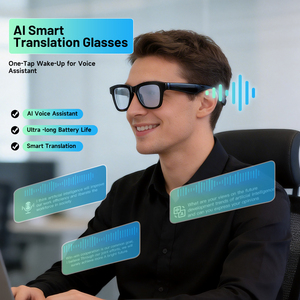
Custom Sports Audio AI Glasses with Voice Calling
Ultra-lightweight aerodynamic frames with beamforming microphones, voice assistant triggers, and sweatproof structural engineering.
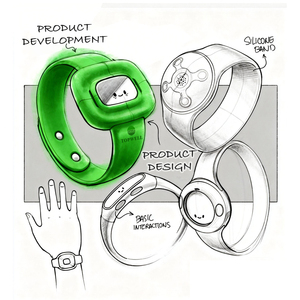
Custom Wearable Design CAD Hardware Smart Band
End-to-end ODM industrial design service: mechanical CAD modeling, rapid SLA prototyping, custom tooling, and bespoke SMT production.
Top 10 Sleep Tracking Smart Ring Manufacturers & Suppliers (2026 Matrix)
A comprehensive review of the global smart ring landscape, contrasting closed consumer ecosystems with open B2B OEM/ODM manufacturing pipelines.
When evaluating a manufacturing partner for sleep-tracking smart rings, hardware procurers must distinguish between closed consumer brand-manufacturers (who monetize through recurring software paywalls) and agile White-Label OEM/ODM Contract Manufacturers capable of offering open SDK access, zero-subscription firmware, custom tooling, and localized cloud compliance. Below is the audited breakdown of the top 10 market leaders.
| Manufacturer / Brand | HQ Location | Sensor Architecture | Primary Sourcing Model | App Ecosystem / SDK | B2B Customization Flexibility |
|---|---|---|---|---|---|
| 1. Smart Wear Works (Shenzhen Sww) | Shenzhen, China | Multi-Wavelength PPG + Dual NTC + 3-Axis IMU | OEM / ODM Direct Factory | White-label app + Open Native SDK (iOS/Android) | Full (Custom ID, CMF, Laser Logo, Firmware, Cloud) |
| 2. Oura Health Oy | Oulu, Finland | Green/Red/IR PPG + NTC Thermistor + 3D Accel | Closed D2C Ecosystem | Proprietary Oura App (Subscription-gated) | Enterprise B2B API only (No white labeling) |
| 3. Ultrahuman Ring AIR | Bangalore, India | Photoplethysmography + Non-contact Temp | Brand Retail / Distribution | Proprietary Ultrahuman App | Minimal (Wholesale retail distribution only) |
| 4. RingConn (Guangdong N丸) | Zhongshan, China | Dual-PPG Sensors + 4 Temperature Sensors | D2C & Commercial Wholesale | Free native consumer app | Restricted to bulk retail distribution |
| 5. Circular Ring | Paris, France | Red & Infrared PPG + Haptic Motor | Consumer Brand Platform | Circular App (Cloud analytics) | Limited co-branding; high software dependencies |
| 6. Movano Health (Evie Ring) | Pleasanton, USA | Medical-oriented PPG + Pulse Rate | Proprietary Clinical / D2C | Evie App (FDA clearance trajectory) | Strictly controlled clinical enterprise trials |
| 7. SLEEPON (Go2Sleep) | Shenzhen, China | Reflective Optical PPG + Capillary SpO2 | OEM & Medical Distribution | Sleepon SDK & Enterprise Portal | Moderate (Custom SDK integration for clinics) |
| 8. Wellue / Viatom Technology | Shenzhen, China | Dual-wavelength SpO2 + Vibration Alarms | OEM / ODM Medical Hardware | ViHealth App & Cloud API | High for medical OEM, moderate for lifestyle |
| 9. Ultrahuman / B2B Solutions | London / Global | Metabolic Biomarker + Sleep PPG | Corporate Wellness SaaS | Corporate dashboard access | Firmware locked to centralized ecosystem |
| 10. Topwell Wearables Division | Shenzhen, China | Standard Dynamic Optical Heart Rate | ODM Hardware Manufacturer | Standard public companion app | High structural customization, variable app support |
*Matrix compiled from technical teardowns, manufacturer factory visits, FCC certification filings, and published B2B commercial terms (Updated 2026).
Sleep Architecture Telemetry: Hardware, Optoelectronics & Algorithms
A technical teardown of the physical and algorithmic infrastructure required to monitor polysomnographic phases inside a 5 mm annular form factor.
1. Dual-Wavelength PPG Micro-Optics
Unlike smartwatches that primarily pulse 525nm green LEDs for motion-resistant heart rate during exercise, sleep smart rings utilize dual-wavelength emitter arrays: 660nm (Red) and 940nm (Infrared).
- IR penetration reaches deep digital subcutaneous arterioles.
- Differential absorption ratios quantify oxygenated vs deoxygenated hemoglobin.
- Nocturnal sampling rates adjust from 25Hz to 100Hz on detection of sleep onset.
2. Digital NTC Thermistor Arrays
Core temperature drops naturally by 0.5°C to 1.0°C as circadian melatonin levels surge. Precision sleep tracking requires direct epidermal contact thermometry.
- Medical-grade NTC thermistors offer ±0.05°C thermal resolution.
- Detects thermal dissipation events indicating entry into NREM Slow-Wave Sleep.
- Correlates circadian phase shifts and female ovulation cycles.
3. Ultra-Low-Power Edge DSP & BLE
Operating within an ultra-constrained 15mAh to 22mAh curved lithium polymer battery demands an edge computing architecture with rigorous power throttling.
- Nordic Semiconductor nRF52/nRF53 or Ambiq Apollo4 microcontrollers.
- Arm Cortex-M4F core with Sub-10μA/MHz dynamic execution efficiency.
- On-chip machine learning classifies motion artifacts before raw data buffers to flash.
The 4-Stage Sleep Telemetry Pipeline
Pulse Wave Filtration
Raw optical signals undergo digital band-pass filtering (0.5Hz–5.0Hz) to remove high-frequency sensor noise and low-frequency baseline respiratory wander.
Inter-Beat Interval (IBI)
Peak detection algorithms calculate the millisecond timing between consecutive R-wave equivalent pulses, extracting true beat-to-beat variability.
HRV Metric Derivation
Mathematical transforms extract time-domain (rMSSD, SDNN) and frequency-domain (LF/HF ratio) metrics signaling parasympathetic autonomic tone.
Machine Learning Staging
Random forest or recurrent neural networks combine movement, HRV, and skin temperature to classify epochs into Deep, REM, Light, or Wake cycles.
Emerging Procurement & Manufacturing Trends for 2026–2030
Key technological and commercial developments every hardware buyer and distributor must account for prior to signing long-term OEM contracts.
1. Elimination of Mandatory Subscriptions
Consumer weariness over recurring monthly app fees (such as Oura's $5.99/month tier) is opening massive opportunities for private labels. Retail buyers demand "Buy Once, Own Forever" models where raw biometric processing is included out of the box, with options for value-added corporate tele-health analytics.
2. Zero-Trace Titanium CMF & Bio-Resin
Supply chains have transitioned away from scratch-prone stainless steel to aerospace-grade Grade 5 Titanium (Ti-6Al-4V) outer shells paired with medical-grade, non-allergenic transparent epoxy resin inner moldings. Physical Vapor Deposition (PVD) coatings now achieve durable Matte Black, Rose Gold, and Mirror Silver finishes.
3. Open API & White-Label App Infrastructure
Corporate wellness operators, remote patient monitoring (RPM) platforms, and insurance providers require direct BLE SDK access and webhooks rather than siloed consumer apps. Modern OEM suppliers must deliver turnkey iOS/Android source code and open MQTT/REST cloud pipes for GDPR/HIPAA-compliant hosting.
4. Solid-State Curved Battery Chemistries
Traditional stacked-layer batteries suffer from energy degradation and safety hazards when curved into ring casings. The leading procurement wave utilizes solid-state electrolytes and custom arc-shaped LiPo cells, delivering 5 to 7 full days of continuous 24/7 telemetry on a single 45-minute magnetic pogo-pin or wireless charge.
5. Multi-Market Regulatory Conformity
With smart rings blurring the line between fitness trackers and medical screening diagnostics, procurers prioritize factories with proven testing regimes. Radio equipment directive compliance (RED, FCC ID, TELEC) alongside material safety directives (RoHS, REACH, California Prop 65) is non-negotiable for Tier-1 retailers.
6. High-Speed Sizing Kit Fulfillment Chains
Unlike adjustable smart watch straps, rings require precise finger circumference fit (US Sizes 6 to 13) to ensure optical contact without vascular occlusion. Successful brands demand factory-packaged white-label plastic sizing sample kits shipped ahead of high-ticket electronics orders to suppress return rates below 3%.
Why Global Tech Brands Choose Smart Wear Works (Shenzhen Sww)
Combining Shenzhen's rapid hardware iteration speed with stringent international quality systems since June 2019.
Operated by Shenzhen Sww Industrial Development Co., Ltd, Smart Wear Works maintains an integrated 1,000 m² cleanroom assembly facility in the high-tech hardware hub of Pingshan, Shenzhen. Staffed by 50+ specialized hardware, firmware, and quality assurance engineers, our facility delivers a monthly output of over 30,000 precision wearable units.
Rather than functioning as a trading middleman, our direct-factory engineering model coordinates industrial mechanical modeling, optical trace simulation, SMT patch management, CNC titanium machining, and ultrasonic resin sealing under one roof. This guarantees that your custom firmware flags, boot logic, packaging, and companion apps are delivered on schedule with batch-to-batch repeatability.
The Factory Direct Advantage
Zero hand-off loss between external design shops and manufacturing plants. Direct dialogue with embedded firmware architects.
From inner laser engraving and bespoke anodized Pantone rings to white-label companion mobile apps published under your company developer account.
Our core European, Japanese, and North American brand partners have maintained uninterrupted quarterly production lines for over 4 consecutive years.
Accelerate Your Smart Ring Launch in 2026
Consult directly with our Shenzhen hardware engineers. Receive full mechanical CAD specs, SMT sensor schematics, white-label app demos, and precise tooling estimates within 24 hours.
Frequently Asked Sourcing & Engineering Questions
Authoritative technical, commercial, and operational answers for B2B buyers preparing for smart ring mass production.
1. How does a smart ring achieve reliable RF connectivity despite having a complete metal outer casing?
Enclosing electronics inside a continuous titanium or stainless steel loop creates a Faraday cage that severely attenuates 2.4 GHz Bluetooth RF radiation. Smart Wear Works solves this by engineering a specialized micro-gap antenna slot filled with non-conductive structural resin, or by strategically routing the inverted-F antenna (IFA) along the inner biocompatible transparent resin wall that rests against the finger. This ensures dependable transmission up to 10 meters with minimal packet loss while maintaining 5ATM water resistance.
2. What is the standard Minimum Order Quantity (MOQ) for custom private-label smart rings?
For existing structural platforms (e.g., our TK20 series) featuring customized laser-engraved logos, personalized retail packaging, and customized BLE broadcast names, the standard MOQ starts at 500 to 1,000 units. For complete ODM programs requiring brand-new exterior tooling, bespoke CMF molds, or dedicated FPC layouts, production runs generally start at 3,000 to 5,000 units to amortize high-precision CNC tooling and mold validation expenses.
3. Are biometric sleep and SpO2 readings considered medical-grade diagnostics?
Unless your organization specifically applies for and achieves 510(k) FDA clearance or CE Class IIa Medical Device certification, all readings should be framed strictly as consumer health, fitness, and general wellness indicators. While our dual-wavelength 660nm/940nm sensors achieve high statistical correlation with medical polysomnography (PSG) and clinical pulse oximeters, marketing copies must clearly communicate that devices are intended for lifestyle insight rather than disease diagnosis.
4. How are smart ring sizing programs managed across cross-border e-commerce channels?
Because rings cannot be adjusted like watch straps, sending customers the wrong size leads to immediate returns and battery degradation. Standard commercial protocol involves a two-phase purchase funnel: the customer first receives an inexpensive plastic sizing kit containing dummy rings from size 6 to 13. Once they confirm their finger size after 24 hours of wear (allowing for natural finger swelling throughout the day), the corresponding electronic ring SKU is dispatched.
5. What is the typical shelf-life of miniature curved ring batteries during transit and warehousing?
Curved 18mAh–22mAh lithium-polymer cells have very low self-discharge rates (approximately 2–3% per month at 20°C) when placed in firmware-enabled "Deep Ship Mode." In this mode, quiescent current draw is constrained below 1.5 microamperes, ensuring the ring can sit in warehouse inventory for 6 to 9 months and awaken instantly upon being docked on its magnetic charging cradle.
6. Can we deploy our own proprietary companion app rather than your standard software?
Yes. We offer three software tiers: (1) Turnkey white-labeling of our existing app with your custom brand identity, typography, and color schemes; (2) Open native mobile SDKs (Swift for iOS and Kotlin for Android) with comprehensive API documentation for direct Bluetooth communication; and (3) Cloud-level webhooks and RESTful endpoints for enterprise tele-health dashboard synchronization.
7. What quality control milestones occur before international shipment dispatch?
Every single production unit passes through four stringent testing stations: (1) Automated Optical Inspection (AOI) of the SMT boards; (2) Optical test fixtures simulating diverse skin tones and perfusion indices; (3) 5ATM hyperbaric chamber water-immersion testing; and (4) 72-hour continuous battery charge-discharge cycle aging to eliminate early component mortality.
8. What certifications are provided to guarantee smooth customs clearance?
We provide full documentation dossiers for European Union conformity (CE RED, RoHS, REACH), United States regulatory adherence (FCC Part 15C, California Prop 65), and Japan wireless compliance (TELEC/MIC). Battery transport safety dossiers include UN38.3 test reports, 1.2m drop test verifications, and MSDS sheets for air and ocean freight clearance.
Ready to review factory spec sheets, request engineering samples, or verify tooling schedules?
Get Catalog