Fitness Band
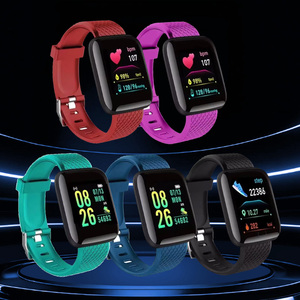
From ultra-slim biometric bands and PPG health rings to screenless ECG telemetry and AI voice optics, our catalog platforms offer battle-tested firmware, turnkey toolings, and flexible NRE customization frameworks.
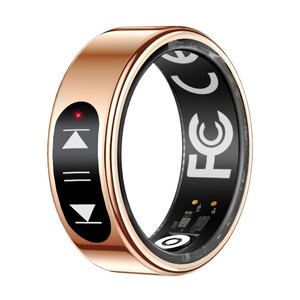
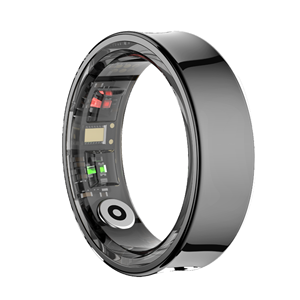
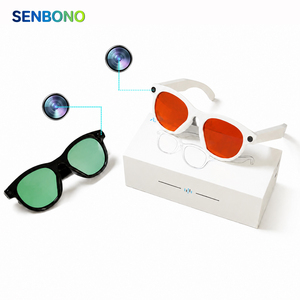
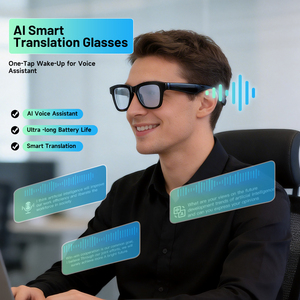
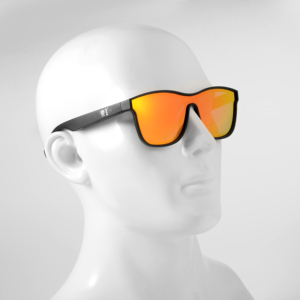
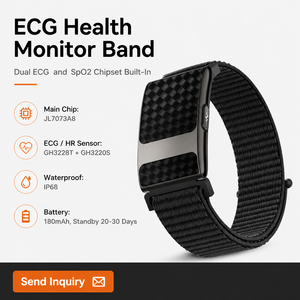
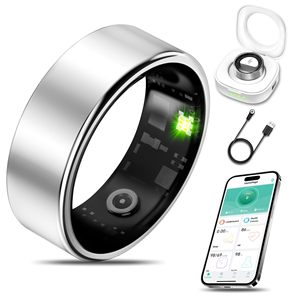
We operate a fully integrated wearable ODM infrastructure in Pingshan District, Shenzhen. Our manufacturing architecture eliminates communication latency between industrial designers, RF engineers, firmware architects, and tooling specialists.
Every smart bracelet batch undergoes a strict multi-tier quality assurance protocol. This includes 5ATM/IP68 air-pressure decay leakage tests, drop-shock resistance simulations, 48-hour continuous sensor thermal burn-in, and Bluetooth RF spectrum emission tests via Rohde & Schwarz analyzers.
Unlike trading houses that rely on generic public-board solutions, our dedicated embedded software team customizes Bluetooth Low Energy (BLE 5.2/5.3/5.4) stacks, RTOS scheduler algorithms, and specialized digital signal processing (DSP) filters for accurate PPG noise rejection.
Accelerate your go-to-market speed with our white-label iOS and Android applications. We deliver clean source code or pre-compiled binaries featuring custom UI skinning, proprietary branding, GDPR-compliant cloud servers in Frankfurt/AWS, and modular Bluetooth communication SDKs.
The global smart band ecosystem has graduated from simple 3-axis pedometer wristbands to micro-laboratory health monitors. Understanding these architectural shifts enables procurement executives to source hardware that stays competitive across multi-year cycles.
Legacy smart bracelets relied on single green-LED (525nm) PPG sensors, which suffer severe motion artifacts during vigorous exercise and show reduced signal-to-noise ratios across varied skin tones. Contemporary ODM architectures integrate multi-wavelength optical arrays incorporating Green, Red (660nm), and Infrared (940nm) emitters combined with dual-channel photodiodes.
By measuring the differential absorption ratios between oxygenated and deoxygenated hemoglobin, our newest sensor modules calculate peripheral capillary oxygen saturation (SpO2) at 25 Hz sampling rates. Concurrently, ambient light sensors (ALS) dynamically regulate emitter current between 2 mA and 20 mA, preventing optical saturation while cutting battery drain by up to 35%.
The wristband market has bifurcated into two distinct design philosophies: distraction-free athletic recovery bands (screenless form factors such as our ECG Health Band) and high-density AMOLED smart trackers. Screenless trackers prioritize uninterrupted biometrics, utilizing high-density textile bands with zero screen glare, yielding continuous 10-day battery life on a single 110 mAh cell.
Conversely, visual smart bracelets utilize 1.47-inch to 2.2-inch flexible 3D curved AMOLED displays with on-cell capacitive touch, delivering 450+ nits luminance and 60 fps refresh rates. Power consumption is mitigated via ultra-low-power microcontrollers (e.g., Ambiq Apollo4 Plus or Nordic nRF5340) featuring dedicated 2.5D GPU engines and sub-microampere deep sleep states.
Cloud-dependent health analysis creates latency and privacy vulnerabilities. Our ODM roadmaps deploy TinyML models directly onto the bracelet’s Cortex-M4/M33 core. These quantized on-device neural networks analyze real-time Heart Rate Variability (HRV) metrics, including root mean square of successive differences (RMSSD) and Standard Deviation of NN intervals (SDNN).
This local compute capability allows immediate alerts for acute autonomic nervous system stress, sleep apnea indicators, and premature atrial contractions without requiring persistent smartphone pairing, drastically reducing radio payload sizes and preserving battery longevity.
Water ingress remains the leading cause of warranty return rates in consumer wearables. Standard double-sided adhesive tapes fail under hot-water shower expansion and chlorine exposure. Our factory utilizes multi-shot liquid silicone rubber (LSR) overmolding combined with structural UV-curable structural bonding adhesives.
This precision mechanical packaging ensures IP68 and true 5ATM (50-meter hydrostatic pressure) waterproof endurance. Furthermore, magnetic pogo-pin charging docks are coated with electroplated 30u" gold-nickel alloys to eliminate electrolytic galvanic pitting caused by acidic human perspiration during intense training.
| Architecture Tier | Typical Processing MCU | Sensor Configuration | Battery Capacity & Cycle | Ideal Market Application |
|---|---|---|---|---|
| Entry Fitness Trackers | Realtek RTL8762 / Dialog DA1469x | 3-Axis G-Sensor + Green PPG (8-bit ADC) | 90–120 mAh / 5–7 Days | High-volume promotional, mass-market retail |
| Advanced Health Bracelets | Nordic nRF52840 / Goodix GR5515 | 6-Axis IMU + Multi-Wavelength PPG + Temp | 140–180 mAh / 7–10 Days | Sports fitness brands, corporate wellness |
| Screenless Recovery Bands | Ambiq Apollo4 Lite / Nordic nRF5340 | Bio-impedance ECG + Dual Red/IR SpO2 + EDA | 110–150 mAh / 10–14 Days | Elite athletic telemetry, sleep science clinics |
| Hybrid AI Smart Wristwear | ARM Cortex-M33 Dual-Core + DSP Co-proc | PPG + Micro-speaker/Mic + NFC Access | 200–260 mAh / 3–5 Days (Calling) | Lifestyle tech brands, omnichannel retail |
For corporate buyers, consumer electronics importers, and private-label brand founders, sourcing wearables requires strategic foresight across supply chain consolidation, firmware sovereignty, and compliance barriers.
Procuring separate components from isolated PCBA houses, housing molders, and software developers creates accountability gaps whenever QA failures emerge. Leading retail brands now demand full-stack ODM partners who own tooling design, automated SMT lines, final assembly, and mobile software engineering under one roof, guaranteeing rapid root-cause analysis.
Global regulatory tightening—governed by European GDPR, California CCPA, and Japanese APPI—makes off-the-shelf Chinese public cloud apps a massive liability for Western retailers. Sourcing programs increasingly mandate proprietary cloud redirection, custom AWS/Google Cloud database connectors, and zero-PII (Personally Identifiable Information) storage options.
Experienced procurement officers recognize that saving $0.40 on inferior lithium polymer cells or cheaper optoelectronic sensors leads to catastrophic return rates (RMA > 4%) and brand-destroying online reviews. Savvy sourcing balances initial BOM investment against long-term lifecycle metrics: 500-cycle battery capacity retention (>80%) and zero firmware crash loops.
Clear answers regarding production lead times, NRE engineering investments, certification scopes, and OEM/ODM customizations directly from our Shenzhen engineering office.
Under our OEM (Original Equipment Manufacturer) framework, we produce smart bracelets based on our pre-engineered, tooling-validated hardware architectures. Clients customize surface CMF (Color, Material, Finish), laser-engraved logos, strap styles, startup boot animations, retail packaging boxes, and companion app skinning. This path provides the fastest time-to-market (3–5 weeks) with minimum order quantities (MOQ) starting as low as 500–1,000 units. In our ODM (Original Design Manufacturer) framework, we engineer custom solutions from ground zero: drafting industrial design (ID), engineering mechanical structures (MD), laying out multi-layer PCBAs, developing bespoke sensor algorithms, fabricating new injection molds, and handling international certifications. ODM cycles typically take 90–120 days from initial architectural sign-off to mass pilot run.
Our smart bracelets and health bands are engineered, certified, and categorized strictly as consumer lifestyle, fitness, and wellness telemetry devices. While our multi-wavelength optical PPG sensors and bio-impedance ECG circuits deliver clinical-grade signal stability and correlation coefficients (>95% Pearson correlation relative to 12-lead Holter monitors under resting baselines), they are not marketed as CE MDR Class IIa or FDA 510(k) diagnostic medical equipment. We advise brand owners to position marketing copy around athletic recovery, daily stress monitoring, sleep hygiene assessment, and general wellness awareness to maintain full regulatory alignment across Western import jurisdictions.
Shenzhen Sww Industrial Development Co., Ltd maintains an extensive compliance portfolio. Our standard production platforms are certified for CE (including RED Radio Equipment Directive, EMC, and LVD safety standards), FCC (Part 15C certification for unlicensed RF intentional radiators), RoHS 2.0 (hazardous substances limit conformance), and TELEC/MIC certification for the Japanese market. Furthermore, all silicone, fluoroelastomer, and TPU wrist straps comply with REACH Regulation (EC 1907/2006) for phthalates and skin-sensitization thresholds under California Proposition 65. Destination-specific testing reports from accredited test houses (SGS, TUV, Intertek) are provided alongside mass production documentation.
Battery safety is mission-critical. We exclusively integrate lithium-ion polymer cells containing dual-MOSFET integrated protection circuit modules (PCM) to defend against over-charge, over-discharge, and high-current short circuits. Every production batch of cells is sourced from audited tier-1 suppliers with valid MSDS (Material Safety Data Sheets), UN38.3 lithium battery transport testing certification, and 1.2-meter drop test packages. In our assembly facility, batteries undergo 72-hour static aging cycles prior to ultrasonic casing bonding to filter out infant mortality defects and micro-leakages.
Yes. Software sovereignty is a key competitive advantage. We provide complete white-label mobile app solutions (supporting both iOS and Android platforms) that your team can publish under your own Apple Developer and Google Play Console enterprise accounts. Our software engineers configure brand palettes, icons, onboarding flows, and multilingual localization (covering 24+ languages). For enterprise partners who already own a proprietary application, we provide documented Bluetooth Low Energy (BLE) peripheral API communication SDKs and JSON payload specifications, enabling your internal app development team to directly interface with our bracelet hardware.
For existing catalog platforms requiring OEM logo laser engraving, custom packaging, and custom firmware boot screens, golden pre-production samples are completed within 7–10 working days, with mass assembly executed in 20–25 working days. For full-scale ODM turnkey projects: Industrial Design (ID) and Mechanical 3D CAD modeling require 15–20 days; rapid functional SLA/CNC functional prototypes take 7 days; precision plastic steel tooling injection mold fabrication takes 35–45 days; T0/T1 trial shots and structural engineering validation require 10 days; mass production runs require 25–30 days following final sample sign-off.
For ODM projects requiring custom tooling and mechanical engineering, NRE fees are fully transparent and itemized (encompassing CNC master fabrication, steel tooling cavities, SMT fixture stencils, automated test jibs, and regulatory agency lab fees). Tooling ownership contracts stipulate that the physical molds belong 100% exclusively to the client upon full payment of NRE fees; molds will never be deployed for third-party production. Additionally, we provide NRE rebate programs where tooling expenses are reimbursed incrementally against future production volume milestones.
Discuss your technical specifications, sensor integration requirements, BOM budget constraints, and volume delivery schedules directly with our senior hardware and firmware engineering team in Pingshan, Shenzhen.