High-Performance OEM/ODM Smart Glasses Lineup
Production-validated platforms engineered for rapid SKU launch, private label branding, or ground-up custom electro-optical architectures.
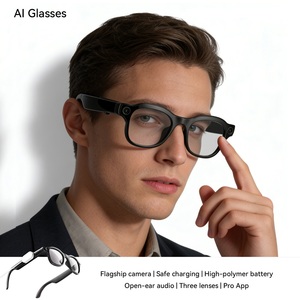
AI Smart Glasses with Camera & Audio Translation
- 1080P Ultra-Wide Optical Sensor
- Dual ENC Beamforming Voice Pickup
- Real-Time 130+ Language Matrix
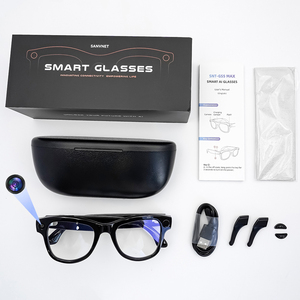
GS5 Max 8MP 4K Camera Glasses & 3600mAh Case
- 3600mAh High-Density Power Dock
- 4K Video Loop & EIS Stabilization
- Stereo Open-Ear Acoustic Engine
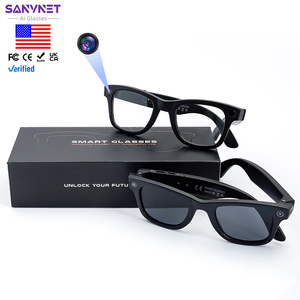
GS4 MAX Smart Eyewear with ChatGPT Integration
- Cloud AI Voice Natural Dialog
- 8MP Sensor / 1080P Instant Clip
- US Stock Ready / Fast Sample
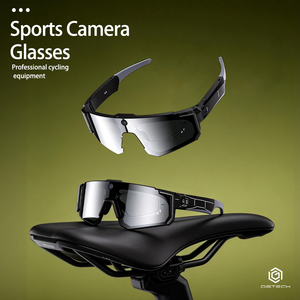
Custom Logo IPX-5 AI Eyewear 1080P HD Video
- IPX5 Weatherproof Nanocoating
- Full 1080P HD Video Recording
- Custom Silk-Screen & Laser Logo
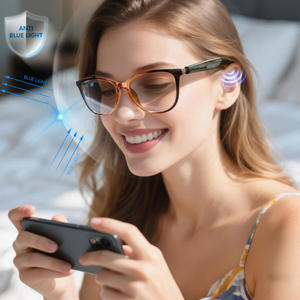
GT50 Ergonomic AI Music & Voice Calling Glasses
- Hi-Fi Spatial Open-Ear Audio
- 7-Day Standby / 6h Call Runtime
- Polarized UV400 Prescription Ready
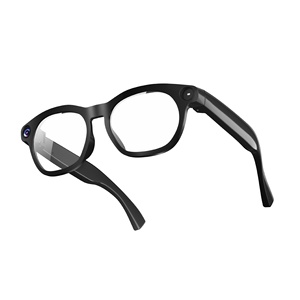
OEM 8MP HD Camera Eyewear Live Video Stream
- Low-Latency RTMP/WebRTC Streaming
- Privacy LED Interlock Architecture
- Custom SDK for iOS/Android
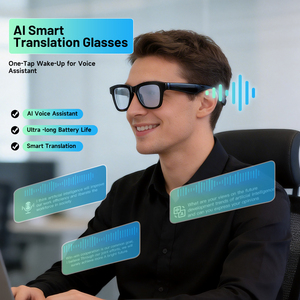
Sports Aerodynamic Audio Glasses & Mic Beam
- Anti-Wind Noise Tunnel Design
- TR90 Memory Polymer Frame
- Dual Battery Balance Architecture
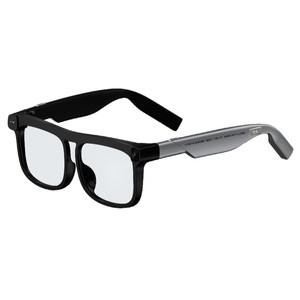
Voxnoos G01 12MP Sensor Visual AI Recognition
- On-Device Visual LLM Processing
- 12MP Sony Exmor Sensor Optics
- Full ODM Bespoke Tooling & App
Integrated Shenzhen Manufacturing Ecosystem
Operating as Shenzhen Sww Industrial Development Co., Ltd (Smart Wear Works) since June 2019, providing end-to-end hardware, firmware, and quality infrastructure under one accountable roof.
In-House Firmware & App Development
Unlike conventional traders who broker external software, our in-house engineering team develops the embedded FreeRTOS/Linux DSP firmware alongside white-label Android/iOS companion apps, guaranteeing zero downstream synchronization bugs.
Precision Acoustic & RF Cleanrooms
Smart glasses encounter acute space limitations. Our Pingshan facility features anechoic chambers and network analyzers to calibrate antenna matching (TRP/TIS) and cancel dipole phase cancellation in open-ear micro-speakers.
Over 4 Years Client Retention Average
Our core OEM clients in Germany, Japan, and the United States have renewed production contracts consecutively for over four years, demonstrating our strict batch-to-batch CMF tolerances and prompt warranty support.
Smart Eyewear Engineering & Architectural Evolution
A comprehensive technical breakdown of how edge computing, optical waveguide modules, and multimodal micro-LLMs are reshaping next-generation smart glasses.
1. On-Device Micro-NPU vs. Cloud LLMs
Early AI frames operated purely as dummy Bluetooth bridges, delegating every voice packet to cloud APIs, yielding high round-trip latency (over 1,800ms) and privacy concerns. The 2026 engineering frontier utilizes ultra-low-power edge NPUs (0.5 to 1.2 TOPS) within Qualcomm and BES chipsets. Wake-word detection, localized voice activity detection (VAD), and basic token classification run on bare metal, cutting voice response latencies below 380ms while maintaining stringent GDPR compliance.
2. Spatial Audio Beamforming & Reverse Dipole Leakage
Open-ear listening often suffers from private audio spill in quiet office environments. Our acoustic laboratory utilizes dual 1506 micro-transducers with phase-inverted secondary vents. By broadcasting an anti-phase soundwave 180 degrees outwards, acoustic leakage is suppressed by over 18dB past a 40cm radius, delivering rich private phone calls and immersive stereo fidelity without physically occluding the ear canal.
3. Micro-Optics, Waveguides & Weight Sub-35g
The industry's greatest adoption barrier has been mass: historical prototypes weighed over 65g, leading to rapid nasal bridge fatigue. By migrating to high-modulus Grilamid TR90 polymer with internal magnesium-alloy heat spreaders, our newest OEM chassis weigh under 32g. Concurrently, diffractive optical waveguides with micro-OLED optical engines achieve 1,500 nits outdoor luminance with minimal power consumption.
| Evaluation Parameter | Legacy Audio Frames (2021–2023 Generation) | Current Multimodal AI Glasses (Standard 2025/2026 Batch) | Next-Gen Optical Waveguide ODM (Custom Roadmap 2026+) |
|---|---|---|---|
| Compute & DSP | Standard Bluetooth BT5.0 Audio SOC | Dual-Core DSP + Edge NPU (VAD & Keyword) | Quad-core Heterogeneous Wearable APU + NPU |
| Vision Capabilities | None (Audio and voice mic only) | 8MP–12MP Still / 1080P/4K EIS Recording | Dual Spatial Depth Cameras + Binocular Waveguide |
| AI Interaction | Siri / Google Assistant relay | LLM Dialogue (ChatGPT/Claude API) via App | Contextual Vision LLM (Real-Time Object ID) |
| Total Mass | 42g – 55g (Heavy temple arms) | 28g – 38g (Ergonomic mass balance) | 35g – 44g (Ultra-thin diffraction waveguide) |
| Battery Performance | 80–110mAh (3–4 Hours playback) | 140–220mAh + 3600mAh Dock (All-day) | Split-temple dual cell + high-voltage LiCoO2 |
Global Procurement Trends in AI Wearables (2025–2030)
Essential guidance for procurement directors, product managers, and enterprise importers navigating the expanding AI smart glasses market.
Convergence of Audio + Vision
Audio-only glasses are commoditizing rapidly. Retail buyers now demand hybrid form factors integrating discreet video, multi-language speech translation, and visual query assistance.
- High average selling price (ASP)
- Higher consumer retention
- Broader gifting & enterprise appeal
Stricter Global Privacy Laws
Customs and retail authorities in the EU, US, and Japan require visible recording indicators. We engineer physical LED circuits hardwired directly to the camera sensor power rail.
- Hardware-enforced privacy LED
- Full GDPR compliant local buffers
- Tamper-proof firmware logs
White-Label App Monetization
Enterprise buyers are leveraging customized companion apps to offer subscription tiers, specialized enterprise translation services, and proprietary corporate AI tools.
- Custom branding on iOS/Android
- API token balancing & server choice
- SDK access for custom ERP hooks
Charging Case Integration
Consumers reject cable clips. High-capacity charging docks (up to 3,600mAh) styled like premium leather cases are becoming the baseline procurement requirement for commercial success.
- Up to 10 full frame recharges
- Magnetic pogo-pin auto-seating
- USB-C Power Delivery compliant
Answers to Common B2B Sourcing Questions
Direct technical and commercial clarifications to accelerate your sourcing review and supplier verification process.
What is your minimum order quantity (MOQ) for custom private label orders?
For standard catalog inventory with silk-screen or laser-engraved logos, custom packaging, and branded startup firmware screens, our typical MOQ starts at 500 units. For full ODM projects requiring custom structural molds, custom PCB layouts, or unique industrial tooling, our tooling threshold is typically 2,000 to 3,000 units.
How do your AI smart glasses handle multi-language translation and latency?
Our translation pipeline combines on-device low-noise microphone arrays with high-throughput BLE 5.3 data channels connected to our cloud middleware. The cloud engine dynamically interfaces with high-availability LLMs (OpenAI, DeepSeek, Google Cloud Speech-to-Text). End-to-end translation latency is maintained between 400ms and 750ms under typical 4G/5G connections across 130+ dialects.
Can we replace optical sunglass lenses with prescription (Rx) lenses?
Yes. All of our front frame assemblies, notably the GT50, GS4 Max, and Voxnoos G01 lines, feature standard optical rim grooves engineered to accommodate cold-mount or heat-mount prescription lenses (single-vision, bifocal, and blue-light blocking lenses) cut by licensed opticians.
What certifications are verified for Western and Asian markets?
Our company maintains valid CE (RED, EMC, LVD), FCC-ID Part 15C, RoHS 2.0, and TELEC (MIC Japan) test reports from accredited laboratories (SGS, TUV). Complete technical construction files (TCF), battery UN38.3 test summaries, and MSDS safety documentation are provided for customs clearance.
How is video recording privacy preserved in consumer retail markets?
To comply with EU GDPR and North American privacy statutes, our camera-enabled frames incorporate an immutable hardware LED indicator. The indicator is physically wired in series with the camera sensor's VDD power circuit, making it impossible for custom firmware to disable the recording light during video capture.
What is your sampling turnaround time and mass production lead time?
Standard evaluation samples ship within 48 to 72 hours. Functional prototypes featuring laser logo mockups and customized companion test apps require 7 to 10 working days. Mass production lead times for standard 1,000–5,000 unit orders range from 25 to 30 calendar days following Golden Sample sign-off.
Ready to Launch Your Proprietary AI Eyewear Program?
Speak directly with our senior hardware engineers and optoelectronic specialists in Shenzhen. We will evaluate your technical requirements, clarify bill-of-materials (BOM) options, and prepare complete sample evaluation units.