Featured Smart Glasses & Intelligent Wearable Catalog
Direct factory production lines for OEM private labeling and high-volume B2B distribution. Fully supported with SDK access, firmware localization, custom industrial tooling, and low-latency cloud AI integration.
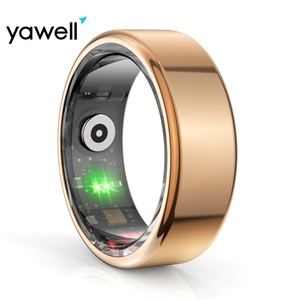
Yawell Custom OEM SDK Smart Finger Ring HRV Heart Rate Blood Oxygen Monitor R02
- Continuous PPG HRV & Blood Oxygen (SpO2)
- 5ATM Waterproof Medical-Grade Resin Inner
- Raw Sensor Data API & White-label App
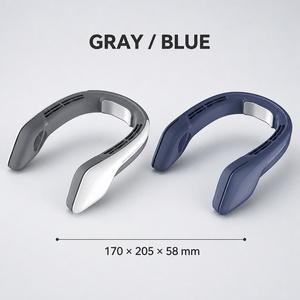
Foldable 2400mAh Wearable Leafless Silent Bladeless Cooling Portable Neck Fan
- 360-degree Surrounding Twin-Turbine Airflow
- Ultra-Quiet 25dB Aerodynamic Airducts
- 2400mAh Type-C Fast Rechargeable Cell
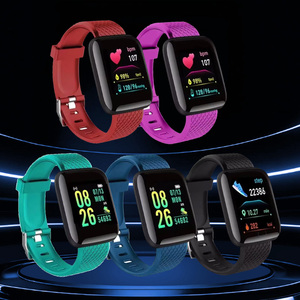
116 Plus Smart Bracelet Fitness Tracker Heart Rate Step Counter TPU Smart Watch
- High-Precision Optical Step & Pulse Engine
- Direct USB Plug-and-Charge Architecture
- Low-Cost High-Yield High Volume Promotional SKU
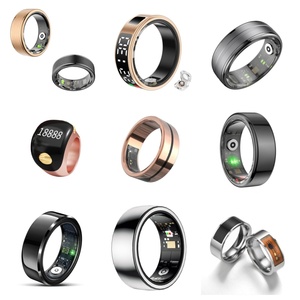
Purchasing Agent 1688 Waterproof Smart Swim Sleep Fitness Metal Smart Ring
- Titanium Alloy Outer Shell with PVD Coating
- Circadian Sleep Cycle & Body Temp Tracker
- Ultra-Low Energy BLE 5.2 Nordic Platform
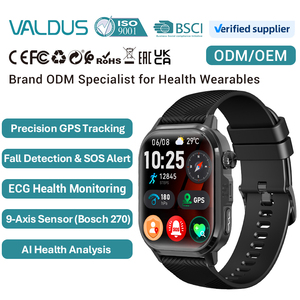
VALDUS Custom Logo AMOLED ECG IP68 CARDIGO GPS Smart Watch OEM ODM
- Single-lead ECG Waveform Generation Module
- High-Definition Retina AMOLED Display 60fps
- Integrated Multi-GNSS Satellite Positioning
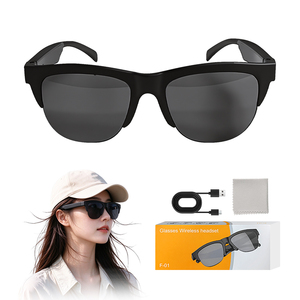
2026 Intelligent BT Audio Sunglasses Support Translation Open Ear AI Glasses
- 163-Language Low Latency AI Voice Engine
- Dual Beamforming Microphones with ENC
- Polarized UV400 TAC Shatterproof Lenses
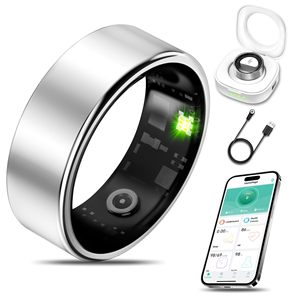
Smart Ring Unisex Intelligent Ring Remote Care Manufacturer Direct Sale
- Family Cloud Remote Telemetry & Alerts
- Skin Temperature & Heart Variability Tracking
- Hypoallergenic Lightweight Biocompatible Resin
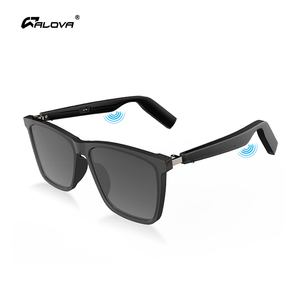
ALOVA Air Conduction Speaker Wireless Bluetooth Smart Audio Sunglasses
- Directional Sound Acoustic Chamber Design
- Zero In-Ear Fatigue Open-Ear Situational Safety
- Voice Assistant & Hands-Free HD Calling
Monthly Manufacturing Capacity of Wearables & Glasses
Shenzhen High-Precision Assembly & Optical Cleanroom Facility
Supported Real-Time Cloud AI Translation Languages & Dialects
Full CE, FCC, RoHS, and TELEC Export Regulatory Scope
Engineering Next-Generation AI Smart Glasses: Architecture, Acoustic Optimization, and Edge Intelligence
The global wearable device industry is undergoing an unprecedented structural transition. Consumer demand has evolved past rudimentary Bluetooth audio sunglasses toward conversational spatial intelligence. For B2B importers, global electronics brands, and retail chain distributors, understanding the engineering fundamentals of AI smart eyewear is critical for selecting a dependable OEM/ODM manufacturing partner capable of delivering commercial-grade reliability.
1. Acoustic Architecture: Micro-Acoustic Chambers & Anti-Sound-Leakage Technology
Early iterations of audio sunglasses suffered heavily from sound dispersion, making private voice calls impossible in public settings. As a precision smart glasses manufacturer, our engineering team in Shenzhen solves acoustic spillover through custom dual-speaker directional phase inversion. By positioning two 1506 micro-dynamic drivers on each temple arm alongside an inverted acoustic leakage vent, we emit counter-phase acoustic waves. This physical destructive interference nullifies acoustic leakage outside a 30-centimeter radius from the wearer's ear, securing enterprise privacy without requiring invasive canal-plugging earbuds.
Technical Validation: In standard hemi-anechoic acoustic testing environments, our reverse-phase dipole acoustic architecture demonstrates an 18.5dB sound pressure reduction at 0.5 meters compared to standard open-chassis speaker mounts, ensuring pristine whisper-level privacy in office or transit environments.
2. Multimodal LLM Integration: The Real-Time Voice & Vision Processing Pipeline
Modern AI smart glasses serve as the primary human-interface hardware for Large Language Models (LLMs) such as OpenAI GPT-4o, Google Gemini, and localized offline engines. The primary engineering bottleneck in wholesale smart eyewear has always been the round-trip latency between audio capture, automatic speech recognition (ASR), LLM semantic processing, and text-to-speech (TTS) streaming. Our ODM firmware stack integrates dual-core BLE 5.4 silicon (Bestechnic BES series or Qualcomm platforms) with specialized neural wake-word algorithms. Real-time audio is digitized via high SNR MEMS microphones with beamforming noise cancellation, compressed via Opus low-latency codecs, and streamed to companion mobile or edge gateways. As a result, end-to-end voice query and translation latency is constrained under 650 milliseconds.
3. Thermal Dissipation and CMF in Sub-35-Gram Structural Frames
Integrating optical lenses, dual batteries, PCBA microcontrollers, antennas, and audio drivers into a lightweight fashion frame presents severe thermal and weight constraints. To deliver an all-day wearable experience under 35 grams, we employ aerospace-grade EMS Grilamid TR90 memory polymers for front frame injection, paired with carbon-fiber-reinforced temple cores. Power distribution is split into dual lithium polymer pouch cells embedded bilaterally in each temple arm, avoiding asymmetric center-of-gravity imbalance. Internal thermal heat spreaders utilize nanometer graphene sheets along the inner temple walls, keeping maximum surface skin contact temperatures below 37.5°C even under continuous dual-way AI translation and Bluetooth streaming.
Why Global Brands Partner with Us for OEM/ODM AI Glasses
Full turnkey lifecycle execution from industrial concept rendering, PCB electronic layout, and custom acoustic tooling to firmware SDK localization and worldwide customs clearance.
Hardware-Level Latency Reduction
Custom firmware pipelines utilizing ultra-low latency Opus audio compression and Bluetooth LE Audio LC3 codecs to deliver sub-second LLM conversational response times across global cloud servers.
Full-Process In-House Assembly
Operating our dedicated 1,000 m² production facility in Pingshan, Shenzhen. We eliminate trading markups and ensure end-to-end quality control from SMT placement to final acoustic sweeps.
Stringent International Certifications
Pre-validated CE RED, FCC Part 15, RoHS, TELEC, REACH, and UN38.3 compliance. Complete documentation packages, factory audit reports, and lab testing data supplied for customs expedite.
Future Sourcing & Procurement Trends in AI Smart Wearables
Anticipate market transitions, avoid high inventory obsolescence, and align your purchasing roadmaps with dominant international technology shifts.
Prescription Lens Modularity
B2B buyers are heavily shifting away from standalone sunglasses toward prescription-ready magnetic clip-ons and optical rim bases, expanding target consumer demographics from seasonal outdoor shoppers to daily optical prescription wearers.
Multimodal LLM Translation
Voice-only smart glasses are transitioning rapidly to simultaneous two-way conversational translation across 160+ dialects, becoming mandatory high-margin accessories for international travel, cross-border negotiation, and hotel hospitality.
Micro-Optic Waveguide Integration
Next-generation ODM RFQs demonstrate increasing interest in monochromatic Micro-LED diffractive optical waveguides for heads-up teleprompting, turn-by-turn navigation, and discreet real-time notifications with sub-45-gram frame targets.
Decoupled Open SDK Ecosystems
Enterprise procurement teams avoid proprietary closed apps. Sourcing programs increasingly demand white-label iOS/Android SDKs, Bluetooth SPP/GATT protocols, and custom webhook APIs for internal workflow integrations.
Wholesale Distribution vs. Private Label OEM vs. Custom ODM
Compare delivery schedules, tooling requirements, and minimum order commitments to determine the optimal partnership model for your organization.
| Procurement Factor | Wholesale Ready-to-Ship | Private-Label OEM | Custom Turnkey ODM |
|---|---|---|---|
| Engineering Scope | Standard factory specifications; factory packaging and universal firmware. | Laser logo engraving, custom CMF frame colors, custom packaging, branded startup audio & app UI. | Exclusive industrial design (ID), mechanical tooling (MD), bespoke PCBA architecture, custom DSP algorithms. |
| Typical Minimum Order (MOQ) | 50 – 200 Units (Low risk sample validation) | 500 – 1,000 Units (Per model/SKU) | 3,000 – 5,000 Units (To offset tooling & mold costs) |
| Production Lead Time | 3 – 7 Working Days (Ex-stock Shenzhen) | 15 – 25 Working Days (Following sample sign-off) | 60 – 90 Working Days (Tooling + Pilot + Mass Production) |
| Software Customization | Factory companion app access. | App white-labeling, brand identity, custom localized multi-language user manuals. | Full BLE API integration, proprietary server endpoints, private server AI wake words. |
| Best Suited For | Cross-border e-commerce sellers testing demand. | Established consumer electronics brands expanding categories. | Venture-backed spatial computing startups & enterprise fleets. |
Factory Capabilities & Shenzhen Precision Infrastructure
Shenzhen Sww Industrial Development Co., Ltd. was established in June 2019 to bridge consumer wearable design with precision contract electronics manufacturing.
Dedicated 1,000m² Assembly
Our dedicated facility in Pingshan District houses dust-free optical assembly cleanrooms, automated ultrasonic plastic welding stations, and specialized ESD-protected electronics workstations.
20,000-Cycle Durability Rig
All smart frames undergo extensive mechanical stress validation: 20,000-cycle temple hinge flexure tests, 1.2-meter steel ball drop impact assessments, and 48-hour continuous artificial sweat corrosion baths.
Global Regulatory File Support
We provide full technical construction files (TCF), CE Declarations of Conformity, FCC test reports, Battery UN38.3 transport safety documentation, and optical UV400 spectral verification curves.
Frequently Asked Questions for B2B Importers & Brands
Answers to common engineering, commercial, minimum order, and regulatory inquiries regarding AI smart glasses and smart wearable procurement.
Are you a direct manufacturing factory or an export broker?
Smart Wear Works is the proprietary consumer technology division of Shenzhen Sww Industrial Development Co., Ltd. Founded in June 2019, we operate an active 1,000-square-meter facility with over 50 skilled assembly specialists, QC inspectors, and firmware engineers located in Pingshan, Shenzhen. All hardware coordination, PCBA testing, final assembly, optical tuning, and quality audits take place directly under our own roofs.
How do your AI smart glasses handle privacy and regulatory compliance (GDPR/FCC)?
For audio-only AI glasses, voice data is buffered strictly in volatile SRAM and transmitted exclusively over encrypted BLE pipes upon explicit button tap or wake-phrase detection; no background ambient eavesdropping occurs. For camera-integrated variants (such as the MSPG007 Ultra), we enforce hardware-level physical LED recording indicators that illuminate whenever the CMOS image sensor draws current. This satisfies EU GDPR video surveillance constraints, California CCPA privacy regulations, and CE RED radiocommunication security standards.
Can our optical retail brand install custom prescription or transition lenses?
Yes. Our smart frames are designed following traditional eyewear structural parameters. The front chassis utilizes high-elasticity TR90 polymer with cold-groove lens bevels. Optical laboratories can demount factory plano/blue-light demo lenses and edge custom progressive, single-vision prescription, or photochromic transition lenses without damaging internal electrical routing embedded in the frame brow.
What is the typical battery endurance during real-world AI translation and audio calling?
Our glasses integrate dual high-density lithium polymer cells (typically 110mAh to 140mAh total capacity balanced between both temple arms). In practical duty cycles, this provides 6.5 to 8 hours of continuous Bluetooth audio streaming, up to 5 hours of continuous two-way real-time voice translation, and over 120 hours of standby time on a single magnetic pin fast-charge cycle (fully replenished in 75 minutes).
What level of software and companion application rebranding do you support?
We provide two tiers of software OEM: First, our pre-certified turnkey companion application can be customized with your company logo, color palette, localized app store listing, and custom splash screens. Second, for enterprise brands with established software architectures, we provide native iOS and Android SDK libraries, full BLE communication protocols, and JSON API schemas to integrate the glasses directly into your existing app.
What is the minimum order quantity (MOQ) for custom private label projects?
For catalog models with laser-etched temple logos, customized gift packaging, and multi-language user manuals, our private-label OEM threshold begins at 500 units. For complete color modifications (custom Pantone frame injection) and custom firmware startup chimes, our standard MOQ is 1,000 units. Bespoke mechanical tooling and industrial redesign projects (ODM) generally start at 3,000 units.
How do you manage defective rates and RMA replacement terms?
Every production unit passes through a multi-stage testing process: 100% incoming QC on lithium cells and PCBAs, automated acoustic frequency-response sweeps, wireless RF antenna sensitivity validation, and a 4-hour high-temperature operational burn-in. Our factory defect rate is controlled under 0.3%. For B2B export shipments, we provide 1% complimentary spare units for warranty buffer and back every order with a 12-month factory hardware warranty.
Launch Your Private Label AI Smart Glasses Program
Consult directly with our Shenzhen hardware engineering and project management team. Whether you require fast-turnaround wholesale catalog stock or complete ODM turnkey hardware development, we deliver proven, certified electronics to elevate your brand.