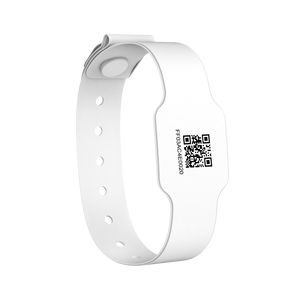
Production-Ready Platforms
High-Performance Wearable Hardware Portfolio
Engineered for swift scalability. Deploy these field-tested platforms with private-label customization or leverage our foundational schematics for ground-up ODM developments.

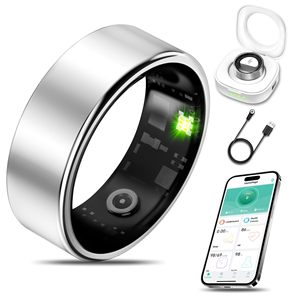
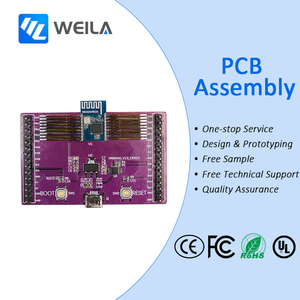
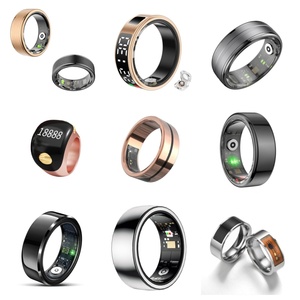
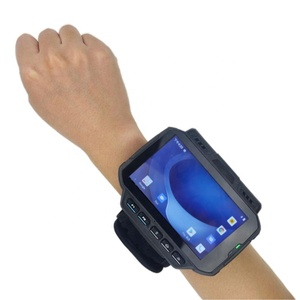
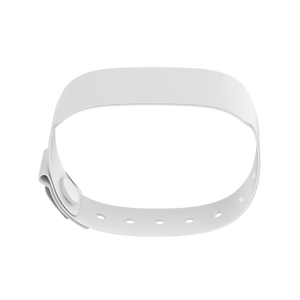
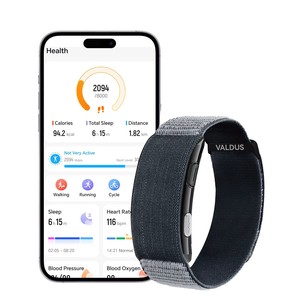
Enterprise Reliability
Industrial Foundations: Why Global Brands Partner With Us
Operating beyond basic trading brokering. We are an end-to-end hardware development facility positioned in the world’s microelectronics capital.
Full In-House Engineering Lifecycle
Unlike regional brokers, our Shenzhen facility directly houses our mechanical design, SMT placement, automated firmware flashing, and structural tooling teams, preventing IP leakage and eliminating cross-contractor scheduling delays.
Proprietary Algorithm Integration
We deploy proprietary digital signal processing (DSP) filters for bio-optical PPG tracking, photoplethysmography noise filtering during motion, and ECG diagnostic lead integration, delivering actionable wellness and enterprise health telemetrics.
White-Label Software & Cloud SDKs
We supply turnkey, unbranded companion applications on iOS and Android alongside granular BLE/MQTT API pipelines, empowering healthcare providers, insurers, and corporate brands to maintain full data sovereignty.
Strategic Sourcing Insights
Technological Shift: The Future of Smart Wearable Sourcing (2025–2030)
The global wearable device architecture is undergoing a structural paradigm shift from passive step counters to proactive edge-computing biosensors and ambient ambient intelligence.
Procurement directors and brand portfolio managers are no longer evaluating smart wearables purely on external industrial aesthetic or raw battery milliampere-hours. The market has bifurcated into two dominant value vectors: non-invasive, continuous diagnostic physiological monitoring (telehealth, longevity platforms, corporate safety) and minimalist, screen-free context-aware interfaces (micro-rings, open-ear acoustic frames, and hands-free industrial scanning terminals).
Continuous Biomarker Tracking
Transitioning beyond simple optical heart rate monitors. Modern hardware contracts focus heavily on multi-wavelength PPG arrays (green, red, and infrared channels) combined with bioimpedance sensors for non-invasive blood pressure indicators and arterial stiffness metrics.
Edge-AI Microcontroller Units
Deploying ultra-low-power ARM Cortex-M33 and RISC-V architectures running on-device neural network accelerators. This enables local noise cancellation, voice biometrics, and arrhythmia anomaly detection without draining battery cells through continuous cloud streaming.
Screenless & Micro Form Factors
Screenless rings and industrial wearable terminals allow users to bypass digital distraction while collecting unadulterated clinical sleep, autonomic nervous system (HRV), and material handling telemetry directly on factory floors.
Procurement Architecture Matrix: Wholesale vs. OEM vs. ODM
A technical assessment for aligning order complexity with supply-chain capitalization and go-to-market timelines.
| Evaluation Parameter | Wholesale Distribution | Private Label (OEM) | Bespoke Turnkey (ODM) |
|---|---|---|---|
| Tooling & ID Investment | Zero Tooling CapEx (Existing SKUs) | Minimal (Custom CMF, Laser Marking) | Full Injection & CNC Tooling Investment |
| Typical Lead Time | 7 – 14 Days (Ex-Stock) | 25 – 35 Days (Production Queue) | 90 – 120 Days (EVT/DVT/PVT Cycles) |
| Firmware & OS Scope | Standard Factory Firmware | Custom Boot Logos, Language Strings | Full OS Customization, Custom BLE Profiles |
| Application Layer | Public App Ecosystem | Branded App UI Skinning | Custom Native White-Label App & Private Cloud |
| Target Margin Vector | Predictable Retail Margins (20-30%) | High Value Brand Equity (40-60%) | Monopolistic Enterprise Moat (>70%) |
Direct Engineering FAQ
Frequently Asked Questions: Smart Wearable OEM/ODM
Objective technical, manufacturing, and regulatory answers to assist your sourcing committee in vetting factory-direct capabilities.
What is the baseline Minimum Order Quantity (MOQ) structure across your production tiers?
Our operational MOQ is strictly scaled by project depth. For existing open-mold platforms requiring cosmetic OEM customization (laser-etched housings, custom silicone/leather straps, branded multi-language retail packaging, and customized software splash screens), MOQ starts at 500 to 1,000 units. For full ODM execution involving bespoke PCB layout, specialized micro-housing injection tooling, custom sensor integration, or proprietary battery chamber certification, our initial volume threshold is typically 3,000 to 5,000 units to amortize Non-Recurring Engineering (NRE) costs and high-precision CNC tooling calibration.
How does your facility manage global compliance, RF validation, and hazardous material directives?
We maintain fully equipped in-house pre-compliance radio frequency (RF) testing chambers to audit Bluetooth low-energy output, SAR levels, and antenna impedance matching before external laboratory submittal. All finished goods and sub-assemblies (SMT components, adhesives, display optics, and wristband fluoroelastomers) comply with EU RoHS, REACH, and California Proposition 65 directives. We routinely oversee formal accreditation pipelines for CE (RED), FCC ID, TELEC/MIC (Japan), KC (Korea), and IC (Canada), transferring full certification documentation directly to your legal corporate entity.
What are your firmware, SDK, and application sovereignty customization boundaries?
Unlike trading houses providing locked, generic software, our software engineering wing provides fully modular firmware architectures. We support custom BLE UUID services, configurable raw sensor telemetry streaming (raw PPG ADC data, 3-axis/6-axis IMU quaternions, and skin temperature logs), and bespoke power-saving sleep algorithms. We provide native white-label smartphone applications (Flutter, React Native, Swift, Kotlin) with zero links back to the original manufacturing source, including complete proprietary backend server integration (AWS, Azure, or self-hosted HIPAA/GDPR-compliant infrastructure).
How do you guarantee batch-to-batch water resistance and structural ingress integrity?
Ingress protection is fundamental to our quality control architecture. Depending on device specifications (IP67, IP68, 3ATM, or 5ATM), every single production unit passes through automated differential pressure decay vacuum chambers to inspect hermetic seal integrity prior to cosmetic finishing. For deep-immersion products (such as our metal smart rings and sports tracking models), batch sample tests undergo pressurized water bath testing (static 50-meter equivalent hydraulic pressure) to ensure zero elastomeric gasket fatigue or adhesive failure during extended aquatic exposure.
Can your biosensor arrays be calibrated to support clinical-grade medical diagnostic hardware?
Our consumer devices operate under general wellness and lifestyle categorizations. However, for specialized healthcare integrations, we engineer custom ODM hardware modules utilizing clinical-grade bio-sensing chipsets (e.g., Texas Instruments, Analog Devices, Maxim Integrated) coupled with gold-plated stainless steel dry-contact ECG leads. We work in tandem with our clients' regulatory affairs teams to supply all relevant hardware technical construction files (TCFs), electrical safety documentation (IEC 60601-1 / IEC 60601-1-2), and biometric raw data benchmarking necessary for regional FDA 510(k) or EU MDR regulatory submissions.
Initiate Your Smart Wearable Hardware Development
Connect directly with our senior hardware architects, structural engineers, and firmware directors in Shenzhen. We transform complex wearable blueprints into mass-manufactured, commercially compliant consumer realities.
Get a Quote