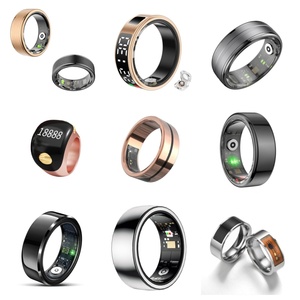
Custom OEM Smart Ring Manufacturer & Exporters
Enterprise OEM/ODM Engineering, Micro-Optoelectronic Integration, and High-Precision Biometric Wearables Built for Global Brand Deployment
Enterprise Sourcing Portfolio
Precision Engineered Smart Ring & Advanced Wearables
Explore production-ready platforms featuring micro-molded biocompatible shells, multi-wavelength PPG sensors, medical-grade algorithms, and end-to-end white-label application ecosystems.
Remote Family Care
Telemetry
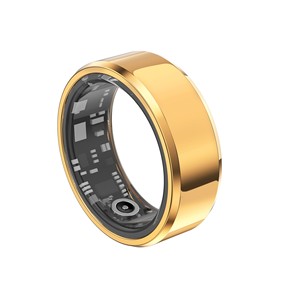
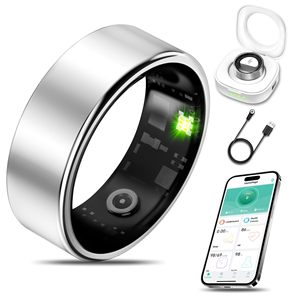
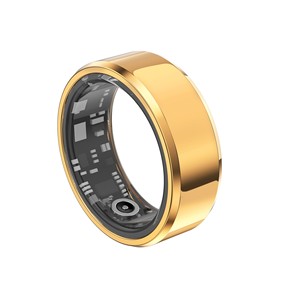
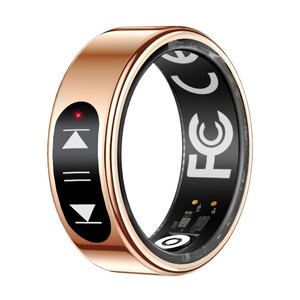
Smart Ring Unisex Intelligent Ring Remote Care Manufacturer Direct Sale
HRV & Stress
Sleep Architecture
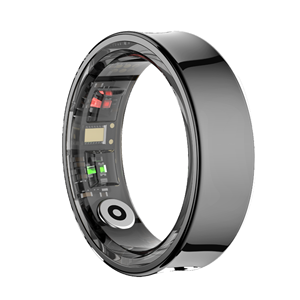
Smart Ring with Heart Rate, Blood Oxygen, Sleep, HRV, Stress Test, and Step Counting Smart Ring Manufacturer
30,000+
Monthly Unit Assembly Capacity
1,000 m²
Cleanroom Manufacturing Plant
< 0.35%
Mass-Production RMA Failure Rate
100%
Traceable In-House Algorithmic IP
Engineering Whitepaper
Overcoming Engineering Bottlenecks in Smart Ring OEM Architecture
The miniaturization of continuous health telemetry represents one of the most demanding frontiers in modern microelectronics. Unlike smart wristwear, which operates with larger battery volumes (typically exceeding 250mAh) and broad skin-contact surface areas, custom smart ring manufacturing demands sub-millimeter component integration within a curved, hermetically sealed form factor that must not exceed 2.5mm to 3.0mm in cross-sectional thickness. Achieving enterprise-grade reliability requires a comprehensive reassessment of battery chemistry, rigid-flex printed circuit board (FPCB) design, signal-to-noise ratio (SNR) optical tuning, and hypoallergenic bio-interface materials.
As a seasoned custom OEM smart ring manufacturer based in Shenzhen, our engineering framework solves the trade-off between biometric measurement fidelity and battery longevity. Utilizing medical-grade epoxy potting or structural resin transfer molding over rigid-flex polyimide architectures, our rings incorporate Nordic Semiconductor nRF52/nRF53 low-power Bluetooth System-on-Chips (SoCs), ultra-thin multi-spectral PPG photodetectors, and precision analog front ends (AFE). This guarantees multi-day autonomous data logging without subjecting the end user to uncomfortable thermal dissipation or skin irritation.
| Architecture Vector | Consumer Standard Class | Industrial Tier Smart Wear Works Spec | Strategic Enterprise Benefit |
|---|---|---|---|
| Battery Chemistry & Packaging | Pouch Cell (3.7V, ~15-18mAh) | Custom Curved Solid-State/Li-Polymer (4.2V/4.35V) | Extended cycle life (>500 cycles to 80%), zero swelling risk, 4-7 days continuous runtime. |
| Housing Construction | 316L Stainless Steel / Molded PC | Aero-grade Titanium alloy outer layer + Biocompatible Medical Resin interior | Weighs under 4.5g, eliminates nickel-leaching allergies, and withstands 5ATM hydrostatic pressures. |
| Optical Sensing Architecture | Single Green LED (Static HR only) | Multi-Wavelength PPG (Green, Red, Dual-Infrared LEDs + Optical Shunts) | Continuous SpO2 measurement, dynamic Heart Rate Variability (HRV), and nocturnal sleep architecture monitoring. |
| System Firmware & Stack | Standard Turnkey Vendor FW | Custom C-based RTOS with over-the-air (OTA) cryptographic verification | Zero unpatched CVE vulnerabilities, end-to-end data encryption, and branded mobile SDK integration. |
Comprehensive Biometric Telemetry via Finger Arterial Capture
Clinical studies establish that optical monitoring from the finger offers higher optical perfusion signals than the dorsal wrist, because the palmar digital arteries run close to the skin surface without significant epidermal damping or tendon interference. Our proprietary micro-sensor packaging incorporates dual-wavelength infrared photoplethysmography (PPG) calibrated to capture micro-pulsations through sub-surface arterial structures. This sensor topography generates exceptional signal morphology, facilitating precise heart rate variability (HRV) tracking, systemic vascular resistance index assessment, resting pulse evaluation, and real-time oxygen saturation (SpO2) readings at high sampling frequencies.
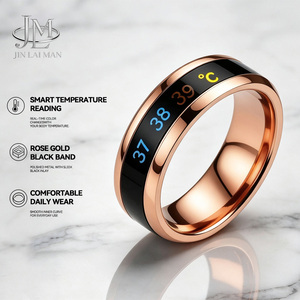
Simultaneously, a miniature semiconductor-grade NTC thermistor array or digital temperature sensor rests flush against the palmar side of the digit. By continuously measuring peripheral dermal temperature shifts alongside HRV circadian fluctuations, our algorithms accurately identify early biomarkers of physiological strain, circadian rhythm disruptions, and biological recovery phases. These predictive wellness metrics furnish direct consumer value without misrepresenting consumer-grade lifestyle sensors as certified clinical diagnostics.
Multi-Spectral PPG Arrays
Combines multi-wavelength LEDs and high-responsivity photo-diodes to measure blood oxygenation, resting pulse, and microvascular blood flow across all skin tones with minimal motion artifact distortion.
Hermetic 5ATM Potting
Utilizes proprietary low-pressure liquid silicone and biocompatible epoxy encapsulation to achieve absolute vacuum-tight environmental sealing, ensuring swim-proof resilience up to 50 meters depth.
Sub-Microamp Power Regimes
Incorporates specialized ultra-low-power Bluetooth LE 5.2/5.3 controller stacks with dynamic CPU sleep profiling, enabling 4 to 7 continuous days of operation on an ultra-compact 18mAh curved lithium cell.
Strategic Market Intelligence
Procurement Forecasting & Technology Roadmap (2026–2030)
Anticipate supply chain evolutions, technical convergence vectors, and evolving regulatory mandates to protect your hardware investments over multi-year commercial cycles.
Trend 1: Contactless Biometric Tokenization (NFC)
Modern enterprise procurement programs are pivoting beyond health telemetry toward contactless NFC integrations for closed-loop transit, access credentials, and bank-grade EMV secure tokenization for tokenized point-of-sale payments.
Trend 2: Spatial Gesture Interfaces & XR Fusion
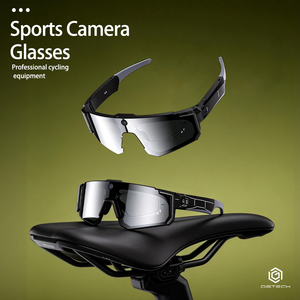
Next-generation smart rings increasingly function as spatial navigation nodes. Incorporating low-noise 6-axis IMUs and micro-capacitive surfaces allows wearers to navigate AR smart glasses, trigger cameras, and control external smart environments effortlessly.
Trend 3: Stringent Privacy & Data Sovereign Stacks
Global regulatory bodies (GDPR in Europe, HIPAA guidelines in North America) demand transparent data sovereignty. Sourcing strategies now mandate localized cloud servers, uncompromised on-device cryptographic encryption, and opt-in telemetry controls.
Procurement Risk Mitigation: Total Cost of Ownership (TCO) in Smart Ring Production
Hardware purchasers transitioning from consumer retail distribution to custom brand ownership frequently underestimate the post-deployment liabilities caused by poorly formulated supply-chain contracts. In high-density miniature electronics, quality defects do not typically emerge on the surface at outgoing inspection; they manifest after weeks of real-world use as moisture penetrates seal lines, micro-flex circuits experience stress fractures from thermal fluctuations, or low-grade battery cells suffer capacity degradation.
A resilient OEM procurement framework must evaluate factory tooling controls, automated optical inspection (AOI) for circuit placement, helium-leak or vacuum pressure testing for water resistance, and full-spectrum automated testing of BLE radio frequency performance. Partnering with a dedicated Shenzhen production facility operating under consolidated structural, mechanical, firmware, and quality-control ownership eliminates vendor fragmentation and shields brand equity from catastrophic field recalls.
Enterprise Manufacturing Competence
Why Tier-1 Importers & Brands Partner With Smart Wear Works
Operating our own high-precision assembly lines in Pingshan, Shenzhen, we combine structural industrial design with native in-house embedded software and compliance engineering.
In-House Assembly Facility
Our dedicated 1,000 m² cleanroom manufacturing facility maintains roughly 50 highly trained technicians, operating under strict ESD controls with a steady monthly capacity of 30,000 units.
Comprehensive Certification
All hardware platforms are engineered to satisfy CE, FCC, RoHS, and TELEC regulatory mandates out of the box, offering streamlined certification transfer and documentation packages for European, Japanese, and North American distribution.
Full-Stack White-Label Apps
We provide complete white-label companion application ecosystems for iOS and Android, including server-side cloud deployment, custom UI branding, algorithmic customization, and third-party health API integrations (Apple HealthKit, Google Health Connect).
Enterprise Procurement FAQ
Frequently Asked Questions on Smart Ring Manufacturing
Direct technical and operational answers to support your hardware evaluation, supply chain auditing, and customized private-label production programs.
Are you a direct manufacturing plant or an export trading intermediary?
Smart Wear Works is the smart wearable manufacturing division of Shenzhen Sww Industrial Development Co., Ltd, founded in Shenzhen in June 2019. We manage our own 1,000 m² assembly plant in Pingshan District, staffed by approximately 50 technical and assembly personnel. Engineering management, circuit design review, firmware optimization, quality assurance, and international logistics are governed entirely in-house by an accountable technical team.
What are the standard Minimum Order Quantities (MOQ) for custom smart rings?
Our minimum order thresholds are structured around customization depth. For standard catalog models requiring laser-engraved logos, custom outer finishes (Titanium Silver, Matte Black, Rose Gold), and branded retail gift packaging, MOQs start from 500 units. For comprehensive ODM projects that require unique outer ring tooling, specialized internal antenna geometries, or custom-potting resins, MOQs typically begin at 2,000 to 5,000 units to amortize dedicated tooling and assembly line configuration.
How do you handle sizing arrays across international consumer demographics?
Smart rings cannot be adjusted post-production, making a balanced size run vital to retail success. We manufacture standard inner diameter sizes ranging from US Size 6 through 13. For production runs, we provide private-labeled physical sizing kits to assist your direct-to-consumer operations in minimizing returns. Our production lines support optimized batch sizing schedules tailored to your regional demographic requirements.
Are sensor readings (Heart Rate, SpO2, Temperature) certified medical-grade?
Our smart ring platforms are engineered as high-precision general wellness, lifestyle, and athletic recovery devices. The telemetry generated—including resting pulse, dynamic HRV, sleep architecture stages, blood oxygen saturation trends, and skin temperature changes—represents consumer wellness estimates. These devices are not sold as certified Class II medical diagnostics and should not be used to treat or diagnose clinical pathologies without appropriate regulatory clearance.
Can we implement our own proprietary application or connect the hardware to our existing cloud?
Yes. We offer fully documented BLE communication protocols, API specifications, and software development kits (SDKs) for iOS and Android under strict non-disclosure agreements (NDAs). This empowers your internal software engineering team to integrate telemetry streams directly into existing enterprise portals, corporate wellness systems, or custom mobile applications.
What is the expected production lead time for prototype and mass orders?
Evaluation samples of existing catalog models typically ship within 3 to 5 business days. Customized private-label branding prototypes require approximately 12 to 18 business days for laser alignment, custom packaging production, and firmware branding. Full-scale mass production runs are fulfilled within 25 to 35 calendar days following golden sample sign-off, depending on component inventory pipelines and scheduled lot testing.