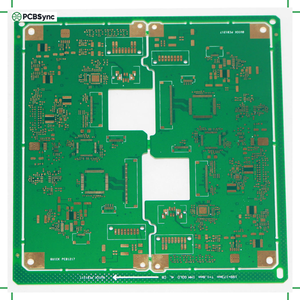
EMS Manufacturer Wearable Device Smart Technology Production Partner Startup
Direct from our Shenzhen ISO-compliant production lines: precision-tooled NFC devices, BLE beacons, sensor-integrated rings, and enterprise monitoring hardware ready for private-label deployment.
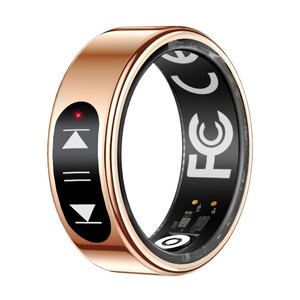
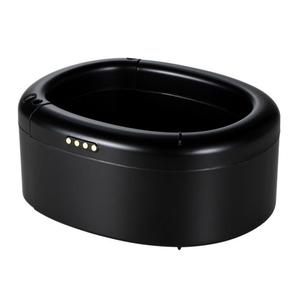
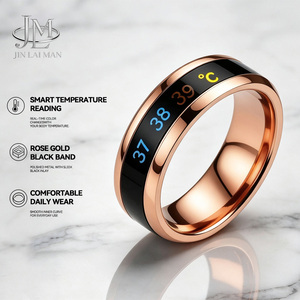
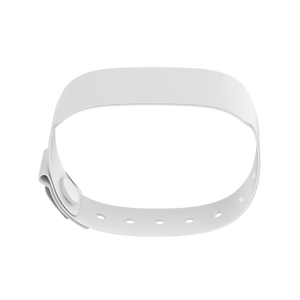
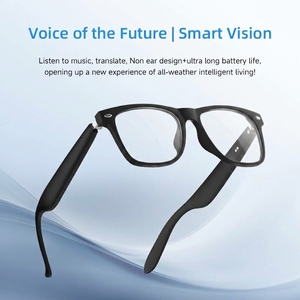
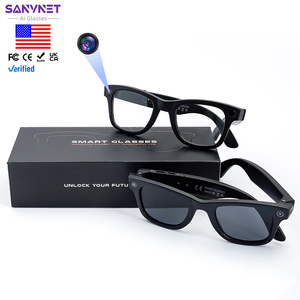
In contemporary wearable engineering, the designation of a custom OEM NFC smart bracelet has shifted from elementary passive identification tags to sophisticated, dual-environment architectures. Modern enterprise procurement requires seamless interoperability between passive high-frequency radio waves (operating strictly at 13.56 MHz compliant with ISO/IEC 14443 Type A/B and ISO/IEC 15693 standards) and active ultra-low-power microcontrollers (such as Nordic Semiconductor nRF52/nRF53 series or Ambiq Apollo micro-architectures). For engineering procurement teams, sourcing from direct manufacturing factories ensures RF antenna geometry is custom-matched directly against the dielectric properties of casing materials, preventing signal degradation caused by skin-contact moisture and internal lithium battery shield distortion.
When engineering an NFC smart bracelet for mission-critical deployments—ranging from commercial contactless micropayments (EMVCo-certified secure elements like NXP SN110 or STMicroelectronics ST54 series) to closed-loop transit networks, access management, and hospital asset tracking—the primary bottleneck remains antenna inductance matching within constrained enclosures. Factory-level tuning utilizes precision Vector Network Analyzers (VNA) to calibrate the resonant frequency under human tissue loading conditions, delivering reliable reading fields from 1.5 cm to 4 cm across varied orientations.
Integration of dedicated hardware root-of-trust (EAL6+ certified) enabling CC EAL5+ compliance for bank-grade contactless tokenization, dual-key mutual authentication, and cryptographic key generation directly on-wrist.
Dual-interface I2C/SPI NFC dynamic transponders (e.g., NXP NTAG I2C plus) allowing microcontrollers to update EEPROM blocks in real-time, facilitating zero-power field diagnostic readouts even when the main accumulator is depleted.
Ultrasonic welding and multi-cavity liquid silicone rubber (LSR) overmolding delivering certified IP68 and 5ATM ratings, resistant to medical-grade disinfection agents, sweat salinity, and sustained submersions.
Strategic purchasing managers and brand product heads must evaluate key technological transitions over the next 24 to 36 months to avoid premature component obsolescence.
Procurement specifications are shifting toward unified connectivity platforms. New wristbands integrate Bluetooth 5.4 PAwR (Periodic Advertising with Responses) and NFC commissioning profiles compatible with the Matter smart ecosystem, enabling wrists to operate as verified local credentials without cloud dependency.
European and North American regulatory mandates require strict adherence to Extended Producer Responsibility (EPR) and corporate ESG reporting. OEM procurement contracts now prioritize factories offering Ocean-Bound Plastics (OBP), bio-based TPU straps, and completely lead-free low-temperature SMT assembly lines.
Modern NFC smart bracelets increasingly leverage Micro-NPU architectures. On-chip gesture recognition and contextual user intent analysis happen entirely at the firmware edge, activating the NFC transmission loop only upon distinct biometric or wrist-movement confirmation to mitigate unauthorized scanning risks.
From schematic sign-off to overseas containerized logistics, our engineering teams eliminate vendor friction via single-source engineering accountability.
Antenna coil simulation, chip selection (NXP, ST, Nordic), CMF layout, and memory partition planning under designated B2B operating conditions.
CNC functional housing, laser-etched RF coils, firmware board bring-up, and baseline testing for magnetic field coupling efficiency.
Precision multi-cavity injection molds, ultrasonic chamber bonding verification, 5ATM hyperbaric testing, and ESD discharge analysis.
High-speed surface mount technology (SMT), clean-room assembly, custom firmware flashing, laser serialization, and multi-region certification dossiers.
Established in June 2019, Shenzhen Sww Industrial Development Co., Ltd. operates as a specialized original equipment and design manufacturer delivering uncompromised hardware fidelity.
Approximately 1,000 m² of specialized clean production space with over 50 seasoned hardware specialists, delivering genuine direct factory pricing without broker markup.
In-house mobile engineers deliver white-label iOS/Android SDKs, custom MQTT/HTTPS gateway synchronization protocols, and custom bootloader ROM flashing.
Documented export readiness with CE, FCC-ID, RoHS, and Japanese TELEC radio certifications, guaranteeing swift, issue-free customs clearance in regulated global ports.
Our core brand clients across the EU, US, and Japan maintain continuous recurring manufacturing runs past four years, verifying dependable batch-to-batch component reliability.
Critical engineering considerations, commercial minimum order quantities, and compliance data essential for hardware sourcing evaluations.
Internal copper lithium-ion pouch cells and multi-layer PCBs act as magnetic field sinks, causing severe eddy current loss. Our engineering team designs custom ferrite shielding sheets (permeability μ' 120-150) positioned precisely between the 13.56 MHz loop antenna and internal electronics, preserving high Q-factor resonance and enabling reliable read distances under standard reader power.
Standard catalog platforms with private-label brand packaging, laser engraving, and custom strap pantones begin at an accessible 500 to 1,000 units. Full ODM developments requiring dedicated plastic/metal injection molds, custom RF antenna engineering, and proprietary companion applications require an initial batch run of 3,000 to 5,000 units depending on mechanical complexity.
Yes. Depending on the Bill of Materials (BOM) target, we integrate either standard NXP MIFARE/NTAG chips for corporate building access, campus ecosystems, and hotel systems, or incorporate certified EMVCo Dual-Interface Secure Elements running Java Card OS to support payment network tokenization (Visa, Mastercard, domestic networks).
We provide comprehensive mobile SDKs for both native iOS and Android environments, enabling client developers to interface directly with Bluetooth LE communication channels, read/write protected NFC data blocks, manage cryptographic handshakes, and route device telemetry to private cloud platforms via MQTT/HTTP REST APIs.
Every single manufactured casing undergoes automated pneumatic vacuum chamber testing before PCB insertion. Post-assembly units are tested using differential pressure leak testers alongside calibrated multi-atmosphere hydrostatic immersion chambers, guaranteeing sustained hermetic integrity against dust, chlorinated swimming water, and thermal stress.
As documented across our operational guidelines, all consumer wearables, smart bracelets, and rings are intended as general wellness and fitness indicators (heart rate variability, blood oxygen saturation trends, and sleep monitoring). They do not constitute certified medical diagnostic devices under FDA Class II or EU MDR regulations unless an explicit clinical certification track is scoped under contract.
Initiate direct communication with our senior hardware engineering and production scheduling team in Shenzhen. We evaluate your functional BOM requirements, target casing designs, and timeline to provide an actionable technical proposal within 24 hours.