Directly manufactured in our Shenzhen assembly facility. Designed for private-label brand deployment, sports data ecosystems, healthcare pilots, and enterprise white-label solutions.
Turnkey solution featuring open iOS and Android SDK libraries, custom Bluetooth Low Energy (BLE) GATT services, encrypted payload transmission for custom app builders.
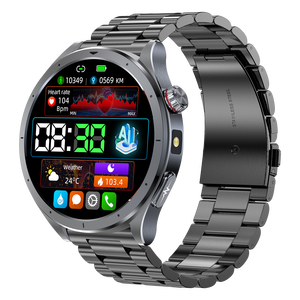
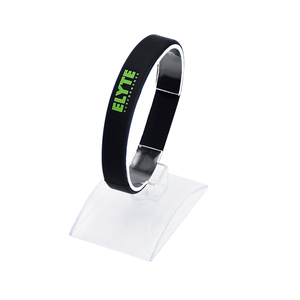
Biocompatible silicone compound certified under ISO 10993 standards. Built-in high-frequency 13.56 MHz NFC transponder and UHF tracking chip for clinic and event identity management.
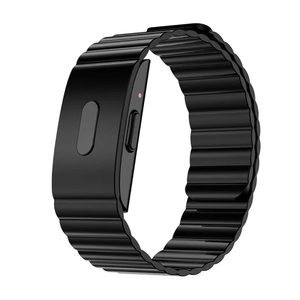
Screen-free minimalist form factor designed for distraction-free performance. Continuous 24/7 autonomic nervous system (ANS) stress indexing, 14-day ultra-deep battery life cycle.
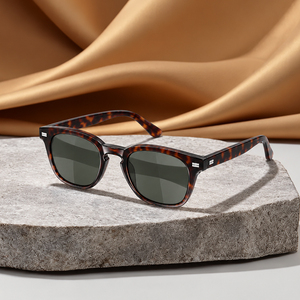
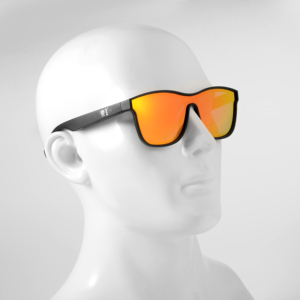
Military-grade bone vibrator transducers bypass the tympanic canal for superior situational safety. Sealed IP55 dust-and-sweat-proof enclosure, TR90 memory-resin composite arms.
Headquartered in Pingshan District, Shenzhen Sww Industrial Development Co., Ltd has engineered and mass-produced smart wearable electronics since June 2019. We bridge the critical gap between conceptual electronic design and automated, high-yield mass production.
1,000 m²
Self-Owned Assembly Line
30,000+
Monthly Unit Capacity
50+
In-House Engineers & Specialists
4+ Years
Tier-1 Brand Client Retention
Unlike trading brokers and secondary packaging agents, Smart Wear Works maintains direct capital investment in surface-mount technology (SMT) coordination, ultrasonic casing fusion chambers, robotic precision glue dispensers, and radio-frequency (RF) anechoic test chambers. Every wearable unit undergoes 100% automated optical inspection (AOI), battery impedance calibration, and atmospheric pressure water-resistance verification (up to 5ATM/IP68).
Unified Firmware & App R&D
Our internal firmware engineering team develops tailored FreeRTOS kernels, proprietary BLE GATT services, and zero-overhead native iOS and Android white-label companion apps. No reliance on insecure third-party cloud brokers.
Global Compliance Scope
Turnkey certification support spanning CE (RED & LVD), FCC Part 15C, RoHS 2.0 hazardous substances conformity, and Japan TELEC (MIC) technical standard conformance. Export documentation provided at pre-shipment sign-off.
Deep White-Label Customization
Support for micro-laser etched logomarks on titanium and 316L stainless steel bezels, customized dynamic bootloaders, proprietary packaging die-cuts, and custom structural injection moulding tooling.
Engineering Whitepaper
Technological Architecture: The Evolution of Custom Fitness Trackers
An authoritative engineering breakdown of biosensing arrays, low-power processing cores, and Edge AI algorithmic synthesis redefining the smart wearable landscape.
The commercial fitness tracker market has evolved from rudimentary 3-axis step counters into sophisticated non-invasive metabolic and autonomic nervous system (ANS) monitoring instruments. For international B2B brand owners, understanding the physics, semiconductor constraints, and firmware challenges of biosensor integration is crucial for achieving high consumer satisfaction and minimizing return merchandising authorizations (RMAs).
Dual-Wavelength PPG & Multi-Spectral Sensors
Modern tracker bands require dual green (525 nm) and infrared (940 nm) optical pathways. Green LEDs penetrate the epidermal microvascular bed to determine pulsatile heart rate, while red/IR wavelengths assess differential oxygenated hemoglobin saturation (SpO2). We implement custom optical cross-talk isolation shields to maintain signal integrity during vigorous motion.
Single-Lead ECG & Galvanic Skin Response
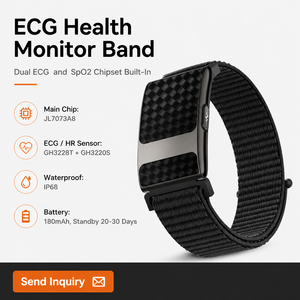
By pairing stainless steel or titanium dry-contact electrodes with high-impedance Analog Front-End (AFE) processors (such as the TI AFE4404 or Goodix GH3220), our advanced platforms perform Lead-I electrocardiogram traces. This allows real-time R-peak interval detection to extrapolate Heart Rate Variability (HRV), autonomic strain, and physical recovery indexes.
Sub-Milliamp Micro-Architectures & BLE 5.4
Battery longevity remains the core driver of consumer adoption. We design our custom PCBs around ultra-low-power ARM Cortex-M4F and M33 microcontrollers (including Nordic Semiconductor nRF52840 and Ambiq Micro Apollo series), achieving deep-sleep currents below 2.5 µA. Bluetooth 5.4 LE Audio and periodic advertising optimize over-the-air data packet transmission.
Anticipate component supply shifts, regulatory hurdles, and software commoditization to maximize gross margins in international wearable retail.
1. Transition to Screenless & Micro Form Factors
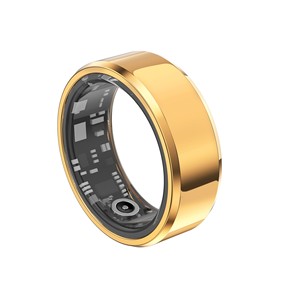
Consumer display fatigue has sparked a rapid shift toward screen-free recovery bands and ultra-lightweight smart rings. These devices emphasize sleep quality, strain tracking, and passive wellness scoring. Procurement directors are pivoting from low-cost displays to high-accuracy sensor accuracy and compact enclosure designs.
2. Edge AI Micro-Inference Integration
Cloud-dependent algorithmic processing creates data latency and severe privacy liabilities under GDPR and HIPAA. Leading OEM buyers now demand on-device TinyML models executing locally on ARM Cortex microcontrollers, facilitating real-time motion classification, swimming stroke identification, and cardiac anomaly detection without external connectivity.
3. Software SDK-Driven Hardware Sourcing
Hardware has become a conduit for software ecosystem monetization. Modern enterprise buyers no longer evaluate bare fitness tracker hardware in isolation; they assess the accessibility of raw Bluetooth communication protocols, Android/iOS Software Development Kits (SDKs), and direct-to-cloud webhook integrations.
Procurement Due Diligence
Frequently Asked Questions for Sourcing & Engineering Teams
Real-world answers covering minimum order quantities (MOQs), Non-Recurring Engineering (NRE) tooling costs, firmware flashing, and regulatory compliance.
What is the standard Minimum Order Quantity (MOQ) for custom OEM vs. full ODM projects?
For existing industrial designs requiring custom branding (laser-etched chassis logos, custom boot animation, localized packaging, and custom silicone strap pantones), our baseline production MOQ begins at 1,000 to 2,000 units depending on the specific model. For complete bespoke ODM programs requiring brand-new structural injection molds, customized PCB layouts, and proprietary sensor integration, the baseline MOQ starts at 5,000 to 10,000 units to amortize rapid tooling and pilot-run production overhead.
How does Smart Wear Works manage intellectual property (IP) and firmware source code?
We adhere to strict international Non-Disclosure Agreements (NDAs) prior to engineering schematic exchanges. In standard OEM programs, clients receive customized firmware binaries with proprietary UUIDs and full application-layer BLE SDKs for custom app builds. In bespoke ODM contracts with negotiated Non-Recurring Engineering (NRE) agreements, full mechanical CAD files, Gerber files, and embedded application code ownership can be legally transferred upon project milestone completion.
Are biosensor outputs (HRV, ECG, SpO2) classified as medical-grade or consumer wellness?
Unless an enterprise customer specifically contracts a designated clinical validation study under our medical device consultation program, all production wearables are engineered and labelled as general consumer health, sports, and wellness instruments. While our analog front-ends utilize clinical-grade silicon (such as Texas Instruments and Goodix chipsets), marketing devices as certified Class II medical diagnostic devices requires region-specific regulatory filings (FDA 510(k), CE MDR) which we support via technical dossier compilation.
What is the typical timeline from prototype validation to final mass production delivery?
For rapid private-label OEM modifications on established platforms, golden master samples require 7 to 12 business days, with mass production runs completing within 25 to 30 days. For greenfield ODM programs, the engineering schedule averages 90 to 120 days: 20 days for industrial concept and mechanical CAD sign-off, 25 days for rapid CNC prototype and EVT (Engineering Validation Test), 35 days for steel tooling fabrication, and 20 days for DVT/PVT (Design/Production Validation Test) before bulk assembly.
How are water-resistance ratings validated on the factory floor?
We utilize dual dry-air and wet-vacuum pressure testing apparatuses. Every batch of IP67/IP68 and 5ATM (50-meter hydrostatic equivalent) enclosures is verified under automated air-leakage detection instruments capable of sensing microscopic pressure deltas down to 0.1 Pa. Spot checks undergo submerged heated water tank testing to immediately identify boundary seal anomalies or ultrasonic weld micro-fractures.
Initiate Your Custom Wearable Program Today
Direct factory engineering consultation. Send us your target bill of materials, form factor preference, or application SDK requirements. Speak directly with our Shenzhen R&D team to lock in production slots and receive custom tooling quotes.