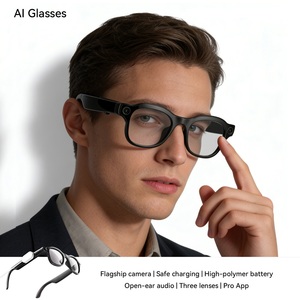
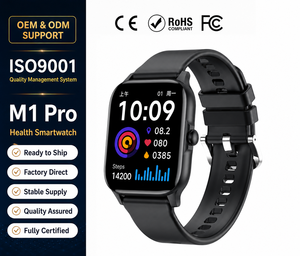
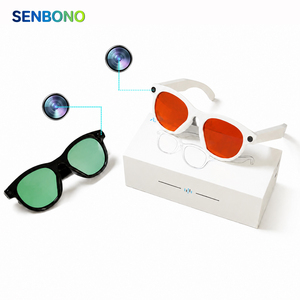
Custom OEM AI Smart Glasses Manufacturer & ODM Wearables Supplier
Enterprise White Paper: Architectural Integration, Acoustic Ergonomics, Real-Time Multimodal LLM Translation, and Global Supply Chain Roadmap
Production Catalog
Featured OEM/ODM Wearable & Smart Audio Ecosystem
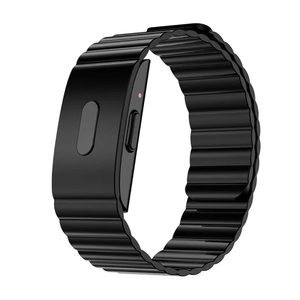
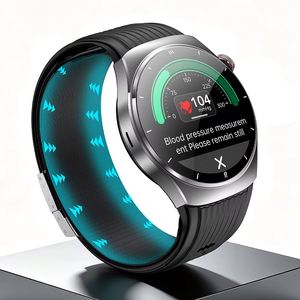
From dual-engine AI translation eyewear to medical-grade sensor arrays and precision telemetry wristbands, explore our production-ready hardware blueprints engineered for tier-1 distributors and private-label technology brands.
Architectural Deep-Dive: Engineering Custom OEM AI Smart Glasses
The commercial smart eyewear sector has permanently graduated from basic hands-free Bluetooth audio frames into sophisticated, multimodal edge-AI edge devices. As a premier custom OEM AI smart glasses manufacturer headquartered in the high-technology epicenter of Shenzhen, China, our engineering methodology bridges microscopic electronic packaging with premium optical ergonomics. Developing a consumer-viable, high-reliability AI frame requires synchronizing several non-negotiable physical constraints: sub-38g total temple payload, zero thermal propagation toward the user's temporal lobes, acoustic dipole beamforming for complete whisper-privacy, and deterministic edge-to-cloud inference latencies under 280ms.
Edge NPU & Acoustic DSP
Dual-core micro-DSP architecture decoupling ambient beamforming noise cancellation from speech-to-text token streaming, conserving battery during active LLM dialogues.
Dipole Micro-Acoustics
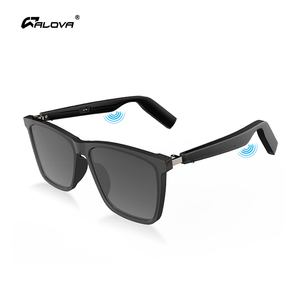
Phase-inverted acoustic cancellation ports precision-drilled into the TR90 temple stems to eradicate audio leakage above 70dB sound pressure levels in public environments.
Hardware-Enforced Privacy
Hardwired LED status indicators connected directly to camera power rails, eliminating covert capture vulnerability and fulfilling strict GDPR/EU jurisdictional compliance.
Unlike mass-market trading companies that rebrand unverified white-label chassis, our turnkey OEM/ODM lifecycle handles the entirety of physical execution: high-precision SMT placement of flexible PCBs (FPC), ultra-sound plastic welding, multi-axis CNC hinges, and localized optical calibration. This turnkey precision guarantees that tier-1 global brands can scale private-label eyewear lines with zero deviation across mass manufacturing batches.
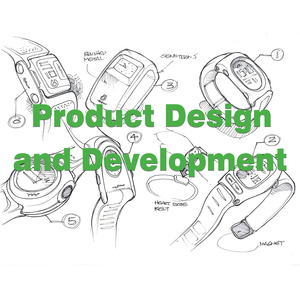
Product Development & Technological Evolution Trends
Procurement specialists and technology product directors evaluating the smart eyewear category must architect their multi-season roadmaps against several shifting foundational technology tides. Our R&D laboratory in Pingshan benchmarks hardware design choices against a five-year horizon, tracking three macro disruptions transforming smart eyewear:
Silicon Density & SiP Heterogeneity
System-in-Package (SiP) modules now consolidate BLE 5.4, power management ICs (PMIC), and 6-axis IMUs into sub-1.2mm profiles, shifting mass balance strictly toward the nose bridge rather than temple tips for sustained all-day ergonomic comfort.
Multimodal Context Inference
Next-generation smart glasses bypass manual wake prompts. By fusing ultra-low-power vision sensors with natural conversational agents (GPT-4o, Claude 3.5, Gemini Nano), the frame dynamically identifies contextual real-world text, menus, or foreign speech automatically.
Solid-State Battery Micro-Chemistry
Transitioning from traditional lithium pouch cells to semi-solid high-density curved temple cells increases volumetric energy density by 32%, pushing active video and translation recording uptime to over 6 continuous hours without structural bloat.
Procuring smart wearable technology requires precision balancing between capital expenditure, tooling commitments, unit lead times, and product differentiation. Enterprise buyers often face misaligned expectations when navigating the gradient between standard wholesale SKU off-the-shelf sourcing and complete bespoke ODM ground-up tooling.
Telecom operators & medical enterprise integrators
Our Shenzhen facility eliminates typical procurement risks through our progressive validation pipeline. Strategic partners frequently initiate distribution with pre-certified catalog units (such as our M88 or W100 series) to calibrate regional channel demand, seamlessly transitioning the exact mechanical form-factor into private-label OEM firmware and packaging configurations without redundant reliability testing cycles.
Operating as the direct wearable hardware brand of Shenzhen Sww Industrial Development Co., Ltd (established June 2019 in Shenzhen), our 1,000 m² cleanroom manufacturing facility in Pingshan District provides direct structural and contractual accountability. Unlike brokerage trading desks, we eliminate intermediary markups, engineering distortion, and intellectual property leakages.
In-House Assembly Line
Over 50 dedicated operators and quality technicians operating precision assembly jigs, ESD-safe workstations, and automated optical inspection stations delivering 30,000 units monthly.
Firmware & SDK Engineering
On-site firmware teams proficient in Nordic, Realtek, Bestechnic, and Qualcomm wearable platforms, writing custom Bluetooth profiles, sensor drivers, and RTOS threads directly.
Reliability Testing Chambers
100% in-house drop testing, salt-spray corrosion resistance, thermal shock (-20°C to 60°C), IP67/IP68 ingress verification, and pneumatic waterproof test chambers.
Global Regulatory Expertise
Established direct documentation pathways and compliance dossiers spanning CE (RED), FCC ID, RoHS 2.0, TELEC (MIC Japan), and REACH for rapid customs clearance worldwide.
Procurement Due Diligence
Frequently Asked Questions (FAQ) for OEM Buyers
Critical technical, regulatory, and supply chain criteria answered directly by our factory engineering management.
1. Are you a verified factory or an intermediary trading export agency?
We are the direct manufacturing arm of Shenzhen Sww Industrial Development Co., Ltd, operating our own physical assembly, SMT quality coordination, and testing facility on the 3rd Floor, Building B, No. 2 Ziping Road, Kengzi Subdistrict, Pingshan District, Shenzhen. Our enterprise registration dates to June 2019. We welcome on-site third-party supply chain audits (such as SGS or TÜV Rheinland) or live scheduled video facility walkthroughs.
2. What specific hardware and software components can be customized for OEM orders?
Customization covers three distinct tiers: Physical aesthetics (custom Pantone frame colors, TR90 nylon or titanium hinges, laser-engraved logos on temples, branded optical packaging and cloth); Firmware & Software (custom BLE device broadcasting name, bespoke boot logos, custom synthesized wake-up audio, white-label iOS and Android companion apps); and Architectural hardware (custom lens coatings, polarized prescription inserts, altered battery capacities, and alternative sensor suites).
3. How do your AI Smart Glasses manage microphone pickup in noisy conditions?
Our models utilize dual MEMS microphone arrays coupled with an on-chip DSP beamforming algorithm. By computing the physical time-difference of arrival (TDOA) between front and rear microphone ports, our hardware creates a directional 60-degree pickup cone focused precisely on the wearer's mouth, attenuating lateral street and wind noise by up to 26dB before audio tokens are transmitted to the translation engine.
4. How is user privacy handled for smart glasses equipped with cameras?
Data privacy and regulatory compliance are built directly into hardware schematics. In our camera-enabled frames (such as the MSPG007 Ultra and M88 platforms), capturing video or imagery physically illuminates an external-facing high-luminance micro-LED hardwired in series with the camera sensor power supply line. This prevents firmware-level disabling of the privacy indicator, ensuring complete compliance with European Union GDPR requirements and North American privacy statutes.
5. What are the battery runtimes for streaming audio versus active AI translation?
In standard Bluetooth continuous audio streaming or hands-free calling mode, our frames sustain between 5 to 7 hours of continuous playback on dual 110mAh temple batteries. When operating in intensive live two-way AI translation mode (which maintains continuous microphone polling, BLE telemetry streaming, and cloud TTS playback), runtime averages 3.5 to 4.5 hours. Models bundled with quick-charge travel cases can achieve 80% charge in just 22 minutes.
6. Can we integrate our own private cloud LLM or custom mobile application?
Yes. We provide complete Native Android and iOS Bluetooth communication SDKs, sample source code, and comprehensive BLE GATT profile documentation. B2B enterprise partners can route microphone audio streams directly to their proprietary cloud LLM endpoints (e.g., Azure OpenAI, custom AWS Bedrock deployments, or local edge servers) without binding to our default companion cloud infrastructure.
7. What is your standard Defective Rate (RMA) threshold and warranty protocol?
Our historical factory out-of-box defect rate consistently tracks below 0.35%, verified across rigorous end-of-line AQL 0.65 functional testing. For international B2B OEM contracts, we provide 1% to 1.5% redundant spare units or maintenance modules (temples, FPCs, and charging docks) shipped directly with the mass cargo, backed by a comprehensive 12-month hardware replacement warranty against manufacturing defects.
8. What international certifications are currently certified for your glasses?
Our standard production chassis maintain existing lab test certifications including CE-RED (Europe), FCC ID (United States RF and intentional radiator), RoHS 2.0 (lead-free hazardous substance directive), and TELEC / MIC (Japan radio law). In the event custom housing alterations or modified antenna layouts are requested during ODM engagements, our Shenzhen team oversees re-testing and documentation with accredited partner laboratories (SGS, Intertek) to issue dedicated certificates under your corporate trademark.
Ready to Engineer Your Private-Label Wearable Line?
Connect directly with our senior hardware engineering and firmware development teams in Shenzhen. Accelerate your project from prototype sign-off to full mass production with guaranteed factory accountability.