Production-Ready OEM Wearables & AI Eyewear Platforms
From ultra-compact PCBA engineering and vision-enabled smart rings to multimodal AI camera frames and screenless biometric trackers—all fully certified for global white-label distribution.
Hardware Architecture: Engineering Next-Gen AI Camera Eyewear
Developing consumer-grade and enterprise AI camera glasses requires solving brutal physical constraints: sub-45g ergonomic frame weight, real-time thermal throttling, low-latency multimodal LLM pipeline streaming, and optical stabilization.
Ultra-Low-Power Image Signal Processing (ISP)
Our custom OEM AI camera frames integrate high-efficiency Sony CMOS image sensors (e.g., IMX series) capable of native 4K snapshot and stabilized 1080p/60fps video ingestion.
- Hardware-accelerated HDR and zero-shutter-lag pipeline
- Sub-150mW idle standby with instant hardware wake-up
- Hardware-tethered physical LED privacy indicator compliant with EU/US privacy laws
- Integrated Electronic Image Stabilization (EIS) running on edge IMU telemetry
Edge NPU & Multimodal AI Vision
Vision-language models (VLMs) require synchronized audio-visual inputs. Our dual-chip architecture decouples BLE/Wi-Fi communication from edge inference.
- On-device edge inference for real-time OCR, barcode, and object boundary detection
- Seamless Bluetooth 5.4 & Wi-Fi 6 low-latency streaming to cloud LLM agents (GPT-4o, Claude 3.5, Gemini)
- Dual beamforming ENC microphones for crystal-clear whispered voice prompts
- Integrated wake-word DSP consuming under 12µA during standby state
Advanced Thermal & CMF Enclosures
Dissipating heat from the sensor module and system-on-chip without transferring thermal energy to the wearer's temples is our key patented proprietary engineering focus.
- TR90 memory polymer frames combined with aerospace-grade magnesium-aluminum alloy core
- Micro-pyrolytic graphite heat spreaders channeling heat outward through the hinge mechanism
- Skin-contact temperature strictly maintained below 38.5°C during prolonged camera capture
- IP54 to IP67 dust and splash-proof sealing for outdoor all-weather deployment
| Hardware Parameter | Standard Commercial Smart Glasses | Our Custom OEM AI Camera Glasses Platform | Procurement Benefit for Brand Owners |
|---|---|---|---|
| Optics & Sensor | Generic 2MP / 5MP fixed-focus sensor | Sony 8MP / 12MP Ultra-Compact Sensor with PDAF & EIS | Pristine machine vision accuracy and 4K photo clarity |
| AI Multimodal Pipeline | Audio-only or slow cloud photo upload (5-8s) | Low-latency RTMP/WebRTC video snippet streaming (<800ms) | Real-time visual conversational AI experience |
| Thermal Envelope | No graphite conduction; overheats in 4 mins | Dual-hinge micro graphite spreaders + dynamic SoC throttling | Continuous recording reliability without user discomfort |
| Battery & Docking | Pogo-pin cable (110mAh, 1.5 hrs runtime) | 180mAh Dual Temples + 3600mAh Magnetic Charging Case | Full-day operational capability for travel & work |
| Regulatory & Privacy | Firmware-switchable LED (Non-compliant) | Hardware-interlocked tamper-proof LED + CE/FCC/TELEC | Risk-free customs clearance in EU, USA, and Japan |
Future Procurement Trends in AI Vision Wearables
Global consumer electronics brands and enterprise procurement officers must adapt to rapid paradigm shifts across edge AI processing, optical miniaturization, and software ecosystems.
1. Multimodal On-Device TinyML & SLAM
By 2027, smart eyewear will transition from passive cloud transmission to hybrid local inference. B2B buyers should specify NPUs capable of INT8 quantized models directly on the frame.
This allows instantaneous semantic segmentation, privacy-preserving face blurring before cloud transmission, and rapid spatial context extraction for augmented reality cues.
2. White-Label SDKs & Cloud LLM Agnostic Pipelines
Modern B2B customers demand software sovereignty. Hardware is commoditized without turnkey companion software. Procurement contracts increasingly dictate custom iOS/Android SDK availability.
Our factory provides turnkey Bluetooth GATT protocols, Wi-Fi raw streaming sockets, and modular API bridges that connect to AWS Bedrock, OpenAI, Anthropic, or proprietary enterprise private clouds.
3. Micro-Optics & Prescription Lens Integration
The consumer eyewear market cannot succeed as a one-size-fits-all plastic accessory. The fastest-growing procurement category is hybrid smart prescription frames.
Our tooling supports standard magnetic clip-on sunglasses, prescription optical inserts, and blue-light blocking lenses, enabling eyewear retail chains to market the frames directly through optometrists.
4. Strict Hardware Privacy Standard Enforcement
Regulatory authorities in North America and the European Union (under the EU AI Act and GDPR Article 25) are outlawing covert recording eyewear without hardwired indicators.
Sourcing from non-compliant suppliers risks entire shipment seizures at customs. Our camera eyewear physically routes LED power in series with the camera sensor, making software bypassing impossible.
5. Modular Ecosystems (Rings, Watches & Glasses)
AI glasses do not operate in a vacuum. The dominant 2026 enterprise deployment model utilizes multi-device body area networks (BAN).
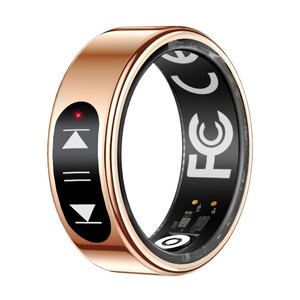
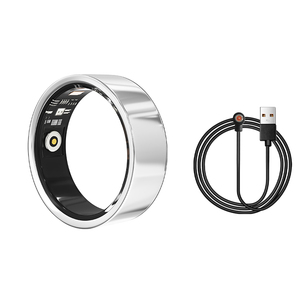
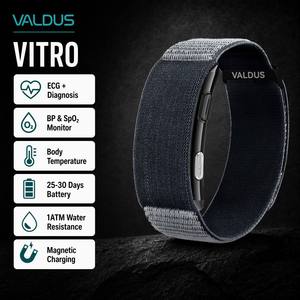
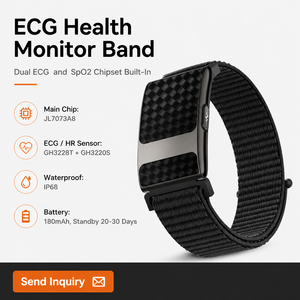
A smart ring or ECG band captures physiological telemetry and gesture input, while the AI camera glasses handle visual context and spatial audio feedback, all unified via our standardized SDK.
6. Zero-Defect Optical Alignment in Mass Production
Small deviations in camera optical axis cause severe user eye fatigue and failed machine vision parsing. Future-proof factories must utilize robotic Active Alignment (AA) assembly.
Our Shenzhen factory employs 6-axis optical calibration collimators during camera bonding, guaranteeing sub-pixel lens center alignment and pristine optical MTF curves on every batch.
Your Direct Manufacturing Factory Partner in Shenzhen
Founded in Shenzhen in June 2019, Smart Wear Works (Shenzhen Sww Industrial Development Co., Ltd) operates an advanced 1,000 square meter manufacturing plant in Pingshan District. We eliminate trading intermediaries, giving global brands direct access to our 50-person engineering, firmware development, SMT coordination, cleanroom optical assembly, and quality control departments.
With an established monthly throughput exceeding 30,000 units, we specialize in high-reliability OEM/ODM contracts: from industrial ID mockups and custom tooling to BLE/Wi-Fi antenna matching, white-label smartphone applications, and comprehensive international compliance management.
Our long-standing brand partners across Europe, North America, and Japan have relied on our hardware platforms for over 4 continuous years due to our uncompromising component sourcing, ISO9001-aligned QA protocols, and responsive engineering support.
Frequently Asked Questions for B2B Importers & Brands
Clear, unambiguous engineering answers regarding minimum order quantities, private labeling, SDK integration, optical sensors, and international compliance protocols.
Q1: Are you a direct manufacturer or a trading company?
We are a genuine direct manufacturing factory. Smart Wear Works is the dedicated wearable division of Shenzhen Sww Industrial Development Co., Ltd, established in Shenzhen in June 2019. Our physical assembly lines, cleanrooms, and testing facilities span 1,000 m² in Pingshan, Shenzhen, supported by over 50 skilled personnel. When you partner with us, you communicate directly with embedded hardware, firmware, and optical engineers—not sales agents.
Q2: What is the Minimum Order Quantity (MOQ) for custom OEM AI camera glasses?
Our MOQ structure depends strictly on the level of customization required:
• Wholesale Standard Platforms: Fast-ship stock models require an MOQ as low as 50 to 100 units for market trials.
• Private-Label OEM: Custom laser logo engraving, personalized boot screen, bespoke packaging, and localized manuals start at 500 to 1,000 units.
• Deep ODM Tooling & Custom Firmware: New frame industrial design (ID), custom injection molds, bespoke PCBA architectures, and proprietary white-label apps start at 3,000 to 5,000 units.
Q3: How do your AI camera glasses address privacy laws such as EU GDPR and US state laws?
All our AI camera glasses frames feature a hardware-interlocked recording LED indicator located directly next to the optical lens. The LED circuit is physically wired in series with the camera sensor power rail; if the LED is disconnected, bypassed, or tampered with, the camera sensor fails to receive power and cannot capture imagery. This hardwired design complies with GDPR Article 25 (Data Protection by Design) and North American surveillance statutes.
Q4: Can we integrate our proprietary enterprise AI models or cloud endpoints?
Yes. We supply comprehensive iOS and Android companion app SDKs, as well as low-level BLE and Wi-Fi communication protocol documentation. Your software engineering team can route captured video chunks, audio streams, and snapshots directly to your own AWS, Azure, Google Cloud, or self-hosted LLM endpoints (e.g., vLLM, Ollama, GPT-4o API) without passing through any third-party Chinese servers.
Q5: What camera sensors and optical specifications do you incorporate?
Our standard camera platforms utilize high-reliability Sony CMOS sensors ranging from 8MP up to 16MP interpolated, featuring a wide 115° to 125° field of view (FOV) optimized for first-person perspective recording. Lens construction comprises a 4P or 5P optical glass stack with anti-reflective coating. Electronic Image Stabilization (EIS) is processed either directly via onboard DSP or synchronized with 6-axis gyroscope telemetry inside the companion app.
Q6: How is the thermal envelope managed during continuous video recording or AI streaming?
Heat generation is the number one failure point in low-quality smart glasses. We utilize multi-layer pyrolytic graphite thermal spreaders inside the temples to dissipate heat generated by the SoC and Wi-Fi chip outwards toward the temple hinges, away from human skin. In addition, our firmware features intelligent dynamic frequency scaling (DVFS) that regulates capture bitrate and frame rates to keep exterior frame temperatures strictly under 38.5°C.
Q7: What certifications are available for international customs clearance?
Our products are engineered to pass comprehensive global regulatory compliance. We provide full testing documentation and certificates for:
• CE-RED & RoHS: European Union radio frequency, safety, and hazardous material directives.
• FCC Part 15C / ID: United States Federal Communications Commission wireless compliance.
• TELEC / MIC: Japanese radio certification for Bluetooth and Wi-Fi transmitters.
• UN38.3 & MSDS: Certified air and sea transportation documentation for built-in lithium-polymer batteries.
Q8: What is the typical development timeline from initial concept to mass production?
For existing catalog platforms with private-label branding, functional pre-production prototypes are delivered in 7 to 10 working days, with mass manufacturing completed in 20 to 25 days. For complete ground-up ODM projects requiring new industrial tooling, PCBA development, and optical mold validation, the typical schedule spans 75 to 90 days across DFM review, EVT, DVT, and PVT pilot runs.
Q9: Can the frames support prescription (Rx) lenses and sunglasses tinting?
Absolutely. Our frames are designed with precision cold-groove lens bevels matching standard optical lab specifications. Wearers can have their local optometrist fit single-vision, bifocal, or progressive prescription lenses. We also supply factory-fitted polarized TAC lenses, photochromic transition lenses, and magnetic prescription inserts as turnkey accessories.
Q10: What is the battery life and charging mechanism?
Our AI camera frames incorporate dual high-density lithium polymer batteries (one in each temple to ensure balanced 50:50 weight distribution) totaling 160mAh to 220mAh. This yields approximately 70 to 90 minutes of continuous 1080p recording, or over 14 hours of mixed Bluetooth audio, voice calls, and intermittent AI snapshot queries. In addition, our companion magnetic storage cases pack an integrated 3600mAh power bank, delivering up to 10 full frame recharges on the go.
Ready to Engineer Your Private-Label AI Camera Glasses?
Discuss your hardware requirements, target retail price point, MOQ parameters, and custom firmware roadmap directly with our Shenzhen engineering directors.
Get a Quote