Standard Catalog SKUs & Customizable Wearable Platforms
Explore production-ready platforms engineered for low-power edge computing, continuous biosensing, and rugged consumer use. Available for wholesale volume distribution and turn-key private label programs.
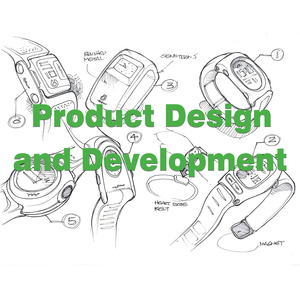
Custom Wearable Fitness Tracker CAD Drawing Hardware Smart Band
Full-cycle mechanical structural prototyping, injection mold manufacturing, and bare-board PCB integration for high-yield fitness band production.
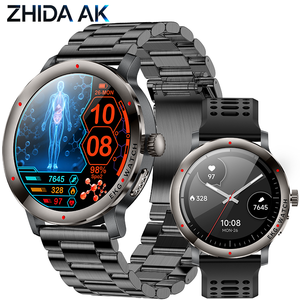
KC102 AMOLED Smart Watch ECG+PPG HRV Monitoring
Ultra-vivid retina display equipped with dual-lead ECG micro-sensors, photoplethysmography (PPG), pulse oximetry, and blood pressure trend tracking.
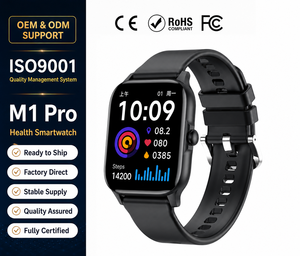
M1 Pro Smart Watch Bluetooth Calling Sports Fitness Tracker
Dual-mode Bluetooth 5.3 architecture providing high-fidelity wrist-based communications, 100+ athletic training algorithms, and IP68 waterproof housing.
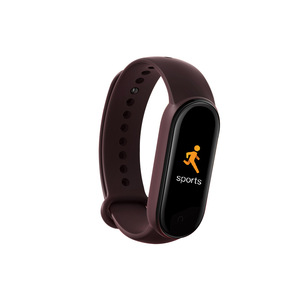
HT GRAND Premium Smart Health Watch Wireless Charging ECG
Engineered for long-haul tracking with an energy-dense lithium polymer battery, Qi-standard wireless docking, sleep staging, and cardiac rhythm logging.
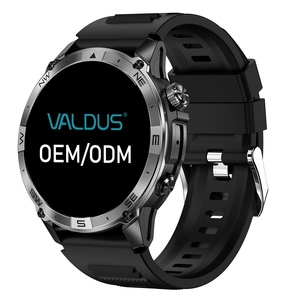
Valdus Source Factory GPS Smart Watch Heart Rate Monitoring
Built-in standalone GNSS receiver supporting GPS, GLONASS, and Galileo constellations for accurate outdoor tracking without reliance on cellular handsets.

Leading Manufacturer of Fitness Tracker Wearable R&D Production
High-throughput assembly and multi-station Automated Optical Inspection (AOI) lines capable of delivering 30,000+ certified wearable units every month.
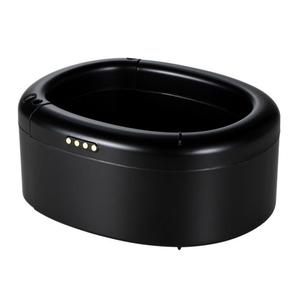
Smart Bracelet with External SIM Card Slot Wearable Devices
Independent 4G LTE-M / NB-IoT connectivity for lone-worker safety, institutional patient telemonitoring, and continuous remote biometrics upload.
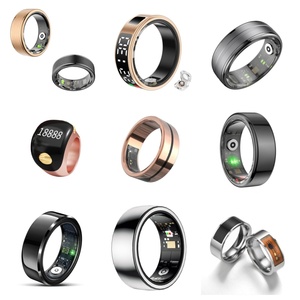
Waterproof Smart Swim Sleep Fitness Tracker Metal Smart Ring
Ultra-light 5g titanium alloy chassis featuring 25Hz SpO2 sampling, non-invasive cardiovascular tracking, and white-label companion SDK integration.
Precision Wearable Production Grounded in Shenzhen Innovation
Operating from our dedicated assembly and quality facility in Pingshan, Shenzhen, we integrate the complete electronics supply chain—from industrial toolmakers to firmware engineers—under one accountable roof.
Full Certification Scope
We streamline market entry across North America, the European Union, and Asia-Pacific with comprehensive test documentation covering CE RED, FCC Part 15C, RoHS 2.0, and Japan TELEC radio approvals.
In-House Firmware & App SDK
Our engineering team maintains complete source control over low-power RTOS platforms, Nordic Semiconductor and Realtek BLE chipsets, offering private-label brand partners fully customizable white-label iOS and Android apps.
4+ Year Brand Client Retention
Our long-term brand clients have renewed production contracts consecutively for over four years. We prioritize dimensional stability, low RMA rates (<0.8%), and batched CMF continuity over short-term spot orders.
Cleanroom Assembly & Optical SMT Line in Pingshan, Shenzhen
Monthly Production Output Capacity Across All Wearable Categories
Precision Mechanics, Optoelectronic Technicians & QC Inspectors
Acoustic, RF Attenuation, and Water-Immersion Pre-Shipment Testing
The Architecture of Modern Smart Glasses: Hardware, Optics & Edge AI
A technical deconstruction of electro-optical engineering, spatial acoustics, and on-device machine learning powering the transition from passive audio spectacles to standalone spatial computing peripherals.
1. Electro-Acoustic Tuning: Dipole Cancellation and Directional Sound Fields
Traditional bone-conduction frames suffer from poor low-frequency resonance and severe sound leakage. Our contemporary wholesale smart audio glasses utilize 1506 and 1608 micro-dynamic balanced transducers housed in sealed micro-acoustic chambers within the spectacle temples. By implementing inverted-phase acoustic wave ports along the outer rim, our design cancels outward audio bleed by up to 22dB at conversational volumes. This ensures enterprise-grade voice privacy for corporate calling, AI voice queries, and live conference translation without blocking ambient environmental awareness.
2. Visual Engine Integration: Micro-OLED and Diffractive Optical Waveguides
Display-enabled AI glasses depend heavily on weight balancing and optical efficiency. Our ODM development pipeline focuses on dual architectural paths: monocular heads-up micro-displays for industrial picking and outdoor sports telemetries, and binocular surface relief grating (SRG) diffractive waveguides for consumer augmented reality. Pairing high-luminance Micro-OLED engines delivering up to 3,000 nits of source brightness with precision photopolymer waveguide combiners ensures full readability under direct sunlight while maintaining total frame weights below 48 grams.
3. Multimodal Edge AI and Visual Translation Chips
With models such as the W100 and MSPG007 Ultra, smart eyewear has evolved beyond simple Bluetooth accessories into AI input-output nodes. Integrated Sony IMX sensors combined with low-power edge Neural Processing Units (NPUs) enable real-time OCR document translation, voice-to-text live transcribing in 163 languages, and contextual object classification. Processing voice data locally through custom low-latency quantization algorithms cuts network latency down to <200ms when paired with our cloud-assisted companion SDKs.
| Architecture Subsystem | Catalog Standard Tier | Flagship AI Translation Spec | Enterprise AR Waveguide Spec |
|---|---|---|---|
| Optical Engine | Open-Ear Acoustic (No HUD) | Micro-LED Monocular HUD (Optional) | Binocular Diffractive Waveguide (Micro-OLED) |
| Acoustic Transducer | Dual Open-Ear 1506 Speaker | Stereo Dual-Mic ENC Beamforming | Quad-Mic Array + Spatial Directional Drivers |
| Main Processor | Realtek RTL8763 / JL7012 | Actions ATS3085 / Qualcomm 3034 | Qualcomm Snapdragon AR1 Gen 1 / Dual NPU |
| Frame Weight | 25g – 32g (TR90 / Acetate) | 28g – 36g (Magnesium Alloy) | 42g – 52g (Titanium Ergonomic Frame) |
| Battery & Operating Life | 110mAh (4.5 hrs talk / 7 days standby) | 180mAh (6.5 hrs translation / 3600mAh Case) | 280mAh Dual-Cell (3 hrs continuous display) |
| Compliance Markings | CE / FCC / RoHS | CE / FCC / TELEC | Full International Standard |
2026–2030 Procurement Roadmap: Sourcing Smarter Wearables from China
Key economic shifts, manufacturing developments, and architectural trends that global B2B procurement directors must integrate into upcoming RFP and ODM negotiations.
1. Convergence of Audio Eyewear and LLMs
Global consumers are migrating away from screen-heavy smartwatches for discrete voice interactions. The procurement trend for 2026 prioritizes ultra-light smart frames with low-power wake-word engines that seamlessly tether with ChatGPT, Claude, and proprietary private-cloud AI services without draining phone batteries.
2. Strict Privacy & LED Indication Mandates
With expanding EU AI Act and state-level recording consent regulations, wholesale smart camera glasses must incorporate hardware-interlocked recording LEDs. Sourcing agents are enforcing un-bypassable power circuitry to ensure optical indicators light up whenever photos or videos are taken, safeguarding consumer privacy.
3. Modular Hinges and Prescription Rx Assembly
Traditional one-piece plastic smart eyewear prevented standard optical dispensers from servicing end-users. Modern OEM platforms utilize detachable front chassis, magnetic clip-ons, and front screw mounts that accommodate custom prescription lenses from -8.00D to +4.00D without putting stress on sensitive electronic temples.
Manufacturer Qualification Playbook: How to Audit a Wearable OEM in China
Essential checklist points for overseas sourcing directors, hardware startups, and B2B buyers vetting Shenzhen smart electronics suppliers.
Step 1: Check True Manufacturing vs. Trading Intermediaries
Many trading agencies pose as smart eyewear manufacturers while outsourcing production across unstable workshops. Review real facility ownership, request a live video tour of the Pingshan assembly line, inspect worker headcount records, and check for on-site cleanroom SMT reflow and ultrasonic welding capabilities.
Step 2: Inspect Acoustic Chamber & Water Ingress Testing
Demand verification of anechoic chamber testing for speaker THD (Total Harmonic Distortion) and dual-microphone beamforming efficiency. For waterproof watches and smart rings, inspect pressure chamber equipment verifying IP67, IP68, or 5ATM (50-meter hydrostatic) water resistance on the mass-production floor.
Step 3: Firmware Ownership & White-Label App Control
Inquire whether firmware updates (OTA) are developed by the factory's in-house software division or depend on a third-party turn-key vendor. Direct code access allows your brand to reconfigure boot screens, tweak Bluetooth pairing names, adjust sensor sampling rates, and secure private server endpoints.
Step 4: Battery Safety and Transport Certifications
Lithium polymer batteries in smart glasses and rings sit close to human tissue. Verify that all battery cells have certified Protection Circuit Modules (PCM) preventing overcharging, along with UN38.3 transport test summaries, MSDS documentation, and air/sea courier safety clearance certificates.
Frequently Asked Questions: Sourcing Smart Glasses & Wearables
Key technical, logistical, and customization questions answered directly by our factory engineering team.
Q1: What is the typical Minimum Order Quantity (MOQ) for custom private-label smart glasses?
For existing catalog hardware with custom laser-etched branding on temples, bespoke packaging, and custom Bluetooth pairing names, our MOQ starts at 500 to 1,000 units. For full ODM projects requiring custom injection molds, bespoke temple industrial design (ID), or proprietary PCB routing, initial production runs typically require 3,000 units to amortize dedicated tooling costs.
Q2: Are you a direct manufacturing factory or an export broker?
Smart Wear Works is the dedicated manufacturing division of Shenzhen Sww Industrial Development Co., Ltd, established in June 2019. We operate our own 1,000 m² assembly and testing facility located in Pingshan, Shenzhen, supported by over 50 team members. We manage engineering coordination, SMT assembly, and strict quality control directly in-house.
Q3: How do you address sound leakage in smart audio glasses during business calls?
We deploy directional acoustic dipoles paired with miniature 1506 transducers. By designing reverse-phase acoustic release ports on the temple's upper ridge, exterior sound waves are phase-cancelled in the far field. This limits intelligible audio leakage beyond 30cm, preserving private conversations in offices or public transit.
Q4: Can prescription (Rx) optical lenses be installed in your standard frames?
Yes. Our TR90 and titanium-acetate composite frames feature cold-insert optical grooves. Optical professionals can pop out the default anti-blue light or polarized sun lenses and insert single-vision, progressive, or photochromic prescription lenses from -8.00D to +4.00D without heating the electronic temples.
Q5: What certifications do you provide for export to the US, Europe, and Japan?
Our standard production platforms hold full compliance documentation for CE (RED, LVD, EMC), FCC Part 15C certification for US radio emissions, RoHS 2.0 hazardous substance compliance, and TELEC (MIC) certifications for the Japanese market. We provide complete lab test reports for custom branded runs.
Q6: Can we customize the companion smartphone application with our own branding?
Yes. We offer white-label iOS and Android companion software. We update app icons, user registration interfaces, brand color schemes, and privacy policy agreements, and compile installation packages for your corporate Google Play and Apple App Store developer accounts.
Q7: Are health tracking metrics (ECG, Blood Pressure, SpO2) certified medical-grade?
No. Our consumer smart watches, bands, and rings are intended strictly for fitness, sleep monitoring, and sports wellness reference. While our sensors utilize PPG algorithms and dual-lead ECG chips with high correlation, they are consumer electronics and should not be marketed as FDA/MDR Class II clinical diagnostic equipment.
Q8: What is the standard production lead time from prototype to delivery?
Branded sample units using standard hardware platforms typically ship within 5 to 7 business days. Mass production of branded catalog models takes 25 to 30 days after golden sample confirmation. Complete ODM builds involving custom tooling take 45 to 60 days for tooling, plus 30 days for initial pilot runs.
Q9: How do your AI glasses maintain user privacy in camera-equipped models?
Our camera glasses models (such as the MSPG007 Ultra) incorporate an un-bypassable hardware-linked front status LED that stays solidly illuminated whenever the sensor captures video or stills. Furthermore, our firmware does not permit hidden background recording, ensuring full alignment with EU GDPR and US state privacy codes.
Q10: What warranty and post-sales replacement policies do you provide for B2B buyers?
We provide a comprehensive 12-month factory warranty for all electronic assemblies, internal batteries, and optical display components. We typically include a 1% spare units allowance or provide direct replacement parts with subsequent replenishment shipments to keep customer return rates low.
Start Your OEM/ODM Wearable Project with Shenzhen Engineers
Whether you need volume wholesale pricing for catalog smart glasses, a custom firmware configuration, or an enterprise-grade hardware quotation, our engineering team responds with technical specs and project timelines within 24 hours.