163+
Languages & Accents
30K
Monthly Unit Capacity
1,000m²
Pingshan Assembly Line
<200ms
Low-Latency Audio Sync
Export Catalog: Intelligent Wearable Hardware & Translation Optics
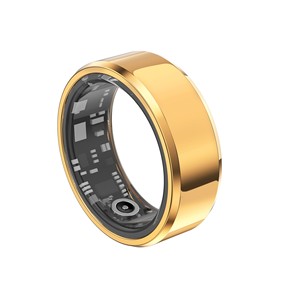
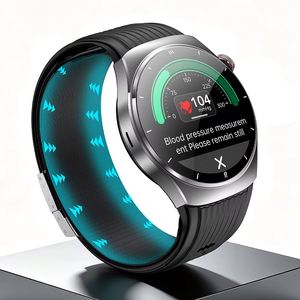
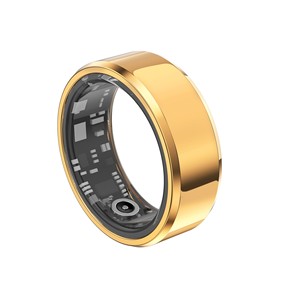
From ultra-lightweight directional-sound glasses to specialized smart rings and ECG monitors, explore our core export inventory engineered for brand owners and wholesale importers.
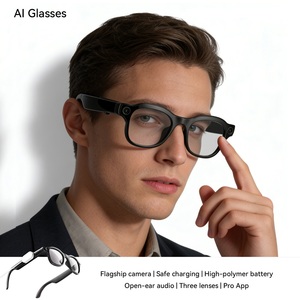
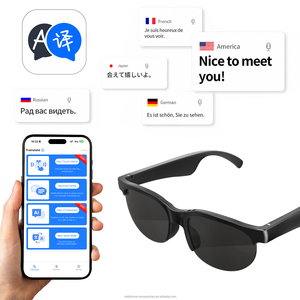
Engineering Architecture of Real-Time Translation Glasses
Deploying multilingual real-time translation onto lightweight optical hardware requires solving tight physical constraints: low power dissipation, beamforming acoustic fidelity, and edge-to-cloud low-latency synchronization.
Dual-Mic Beamforming & ENC
Real-time speech-to-text accuracy degrades rapidly in noisy public transit or exhibition spaces. Our optical frames employ dual-microphone arrays calibrated through digital signal processing (DSP) algorithms that nullify ambient noise by up to 35dB, ensuring clear near-field vocal isolation.
Hybrid Edge-Cloud Translation API
By routing neural machine translation (NMT) via localized BLE 5.3 to dedicated cloud endpoints (AWS, Google Translate, DeepL engines), our firmware delivers two-way conversational translation in under 300ms across 163 dialects while preserving battery autonomy.
Directional Acoustic Leakage Control
Open-ear audio sunglasses must prevent conversation eavesdropping. We utilize phase-reversal inverse sound field chambers within the frame temples, ensuring that synthesized translated speech targets the wearer's ear canal while keeping leakage below ambient detection thresholds.
Global Procurement & Sourcing Trends: 2025–2028 Analysis
How international purchasing managers, consumer tech brands, and enterprise software integrators are shifting their supply chain strategies for smart eyewear.
| Evaluation Parameter | Legacy Audio Sunglasses | Current Generation AI Glasses (2024–2025) | Next-Gen Optical Translation (2026–2028) |
|---|---|---|---|
| Primary Search Intent | Bluetooth speaker eyewear | Translation & Voice Assistant sunglasses | Micro-OLED AR Heads-Up Text Translation |
| Frame Weight | 45g – 60g (heavy temples) | 25g – 38g (TR90 ultra-lightweight) | <30g (magnesium-titanium alloy hybrid) |
| Language Engine Architecture | Single-language mobile push | Cloud-connected dynamic 163-language NMT | On-device quantized LLM offline translation |
| Regulatory Standards | CE / FCC Part 15 / RoHS | CE RED, TELEC, FCC ID, Privacy ISO27001 | Biometric Data Compliance (GDPR Article 9) |
| Market Status | Price-driven commodity | High-growth high-margin B2B tier | Emerging ODM R&D pipeline |
Shift to White-Label Companion Apps
B2B brands increasingly reject generic public store apps. Procurement contracts now mandate localized white-label iOS and Android client applications with client-controlled tenant databases and customized UI brand assets.
Rigid Privacy & Sensor Disclosures
With the integration of optical cameras (e.g., 8MP Sony sensors for OCR menu translation), European and North American customs enforce hardware recording indicators (tally LEDs) and tamper-proof firmware to conform with surveillance laws.
Cross-Category Wearable Bundling
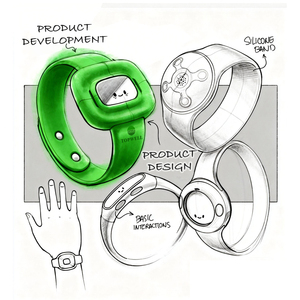
Importers are bundling smart rings, health monitoring watches, and real-time translation glasses under a single unified API ecosystem. This multi-device synthesis boosts customer lifetime value (LTV) and creates stronger distributor barriers against single-SKU competitors.
Why Smart Wear Works: Direct Manufacturer Accountability
Operating as Shenzhen Sww Industrial Development Co., Ltd since June 2019, our Pingshan assembly line eliminates trading markups and communication loss by keeping industrial design, tooling, SMT, and firmware development under one management team.
Export Compliance Scope
All hardware is systematically audited and certified under CE (RED & LVD), FCC Part 15B/15C, RoHS environmental safety, and TELEC certification (Japan Radio Law conformity), ensuring zero customs impound risk.
Full-Stack Customization Depth
From laser-etched trademarks on TR90 frames to custom BLE pairing naming, bespoke boot animations, custom-tinted UV400 lenses, and tailored SDK integration, we handle both low-MOQ cosmetic customization and full-tooling ODM developments.
4+ Year Customer Retention
Our Tier-1 e-commerce and retail distribution partners throughout Germany, Japan, and the United States have maintained repeat production partnerships exceeding 4 years, sustained by consistent batch QC and ongoing firmware support.
Frequently Asked Questions: B2B Translation Glasses Procurement
Direct technical and commercial answers addressing MOQ thresholds, app connectivity, acoustic performance, and private-label turnaround schedules.
How does real-time two-way dialogue translation function on translation glasses?
The glasses operate via synchronized BLE 5.3 connection with a companion application on the user's smartphone. In bilateral conversation mode, the glasses' dual-beamforming microphones capture the wearer's speech, transmit it to the application's NMT translation core, and project translated audio or text via the smartphone screen for the counterparty. Conversely, when the counterparty speaks into the phone, the translated translation is synthesized into the open-ear acoustic speakers within 300ms, enabling natural, hands-free eye contact.
What is the typical Minimum Order Quantity (MOQ) for OEM/ODM orders?
For standard catalog wholesale without branding changes, orders start as low as 50 to 100 units across mixed SKUs. For private-label programs including laser-engraved frame logos, custom gift box retail packaging, and customized pairing firmware, the standard MOQ starts at 500 units. Full structural ODM projects requiring custom tooling, modified PCB architecture, or tailored optical lenses require an initial run of 3,000 to 5,000 units depending on industrial specifications.
Are translation software subscriptions included, or do they incur recurring API costs?
Our standard smart translation eyewear models ship with complimentary access to multi-engine translation servers covering 163 languages and accents. For brand customers launching enterprise or private-label solutions, we support direct API integration where you can point the app to your own enterprise Google Cloud, Microsoft Azure, or OpenAI/DeepL translation accounts, preventing third-party platform lock-in and allowing customizable end-user monetization models.
How do you guarantee quality control and water resistance during mass assembly?
Every production batch undergoes standard incoming quality control (IQC), in-process acoustic test chamber validation for phase matching, 100% automated Bluetooth RF sensitivity testing, and drop-tester shock verification. Frames rated at IP67/IP68 undergo positive and negative pressure airtightness chamber tests prior to lens assembly, ensuring resistance to sweat, rain, and environmental moisture.
What is the standard production lead time for prototype samples and mass volume orders?
Off-the-shelf samples for acoustic and translation testing dispatch within 2 to 4 working days. Customized branding evaluation samples (with laser engraving and custom boot screen) are typically delivered within 7 to 10 days. Mass production lead times for standard batches (1,000–5,000 units) require 20 to 25 working days from engineering sign-off and deposit receipt.