The Paradigm Shift in Smart Wearable Manufacturing: 2026–2030 Strategic Whitepaper
The global smart wearable ecosystem has passed through its initial commoditization cycle. The previous era—defined by generic step counters, rudimentary photoplethysmography (PPG) pulse sensors, and unbranded injection-molded casings—has been rendered obsolete. In 2026, international buyers face a transformed consumer landscape driven by clinical-grade biomarker expectations, continuous edge intelligence, strict electromagnetic and RF regulatory oversight, and demanding industrial design aesthetics.
As a specialized high-tier Chinese original design manufacturer (ODM) and private-label contract producer (operating out of Shenzhen Sww Industrial Development Co., Ltd's Pingshan assembly complex since June 2019), we witness this seismic pivot daily. Global brands, high-velocity e-commerce retailers, and institutional healthcare integrators require manufacturing partners who operate beyond simple assembly. Successful international procurement now demands deep competence in low-power RF layout, embedded bioimpedance algorithms, biocompatible metallurgy, and localized cloud SDK integration.
Core Sourcing Reality: Cost per unit is no longer the sole determinant of procurement profitability. RMA (Return Merchandise Authorization) rates above 1.5% can wipe out consumer electronics brand margins due to reverse logistics and marketplace algorithmic penalties. Sourcing from a Shenzhen partner with in-house SMT calibration, RF anechoic chambers, and proprietary firmware testing eliminates this catastrophic vulnerability.
Critical Technical Dimensions Driving Wearable Procurement Today
Procurement directors and product architects must evaluate their wearable hardware pipelines across five architectural pillars before committing to pilot tooling or mass orders:
1. Multi-Spectral Sensor AFE
Transition from single green LED arrays to multi-wavelength systems (infrared, red, green, yellow) paired with dual-channel Analog Front Ends (AFE). This enables continuous peripheral SpO2, blood pressure trend estimation, and HRV autonomic stress profiling with clinical correlation.
2. Ultra-Low-Power Edge MCU
Adoption of dual-core ARM Cortex-M33 architectures, Ambiq Apollo4 series, and Nordic nRF5340 chipsets. These microcontrollers handle real-time sensor fusion and tinyML neural inferencing on-chip, reducing high-drain BLE transmissions and extending battery lifespan.
3. Form Factor Specialization
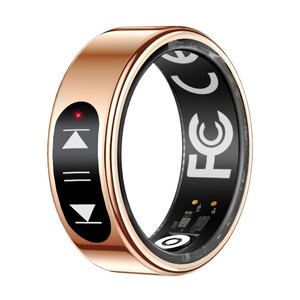
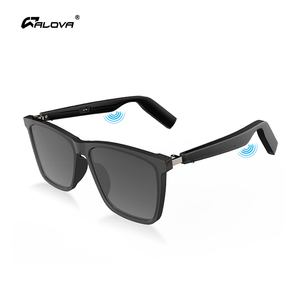
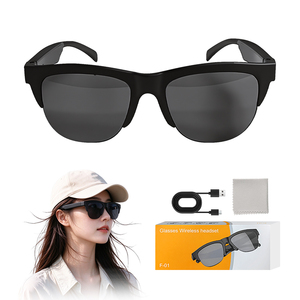
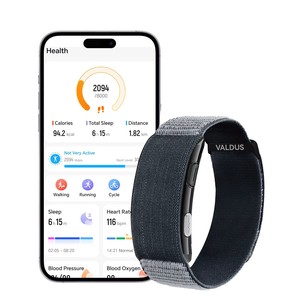
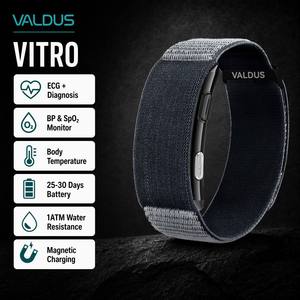
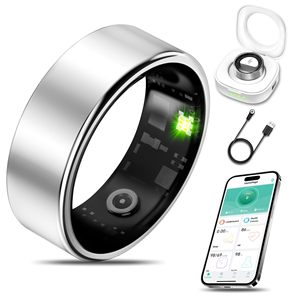
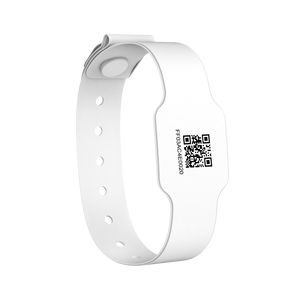
Proliferation of alternative form factors: 5g titanium smart rings, screenless bio-tracking bands for zero-screen distraction, open-ear audio glasses with acoustic beamforming, and clinical BLE/RFID beacons for asset and patient localization.
Advanced Display Subsystems: From Rigid TFT to Micro-Curved AMOLED
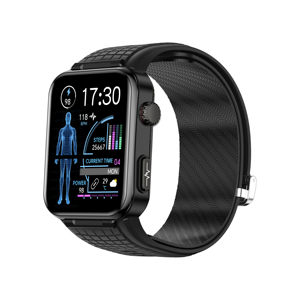
Display technology defines consumer perceived value at point-of-sale. Our manufacturing catalog leverages high-refresh (60 fps) AMOLED displays with pixel densities exceeding 340 PPI, paired with 2.5D or 3D curved Corning Gorilla glass or sapphire composite crystal. By engineering Chip-on-Glass (COG) and Chip-on-Flex (COF) bonding in cleanroom environments, our platforms minimize bezel dimensions, maximizing active screen-to-body ratios up to 92%.
Power Densities & Battery Safety Engineering
Wearable battery engineering is a discipline where compromises yield catastrophic field failures. We utilize customized cobalt-acid lithium-polymer cells engineered for high volumetric energy density (up to 750 Wh/L) paired with Japanese Seiko IC protection boards. Thermal throttling circuits, reverse polarity protection, and vacuum-sealed ultrasonic welding guarantee zero enclosure swelling even under sustained high-humidity (85% RH) and elevated temperature cycles (50°C). Every production lot ships with complete UN38.3 test summaries, IEC 62133 compliance certificates, and airline MSDS declarations.
Future Procurement Trends: Where Smart Wearable Sourcing is Headed (2026–2030)
Enterprise buyers seeking multi-year product lifecycle viability must position their product lines ahead of these emerging technical vectors:
Local TinyML & Generative UI
Watches running local quantized models that generate contextual watch faces and predictive wellness nudges without tethered phone latency.
Screenless Metabolic Health
Explosive demand for unobtrusive rings and screenless straps providing uninterrupted sleep architecture, HRV baseline recovery, and circadian tracking.
Multimodal Audio Translation
Convergence of directional open-ear acoustics and cloud LLMs in lightweight frames, providing simultaneous translation across 160+ languages.
Strict Biosecurity Compliance
EU GDPR, US HIPAA, and California SB-327 mandates requiring encrypted BLE pairing keys, hardened over-the-air (OTA) bootloaders, and zero unauthorized data harvesting.
Sourcing Strategy Comparison: Catalog Wholesale vs. Private Label OEM vs. Turnkey ODM
Selecting the appropriate procurement framework determines your capital expenditure, minimum order quantity (MOQ), and time-to-market. Below is the operational comparison of engagement models offered at our Shenzhen production plant:
| Parameters |
Standard Wholesale |
Private Label OEM |
Turnkey ODM Development |
| Target Buyer |
Distributors, Regional Resellers |
Established Consumer Brands, Amazon Top Sellers |
Venture-backed Startups, Enterprise Health Systems |
| Tooling & Mold |
Existing Standard Molds |
Standard Molds with Customized CMF |
Bespoke Exclusive Tooling (Plastic/Metal CNC) |
| Branding Customization |
None (Standard Factory Mark) |
Laser Casing Mark, Boot Logo, Custom Retail Box |
Proprietary Industrial Design & Custom Mechanicals |
| Firmware & Software |
Standard Factory Firmware |
Custom UI Themes, Tailored Companion App Skin |
Custom Embedded SDK, Open API, Independent App |
| Average Lead Time |
3 to 7 Days (Ready Stock) |
18 to 28 Days (Sample Approval: 5 Days) |
75 to 110 Days (Concept to Mass Production) |
| Typical MOQ Threshold |
50–100 Units |
500–1,000 Units |
3,000–5,000 Units |
Factory Excellence: Why Tier-1 Importers Partner with Smart Wear Works
Headquartered in the global electronics manufacturing epicenter of Shenzhen, Shenzhen Sww Industrial Development Co., Ltd (operating its commercial brand Smart Wear Works) has spent over 7 years engineering and delivering high-yield smart wearable hardware. Unlike trading agencies that outsource assembly to disconnected subcontractors, our 1,000 m² Pingshan facility retains complete operational control over every process step:
- Integrated Mechanical & ID Engineering: Our industrial design studio transforms initial aesthetic sketches into production-ready 3D CAD models, optimizing draft angles, wall thicknesses, and internal antenna clearances for flawless DFM (Design for Manufacturability).
- Cleanroom SMT & Assembly Lines: Precision surface-mount technology ensures micro-pitch BGA and 0201 component placement reliability. Assembly lines operate under strict ESD (Electrostatic Discharge) mitigation protocols.
- Rigorous Environmental Stress Screening: Every batch undergoes extreme environmental validation, including 48-hour continuous salt spray corrosion testing, -20°C to +60°C thermal shock cycles, 1.2-meter steel plate tumble drop tests, and high-frequency key-press fatigue testing (100,000 actuations).
- Full Water-Immersion & Pressure Chambers: We verify IP67, IP68, and 5ATM ingress protection through automated negative-pressure air leak detectors and real water hyperbaric chambers to guarantee zero field condensation.
- Multi-Jurisdiction Regulatory Portfolio: Our hardware platforms are architected to pass CE RED (Radio Equipment Directive), FCC Part 15 Subpart C, RoHS 2.0, REACH, and Japanese TELEC radio certifications. We supply test reports from accredited third-party test houses (SGS, TÜV, Intertek).
- In-House Firmware & Software Team: Our software engineers develop firmware in parallel with hardware. Whether you require custom BLE service UUIDs, secure bootloader encryption, localized multi-lingual user interfaces, or complete white-label apps on Google Play and Apple App Store, we deliver turnkey solutions.