Engineered Hardware Ready for Private Label & OEM/ODM Scalability
Explore production-tested smart wearable platforms and IoT endpoints manufactured in our Shenzhen facility, supporting full firmware customization, custom industrial design, and global regulatory compliance.
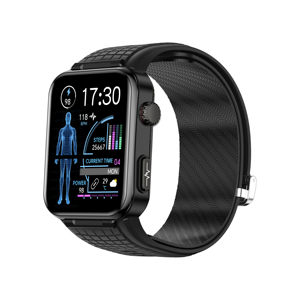

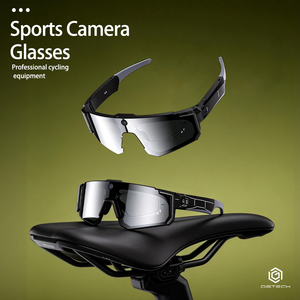
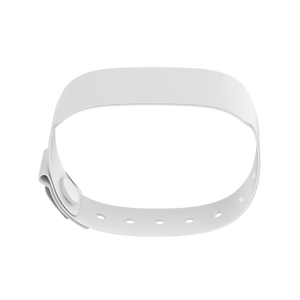
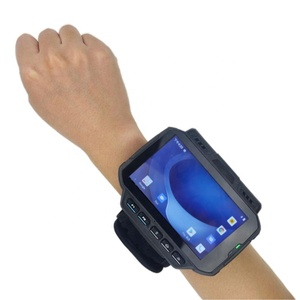
1. The Industrial Shift to Round AMOLED Architecture in China's Wearable Ecosystem
The global smartwatch landscape has undergone a definitive aesthetic and technological bifurcation. While squarish form factors remain tethered to generic digital utility, enterprise B2B buyers and fashion-tier consumer brands increasingly demand circular form factors. Round active-matrix organic light-emitting diode (AMOLED) smartwatches replicate the timeless horological silhouette of traditional Swiss chronographs while serving as high-performance compute nodes on the user's wrist. For international brands seeking contract manufacturing partners in China, understanding the nuances of round AMOLED panel integration is critical to maintaining a defensible market advantage.
Unlike planar rectangular displays that utilize standardized orthogonally aligned glass substrate cutting, fabricating circular AMOLED modules requires advanced laser cut-profiling (precision diamond or picosecond UV laser chamfering) along circular perimeters. This process presents distinct mechanical stress considerations along the display driver IC (DDIC) fan-out circuitry. Top-tier Chinese smartwatch factories have solved these structural yield challenges through Chip-on-Flex (COF) bonding and specialized low-temperature polysilicon (LTPS) backplane designs that enable symmetrical, ultra-narrow bezels under 1.5mm.
Engineering Core Fact: High-grade round AMOLED panels achieve infinite static contrast ratios (>100,000:1) and true black depths (0 nits) because each self-emissive organic sub-pixel switches off entirely. In smartwatches, this architectural attribute decreases system display power draw by 34% to 48% when driving dark dial faces with active Always-On Display (AOD) modes compared to traditional backlit TFT/IPS liquid crystal solutions.
Shenzhen's manufacturing cluster—anchored by specialized industrial hubs in Pingshan, Bao'an, and Longhua—dominates this supply chain. Direct access to premier display foundries (BOE, Visionox, Everdisplay, and Tianma) enables agile engineering transitions from standard high-resolution 1.39-inch (454×454 pixels, 326 PPI) panels to next-generation 1.43-inch, 1.53-inch, and 1.6-inch ultra-bright (up to 1,000–1,500 nits peak luminance) outdoor sport displays. For enterprise buyers, selecting a vetted China factory with dedicated cleanroom optical bonding capabilities prevents moisture ingress, Newton ring optical defects, and delamination across multi-year operating lifecycles.
2. Structural Comparison: Circular Display Technologies in Contract Manufacturing
Procurement teams must carefully weigh the trade-offs between legacy TFT-LCD architectures, standard rigid AMOLED panels, and flexible round AMOLED assemblies. The table below delineates the electrical, optical, and mechanical parameters evaluated during mass-production qualification runs in our assembly cleanrooms.
| Evaluation Parameter | Standard TFT-LCD with Backlight | Rigid Round AMOLED (Glass Substrate) | Flexible Round AMOLED (Polyimide Substrate) |
|---|---|---|---|
| Static Contrast Ratio | 1,000:1 to 1,500:1 (Backlight bleed) | > 100,000:1 (Infinite true black) | > 100,000:1 (Infinite true black) |
| Luminance & Sunlit Legibility | 350 – 500 nits (High thermal penalty) | 600 – 1,000 nits (Sub-pixel boost) | 1,000 – 1,500 nits (Hardware HBM Peak) |
| Panel Thickness (Module) | 2.10 mm – 2.60 mm | 1.10 mm – 1.40 mm | 0.55 mm – 0.85 mm (Ultra-compact) |
| Bezel Clearance (Deadzone) | 3.2 mm – 4.5 mm (Driver routing limit) | 2.0 mm – 2.8 mm | ≤ 1.2 mm (COF/COP reverse folding) |
| Always-On Display (AOD) Draw | High (>18 mA; backlight must fire) | Low (2.8 mA – 4.2 mA at 15% lit pixels) | Ultra-Low (<1.8 mA with LTPO 1Hz refresh) |
| Impact & Drop Fragility | Moderate; standard soda-lime edge | Moderate; edge micro-fracture risk | Exceptional (Shatter-resistant substrate) |
| Relative Unit BOM Cost | Baseline ($1.0x) | 1.85x – 2.30x | 3.10x – 3.80x |
3. Future Procurement Trends: Component Teardown & Architectural Shifts (2026–2030)
As the consumer electronics market matures, procurement directors can no longer rely on superficial cosmetic differentiation. The competitive battleground has moved toward energy-dense chemistry, heterogeneous dual-core compute architectures, and multi-spectral biometric sensing. Tier-one Chinese manufacturers are actively realigning their assembly lines to support these five core procurement shifts:
Heterogeneous Dual-Core SoCs
Migration from single MCU platforms to dual-chipsets pairing an ultra-low-power Arm Cortex-M55/M33 sensor hub with a dedicated 2.5D graphics GPU (e.g., Realtek RTL8773, Actions ATS3085, or Jerry II). This split-core strategy delivers crisp 60 FPS UI transitions while sipping microamperes during idle biometric sampling.
LTPO 1Hz Variable Refresh Panels
Adoption of Low-Temperature Polycrystalline Oxide (LTPO) backplanes that dynamically scale refresh rates from 60Hz during active touch interaction down to an imperceptible 1Hz during static AOD standby, mitigating the single largest battery drain in round AMOLED wearables.
Multi-Channel PPG & ECG Arrays
Consolidation of multi-wavelength photoplethysmography (PPG) using 4 to 8 photodiodes with dual green, red, and infrared VCSEL emitters, combined with titanium-coated dry electrode bezels for continuous HRV tracking, pulse-wave velocity estimation, and ECG arrhythmia logging.
Silicon-Carbon Anode Battery Densities
Replacing standard graphite anode polymer pouch cells with silicon-carbon (Si-C) composite batteries, pushing volumetric energy density past 780 Wh/L. This chemistry breakthrough affords 400+ mAh capacity inside slim 10.8mm round watch chassis, ensuring 7–10 days of continuous operation.
On-Device TinyML Inference
Deployment of lightweight edge neural networks compiled via TensorFlow Lite for Microcontrollers directly onto the watch SoC, facilitating real-time gesture identification, voice biometric wake-word activation, and sleep-stage classification without relying on continuous cloud telemetry.
5ATM / IP68 Dispensing Automation
Shift from traditional manual silicone gasket seating to automated 6-axis hot-melt reactive polyurethane (PUR) dispensing and ultrasonic hermetic casing welding, ensuring 100% pneumatic leak validation under 0.5 MPa underwater pressure simulations.
4. Enterprise Due Diligence: Vetting a Chinese Smartwatch Factory
The contract manufacturing ecosystem in Shenzhen and Guangdong ranges from trading brokers with zero cleanroom facilities to fully certified OEM/ODM manufacturers. International sourcing directors must look beyond marketing rhetoric and conduct rigorous on-site process verification. A qualified round AMOLED smartwatch factory must exhibit documented controls across three distinct operational layers:
Surface Mount Technology (SMT) & High-Density Interconnect (HDI) Validation
The motherboard of a circular smartwatch is constrained by severe geometric boundaries. Premium manufacturers utilize 8-to-10 layer HDI micro-via printed circuit boards (PCBs) or flexible-rigid hybrid boards to curve around internal battery cavities. SMT placement machines (e.g., Yamaha, Fuji, or Panasonic high-speed mounters) must maintain component placement accuracy within ±0.025mm to handle 01005 passive components, 0.35mm pitch BGA processors, and wafer-level chip scale packages (WLCSP).
Optical Bonding & Cleanroom Environmental Standards
Laminating the round AMOLED panel to the protective 2.5D or 3D curved cover glass (Corning Gorilla Glass, Panda Glass, or Synthetic Sapphire) requires a Class 1000 or Class 100 cleanroom environment. Any airborne particulate >0.5 microns trapped during optical clear adhesive (OCA) or optical clear resin (OCR) dispensing produces irremediable optical dark spots and structural bubble nucleation. Inquire whether the factory operates vacuum laminating autoclaves with active de-bubbling cycles.
Full-Stack Firmware & Companion App Sovereignty
Hardware without secure software is an enterprise liability. Sourcing from a factory that relies on third-party generic app solutions (such as public generic platforms with shared server infrastructure) exposes brand owners to severe GDPR and CCPA non-compliance fines. A premier OEM/ODM manufacturer maintains in-house embedded software teams capable of customizing RTOS firmware, developing proprietary Bluetooth Low Energy (BLE) peripheral GATT profiles, and delivering complete white-label iOS and Android companion applications hosted on dedicated AWS or Azure server infrastructure.
5. Enterprise Advantages: Smart Wear Works (Shenzhen Sww Industrial Development Co., Ltd)
Operating out of the advanced manufacturing corridor of Pingshan District, Shenzhen, Smart Wear Works represents the pinnacle of specialized smart wearable engineering. Established in June 2019, our industrial footprint is architected to eliminate the friction points common to international OEM/ODM electronics procurement.
Integrated 1,000 m² Facility
Our dedicated assembly footprint houses Class 10,000 to Class 1,000 clean air zones, automated assembly fixtures, optical bonding chambers, and specialized water-submersion test tanks. Monthly output reliably reaches 30,000 finished wearable devices under rigorous batch traceability.
50+ Specialized Engineers & Technicians
From precision mechanical tooling design and radio-frequency (RF) antenna tuning to embedded C/C++ RTOS development and iOS/Android app architecture, our in-house engineering corps directly handles your technical brief without intermediary outsourcing.
Global Regulatory Scope
Every platform engineered on our lines is architected from schematic inception to satisfy European Union CE (RED, LVD, EMC), United States FCC Part 15, RoHS hazardous substance restrictions, and Japan TELEC radio standards, guaranteeing smooth customs clearance.
Long-Term Strategic Partner Model: Over 70% of our production volume supports long-term international brand owners who have maintained uninterrupted manufacturing contracts with our factory for more than four consecutive years. We protect brand integrity through rigorous revision freeze controls, component lifecycle end-of-life (EOL) monitoring, and consistent mechanical tooling retention.
Frequently Asked Questions: B2B AMOLED Smartwatch Sourcing
Direct technical and operational answers to common inquiries raised by supply chain directors, brand managers, and procurement engineers.
Q1: What is the typical Minimum Order Quantity (MOQ) for custom round AMOLED smartwatches?
MOQ requirements depend on the level of customization. For standard catalog models requiring private-label laser-engraved casing logos, customized boot screens, and bespoke retail gift-box packaging, our standard MOQ starts at 1,000 units. For full ODM programs involving custom industrial design (ID), new injection/CNC tooling molds, proprietary PCB layouts, and bespoke companion app development, our baseline MOQ is typically 3,000 to 5,000 units across production batches.
Q2: How does your factory prevent AMOLED screen burn-in on circular Always-On Displays?
Burn-in occurs when static high-luminance UI elements degrade organic sub-pixels unevenly over time. In our RTOS firmware development, we integrate automated pixel-shifting algorithms into all AOD dial faces. The display engine imperceptibly translates the clock hands and indicator coordinates by 2 to 4 pixels every 60 seconds. Additionally, we enforce strict AOD pixel-ratio caps, ensuring that no more than 10% to 15% of the total AMOLED sub-pixels are illuminated simultaneously during standby.
Q3: Can we develop a fully white-labeled companion app instead of generic public apps?
Yes. Providing proprietary, brand-exclusive companion applications is one of our core competencies. We deliver fully branded iOS (Swift) and Android (Kotlin) applications published directly under your corporate Apple App Store and Google Play developer accounts. All backend API endpoints, user authentication databases, and cloud infrastructure can be hosted on your corporate AWS, GCP, or Azure tenants with strict compliance with GDPR, CCPA, and regional data protection frameworks.
Q4: What waterproofing testing protocols are performed on finished production lots?
Every manufactured unit undergoes a two-stage ingress defense validation. First, 100% of finished casings are tested via pneumatic dry-air differential pressure decay testers (testing seal integrity to 0.3–0.5 MPa). Second, statistical batch samples (AQL 1.0) undergo destructive hydro-static submersion testing in dedicated pressure chambers simulating 50-meter water depth (5ATM pursuant to ISO 22810 standards), followed by hot-plate condensation verification to confirm the absence of internal optical fogging.
Q5: What are the lead times for initial prototypes, golden samples, and mass production runs?
For existing platforms requiring CMF (color, material, finish) customization, laser-marking, and packaging adaptation, engineering verification samples are delivered in 7 to 12 working days. Full ODM projects follow a structured milestone timeline: ID concept and mechanical engineering (3–4 weeks), rapid SLA prototyping and PCB fabrication (3 weeks), tooling mold fabrication (35–45 days), T1 sample verification (10 days), and final mass production assembly (25–35 days after golden sample sign-off).
Q6: How do your engineers address radio frequency (RF) attenuation in metal smartwatch casings?
Round smartwatches predominantly feature zinc alloy, 316L stainless steel, or aerospace-grade aluminum housings. Metal chassis act as Faraday cages that can severely attenuate Bluetooth Low Energy (BLE), Wi-Fi, and GNSS antenna radiation. Our RF engineers utilize custom laser direct structuring (LDS) or molded interconnect device (MID) antennas integrated directly into the ceramic or polycarbonate rear cover, or engineer discreet PVD-isolated antenna slits around the metal bezel, validated via Vector Network Analyzers and 3D anechoic chamber testing.
Q7: Are biometric health tracking functions certified as medical devices?
All biometric measurements generated by our wearable platforms—including optical PPG heart rate, peripheral capillary oxygen saturation (SpO2), estimated blood pressure trends, sleep architecture stages, and single-lead ECG recordings—are engineered strictly for wellness, athletic performance, and lifestyle monitoring. They are not intended or marketed as Class II/III medical devices or diagnostics. When drafting packaging, marketing copy, and UI text, we assist buyers in ensuring compliant wellness-framed consumer labeling.
Q8: How is intellectual property (IP) and proprietary firmware source code protected?
We treat international client IP with uncompromising contractual and physical security. We execute bilateral non-disclosure agreements (NDAs) prior to receiving customer CAD files or industrial specifications. Tooling molds fabricated under custom contracts remain the exclusive property of the buyer and are marked with unique asset tags. For custom firmware codebases, proprietary Git repositories are maintained on isolated VLANs with strict role-based access control and code escrow options.
Q9: What battery safety certifications accompany export shipments?
Lithium-ion polymer pouch cells used in our manufacturing lines are sourced exclusively from Tier-1 audited cell vendors. Every battery pack incorporates an integrated Seiko or Ricoh protection IC protecting against over-charge, over-discharge, and external short-circuits. Complete compliance documentation—including UN38.3 transport testing reports, 1.2-meter drop test certifications, Material Safety Data Sheets (MSDS), and IEC 62133 safety declarations—is supplied with every ocean and air freight consignment.
Q10: Can your factory accommodate mixed-model wholesale orders for retail market testing?
Yes. For established retail chains, regional distributors, and e-commerce enterprises looking to test regional product-market fit before committing to full-scale custom ODM tooling runs, we provide standard catalog wholesale programs. Buyers can place mixed-model orders spanning smartwatches, audio glasses, smart rings, and fitness bands with rapid ex-factory dispatch within 5 to 7 business days, facilitating rapid inventory rotation with minimal capital lockup.