Engineered for Global Scale: Featured Wearable & Smart Eyewear Portfolio
Precision electro-acoustics, dual-mic beamforming noise cancellation, Hall-effect zero-latency switching, and ergonomic IP67 frames ready for custom tooling, white-label apps, and worldwide distribution.
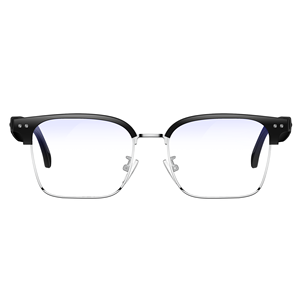
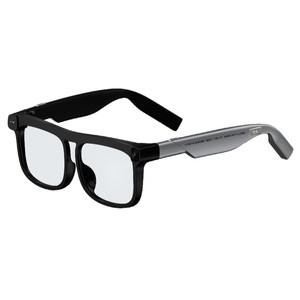
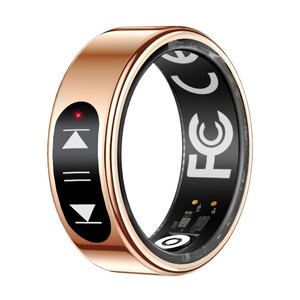
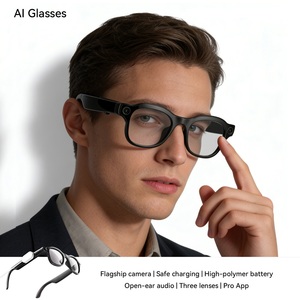
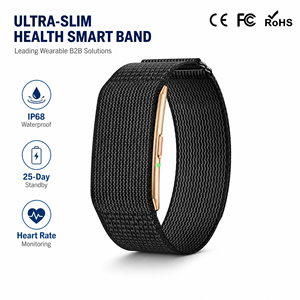
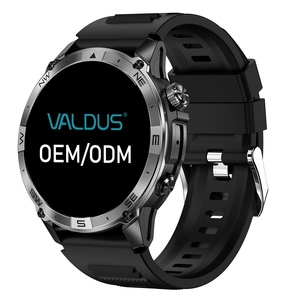
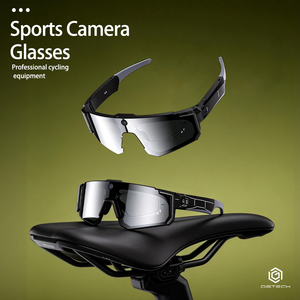
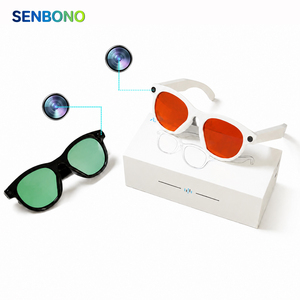
Certified Manufacturing Excellence in Shenzhen, China
Shenzhen Sww Industrial Development Co., Ltd (Smart Wear Works) maintains an accountable, vertically integrated production ecosystem designed to de-risk high-volume OEM/ODM procurement.
Dedicated Wearable & Electro-Acoustic R&D since June 2019
Dust-Free In-House Assembly Facility in Pingshan, Shenzhen
Stable Monthly Output Capacity Across Smart Eyewear & Wearables
CE, FCC, RoHS, TELEC Regulatory & Radio Certification Scope
The Engineering Behind Premium Directional Open-Ear Audio
Addressing the fundamental technical challenges of smart audio eyewear: sound leakage elimination, stereo imaging, and structural mass distribution.
As the consumer electronics landscape converges toward invisible computing, open-ear audio smart glasses have transitioned from a niche novelty into a mainstream wearable category. For B2B importers, optical brands, and consumer electronics distributors, sourcing from an accomplished Chinese exporter requires a comprehensive technical grasp of how micro-acoustics operate within the structural constraints of eyewear temples. Unlike standard in-ear monitors (TWS) that rely on ear canal seal pressure to generate acoustic damping, open-ear audio frames radiate energy through the air directly toward the user's tragus and concha. Achieving high-fidelity audio reproduction without broadcasting conversations to bystanders requires sophisticated engineering at the intersection of electro-acoustics and mechanical industrial design.
Dipole Phase Cancellation
Standard audio frames suffer from sound leakage because acoustic energy expands omnidirectionally. Our acoustic chambers utilize front and rear dual-port acoustic phase cancellation. The rear port vents sound waves that are 180 degrees out of phase with the primary front-firing port, effectively canceling high- and mid-frequency spill beyond a 30 cm radius while preserving pristine stereo clarity for the wearer.
High-Amplitude Micro-Drivers
Integrating custom-engineered 15.4 mm x 8.0 mm or 16.0 mm round dynamic drivers equipped with beryllium-plated composite diaphragms and high-flux Neodymium (N52) magnets. This architecture delivers punchy low-frequency response down to 80 Hz, overcoming the classic bass roll-off characteristic of non-occluded audio wearable transducers without mechanical rattling.
ENC Beamforming Mic Array
Crystal-clear outdoor voice calling and AI voice agent responsiveness are powered by dual MEMS microphones mounted along the temple spine. An adaptive beamforming algorithm calculates time-of-arrival differentials, isolating the user's vocal path while rejecting wind turbulence, automotive rumble, and ambient background noise up to 35 dB.
Strategic Procurement Trends: Audio & AI Smart Glasses (2025–2028)
Anticipate technology cycles, regulatory updates, and supply chain shifts to secure defensible market positions.
Multimodal Edge LLMs
Audio smart glasses are fast becoming the physical endpoint for conversational AI. Sourcing roadmaps are shifting toward devices with built-in voice activation for ChatGPT, Claude, and proprietary private LLMs, requiring low-latency audio transmission via Bluetooth LE Audio and dedicated app SDK integration.
Bluetooth 6.0 & LC3 Codec
Next-generation procurements focus on Bluetooth 5.4 and early BT 6.0 silicon platforms (such as Bestechnic BES2700 series). The integration of the LC3 codec slashes latency to under 30 ms and cuts RF current consumption by 40%, doubling talk times without increasing battery cell volume.
Prescription & Optical CMF
Buyers no longer accept bulky, heavy electronic eyewear. Sourcing contracts demand traditional optical craftsmanship: Swiss EMS Grilamid TR90 injection, CNC-milled Mazzucchelli acetate, spring-loaded barrel hinges, and quick-release lens frames supporting prescription RX glazing.
Dual-Cell Safe Power
To eliminate asymmetric temple weighting, advanced designs divide battery capacity into dual balanced 85 mAh to 110 mAh Li-Po cells housed in both left and right arms. Combined with Hall-effect magnetic switches, opening the temples instantly activates instant auto-pairing without manual buttons.
B2B Procurement Comparison: Selecting the Right Manufacturing Path
A data-driven breakdown of Wholesale Catalog Stock, Private Label OEM, and Custom Tooling ODM models for overseas brand managers.
| Evaluation Parameter | Wholesale Distribution (Catalog) | Private Label OEM (Standard Frame) | Full ODM Development (Custom ID/MD) |
|---|---|---|---|
| Typical MOQ Threshold | 50 – 200 units (Low financial barrier) | 500 – 1,000 units (Per colorway) | 3,000 – 10,000 units (Covers steel tooling) |
| Customization Scope | Stock packaging, standard neutral branding | Laser logo, Pantone CMF, boot sound, giftbox | Bespoke temple geometry, custom PCB, app SDK |
| Tooling & Mold Investment | Zero tooling capital expenditure | Zero mold fee; plate charge for silk-screen/laser | $12,000 – $28,000 USD for injection tooling |
| Sampling & Lead Times | Immediate dispatch (2 – 5 days) | Golden sample: 12 days; Mass: 25 days | EVT/DVT: 60 days; Mass production: 90 days |
| Regulatory Risk Profile | Supplier holds standard CE/FCC certificates | Supplier assists with sub-certificates or DOC | Full custom FCC ID, CE RED, TELEC testing cycle |
| Target Buyer Profile | Market testers, regional boutique retailers | E-commerce DTC brands, consumer electronic chains | Global optical groups, tech enterprises, telcos |
Why International Importers Partner With Shenzhen Sww Industrial
Engineering discipline, in-house acoustic and RF testing, and four-year-plus client retention define our manufacturing heritage.
In-House SMT & Cleanroom Assembly
We do not broker contracts out to unverified third parties. Our 1,000 m² Pingshan facility features precision optical and electro-acoustic assembly lines, dust-free lens mounting stations, and strict electrostatic discharge (ESD) flooring protocols.
Rigorous Acoustic & RF Validation
Every batch undergoes testing in our acoustic chamber utilizing artificial head simulators (B&K HATS) to verify frequency response curves, THD (<1%), and SPL directional leakage. Temple antenna performance is verified in an RF anechoic chamber for zero Bluetooth dropping.
International Regulatory Compliance
Exporting to the EU, North America, and Japan requires uncompromised compliance. Our products meet CE RED (Radio Equipment Directive), FCC Part 15C, RoHS 2.0, REACH, and Japan TELEC standards, backed by optical UV400 and polarized lens impact certifications (ANSI Z80.3).
Audio Smart Glasses Sourcing FAQ for Overseas Importers
Clear, unvarnished technical answers regarding waterproofing, acoustics, lens glazing, and international shipping.
How do you resolve private call audio leakage in public settings?
We deploy dual-cavity anti-phase acoustic cancellation. Secondary acoustic ducts positioned on the upper and outer edges of the temple emit sound waves exactly 180° inverted compared to the primary speaker directed toward the ear canal. At a distance of 0.5 to 1 meter (standard elevator or office spacing), the inverse waves cancel ambient sound radiation by up to 18 dB at standard listening volumes.
Can prescription (RX) lenses be glazed into your smart eyewear frames?
Yes. Our frames utilize optical-grade TR90 or acetate rim profiles with standardized bevel angles (V-grooves). This allows optical labs, optometrists, and downstream retail clients to fit single vision, progressive, blue-light blocking, or tinted corrective lenses directly without damaging internal wiring or moisture-sealed temple electronics.
How is IP67 waterproofing achieved around speakers and hinges?
We combine nano-hydrophobic surface coatings on internal PCBAs with ultrasonic welding along temple plastic seams. Speaker outlets incorporate acoustic ePTFE micro-porous acoustic membranes that allow sound waves to escape freely while acting as an impenetrable barrier against sweat, rainwater, and dust immersion up to 1 meter deep for 30 minutes.
What is the typical battery lifespan and charging design?
Our audio glasses feature dual pure-cobalt micro-lithium batteries (typically 85 mAh to 110 mAh per side, totaling 170 mAh – 220 mAh) regulated by dual Seiko protection ICs. This architecture yields 6 to 9 hours of continuous music/call playback and over 160 hours of standby. Charging is accomplished via magnetic 2-pin or 4-pin contact cables that eliminate vulnerable USB ports.
What white-label companion app customization do you provide?
We provide full white-label companion mobile app services for iOS and Android. Customizations include custom App Store branding, custom Bluetooth device discovery naming, personalized equalizer (EQ) presets, customizable tap-sensor touch controls, firmware-over-the-air (FOTA) server maintenance, and multi-language AI translation integration.
What are the correct HS codes and battery transport requirements?
Audio smart glasses are commonly classified under HS Code 8518.30 (Headphones and earphones, combined with a microphone) or HS Code 9004.90 (Spectacles and sunglasses). For export air freight and ocean shipping, all goods are certified under UN38.3, MSDS, and battery drop test protocols, packaged in compliant Section II PI967 lithium battery cartons for seamless customs clearance worldwide.
Initiate Your Audio Smart Eyewear Program Today
Connect with Shenzhen Sww Industrial Development Co., Ltd. Direct factory access, rapid prototyping, and verified manufacturing capacity for global brand owners, importers, and distributors.