AI Translation
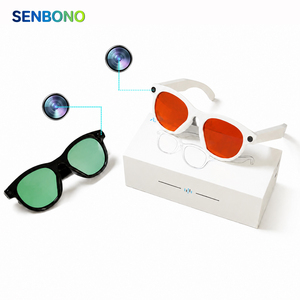
Every platform engineered by Shenzhen Sww Industrial Development Co., Ltd supports flexible OEM brand localization, private-label firmware integration, custom CMF, and rigorous CE, FCC, RoHS, and TELEC compliance protocols.
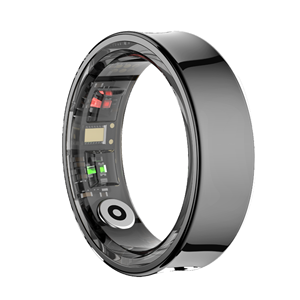
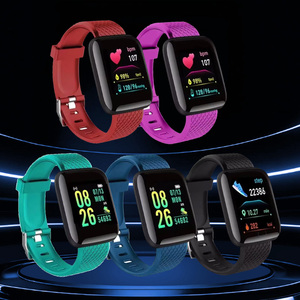
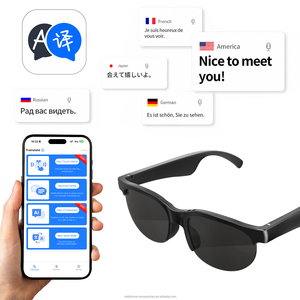
As enterprise procurement shifts toward next-generation wearable interfaces, AI translation eyewear has evolved far beyond rudimentary Bluetooth earphone bridges. Modern translation optics synthesize three foundational hardware tiers: micro-acoustic directional beamforming arrays, ultra-low-power neural network DSPs (Digital Signal Processors), and cloud-synchronized semantic translation engines.
Shenzhen Sww Industrial Development Co., Ltd engineers its smart audio and translation frames around dual-beamforming MEMS microphones paired with noise-cancellation DSP algorithms (ENC). By isolating vocal tracts and computing spatial time-of-arrival differentials, the system cancels peripheral ambient noise up to 45 dB. This acoustic isolation is vital for downstream Natural Language Processing (NLP); uncorrupted audio input reduces Large Language Model (LLM) and Automated Speech Recognition (ASR) character-error-rates (CER) by over 38% in high-noise environments such as transit hubs, trade halls, and international summits.
Evaluating shifting procurement methodologies, hardware convergences, and supply chain adaptations for consumer brand portfolios, telematics integrators, and B2B distributors.
Procurement demands are shifting from pure acoustic playback to unified visual-audio sensory glasses. By embedding ultra-compact 2MP to 8MP CMOS sensors (such as our M88 and MSPG007 platforms), modern devices execute simultaneous OCR (Optical Character Recognition) translation of menus, technical schematics, and road signage alongside spoken foreign dialogue.
Early smart glasses failed due to heavy front-frame balance and thermal buildup. Enterprise buyers now specify ultra-lightweight TR90 memory polymers, titanium alloys, and flexible temple hinges. Distributing dual lithium batteries (80mAh–140mAh per side) into the temple tips optimizes weight distribution and provides over 6 hours of continuous conversational throughput.
With GDPR, CCPA, and Japanese Radio Law (TELEC) scrutinizing voice biometric recording, procurement teams demand strict data siloing. Modern enterprise hardware incorporates hardware-switched LED indicators when cameras or microphones are live, as well as end-to-end encrypted packet transfers with no cloud speech retention.
B2B importers avoid generic, unbranded companion apps that dilute customer loyalty. The ongoing sourcing standard requires turnkey SDK/API licensing, private-label iOS and Android installations, customizable subscription billing modules, and dedicated cloud-server tenant hosting in customer-specified regions.
| Technical Parameter | Standard Acoustic Audio Frames | Enterprise AI Translation Eyewear | Vision + Translation Ultra Glasses |
|---|---|---|---|
| Primary Target Use-Case | Hands-free music, casual calls, UV eye protection | Live multi-language discourse, trade negotiations, travel | Multi-modal OCR translation, field inspection, POV capture |
| Microphone Sensor Array | Single or dual omnidirectional microphone | Dual beamforming MEMS + Dedicated ENC DSP | Quad-array beamforming + Acoustic wind-hoods |
| Translation Latency | N/A (Standard audio streaming) | < 350 ms via Cloud LLM Gateway | < 300 ms Edge-Assisted ASR Inference |
| Optical / Imaging Module | Polarized UV400 / Prescription TAC | Anti-blue / Prescription Photochromic | 2MP to 8MP Ultra-low distortion CMOS Sensor |
| White-Label App Support | Optional standard app rebranding | Full SDK / Custom Private Server Provisioning | Full SDK, Cloud Storage, Custom LLM Token Routing |
Operating as a full-cycle wearable design, SMT coordination, firmware development, and assembly facility in Pingshan, Shenzhen since June 2019.
Our internal mechanical and industrial design engineering team takes client industrial sketches (ID) to functioning CNC working prototypes within 14 days, reducing optical alignment and temple fatigue validation cycles.
We maintain full certification scope covering European CE (RED, LVD, EMC), United States FCC Part 15, RoHS environmental conformity, and Japanese TELEC spectrum licensing. All technical construction files (TCF) are provided directly to your compliance auditors.
We do not outsource codebase maintenance. Our in-house embedded software engineers customize boot screen animations, BLE peripheral identifiers, hardware gesture controls, and proprietary multi-language voice prompt packages directly within the DSP ROM.
Located in the heart of Pingshan's high-tech manufacturing belt, our factory sources Class-A optical lenses, premium polymer frames, and Tier-1 silicon directly, shortening engineering iteration cycles and securing consistent component availability.
Direct answers for purchasing directors, supply-chain specialists, and private-label brand managers.
For standard catalog configurations with custom laser-engraved logos, custom branded packaging, and localized multilingual user manuals, our typical MOQ starts at 500 units. For full OEM/ODM programs requiring bespoke CMF pantones, tailored frame tooling, or customized companion app white-labeling, our engineering threshold is typically 1,000 to 2,000 units depending on structural complexity.
Under standard 4G/5G/Wi-Fi uplink conditions, round-trip audio capture, neural noise-cancellation, cloud transcription, translation, and text-to-speech (TTS) playback take between 280 ms and 450 ms across major language pairs (English, Spanish, Mandarin, Japanese, German, Arabic, etc.). For specialized trade terms, custom vocabulary glossaries can be provisioned within the companion application.
Yes. Our structural frame architecture is engineered with standard optical grooves compatible with prescription lenses (single vision, progressive, anti-blue light, and photochromic transitions). We can supply finished optical units assembled under clean-room conditions or deliver frame chassis configured for finishing by your local optical retail networks.
Every production run passes through our four-stage QA system: Incoming Quality Control (IQC) on raw batteries, chips, and optical resins; In-Process Quality Control (IPQC) checking temple hinge torque (tested to 20,000 open/close cycles) and acoustic frequency response; Environmental Aging (testing thermal tolerance from -20°C to 60°C and IPX4/IP67 ingress); and Pre-Shipment Inspection (PSI) following MIL-STD-105E AQL 1.0/2.5 standards.
We support full Over-The-Air (OTA) firmware upgrade pipelines embedded within the iOS and Android companion frameworks. As translation LLMs and neural models release improved versions, our software team pushes cloud-side API routing updates seamlessly, ensuring your end-users experience consistent translation accuracy without requiring physical hardware maintenance.
Consult with our Shenzhen engineering specialists today. Obtain technical datasheets, request physical Golden Sample evaluations, or review custom frame tooling schematics aligned with your brand roadmap.