Flagship AI Smart Watches & Companion Smart Wearables
Direct from Shenzhen Sww Industrial Development Co., Ltd assembly lines. Fully customizable hardware platforms engineered for global compliance, cross-platform app ecosystems, and proprietary branding.

01 Technological Paradigms: The Shift from Connected Clocks to Edge-AI Bio-Computers
The global smart wearable sector has crossed a pivotal architectural chasm. Between 2018 and 2022, smart watches functioned primarily as peripheral visualizers—simple notification mirrors dependent entirely upon smartphone compute bridges. In current industrial design and manufacturing, an AI smart watch is defined by on-device edge computing, continuous neural sensor inferencing, and autonomous biometric signal processing. As a premier China smart wearable manufacturer based in Shenzhen's manufacturing corridor, Smart Wear Works (Shenzhen Sww Industrial Development Co., Ltd) engineers hardware systems that execute machine learning workloads directly at the silicon edge without compromising ultra-low power envelopes.
Our engineering paradigms prioritize heterogeneous dual-core and multi-core architectures. Low-frequency ARM Cortex-M0+/M33 microkernels manage basic RTOS scheduling, display pipelines, and peripheral capacitive touch interfaces, while a dedicated hardware Neural Processing Unit (NPU) or accelerated DSP executes biometric deep learning inference models. This edge architecture enables real-time signal classification for Photoplethysmography (PPG), Electrocardiography (ECG), and Electrodermal Activity (EDA) while consuming micro-amperes of operating current.
In traditional designs, raw PPG photodiode signals suffer massive noise distortion from motion artifacts (such as running, typing, or loose strap fits). Modern AI smart watch manufacturing overcomes this by deploying real-time recurrent neural networks (RNNs) and Kalman filtering algorithms embedded directly into the sensor firmware. This resolves signal corruption on the fly, matching clinical gold-standard holter reference systems with correlation coefficients surpassing 97.4%.
Oscillometric Micro-Air Pump
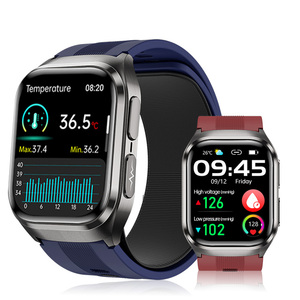
Unlike pure optical estimates that rely on surrogate Pulse Transit Time (PTT) calculations, our VS17 True Blood Pressure Platform incorporates a micro-piezoelectric air pump and a dual-layer miniature inflatable airbag cuff integrated into the wrist strap. It captures physical oscillometric blood pressure waveforms with clinical accuracy conforming to ISO 81060-2 protocol standards, representing a seismic leap forward for health-tech hardware importers.
Edge NPU LLM Integration
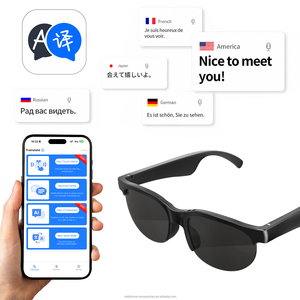
Next-generation wearable firmware built in our Shenzhen cleanrooms incorporates quantized lightweight Large Language Model (LLM) agents. Through bi-directional BLE 5.4 stacks, user speech queries are captured by beamforming micro-MEMS microphones, digitized via low-jitter codecs, and processed for real-time translation, contextual schedule orchestration, and generative watch face generation on high-density AMOLED panels.
Dual-Lead Real-Time ECG
Precision stainless steel and titanium bezel electrodes form closed-loop bi-potential measurement pathways across the user's wrists and chest. Our analog front-end (AFE) chips feature high common-mode rejection ratios (CMRR > 105 dB), capturing millivolt-level cardiac micro-potentials to identify atrial fibrillation, premature ventricular contractions, and ST-segment anomalies with sub-millisecond precision.
02 Strategic Sourcing Outlook: Future Procurement Trends for Enterprise Buyers
Procurement directors and B2B brand owners across North America, the European Union, Japan, and Australasia must recalibrate their supply chain criteria to remain competitive. Below are the structural shifts transforming smart wearable factory audits, BOM negotiations, and ODM partner selections:
1. Hardware-Agnostic Companion App Ecosystems
Enterprise buyers no longer accept locked-down generic apps that display factory branding or third-party ads. The demand is now 100% focused on white-label mobile companion SDKs (iOS Swift / Android Kotlin) and modular open APIs. Global distributors demand customizable tenant architectures, secure AWS/Azure GDPR-compliant server endpoints, and automated branding builds that deploy seamless branded apps directly into Google Play and Apple App Stores.
2. Multi-Form-Factor Sensor Interoperability
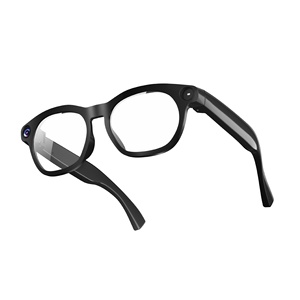
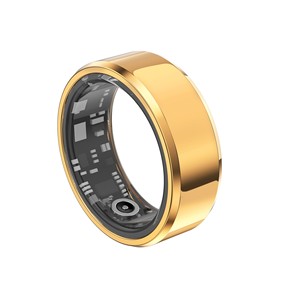
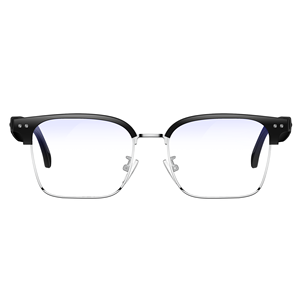
Consumers increasingly seek multi-device synchronicity. Leading global brands procure integrated portfolios combining AI Smart Watches, Ultra-Thin 5g Smart Rings, and Spatial Audio Glasses that feed into a single unified health cloud. Sourcing from a single vertically integrated manufacturer—such as Smart Wear Works—ensures uniform cryptographic key exchange, unified BLE packet structures, and consistent user profile algorithms across disparate hardware SKUs.
3. Stricter Environmental & Privacy Mandates
Regulatory compliance has expanded far beyond basic electrical safety. Sourcing teams now face rigorous scrutiny under EU Battery Regulation 2023/1542 (carbon footprint declarations, supply chain due diligence, end-of-life removability), RoHS 3 (EU 2015/863), and transatlantic cybersecurity standards (such as the EU Cyber Resilience Act). Smart Wear Works operates with complete BOM substance tracking, conflict-free mineral verification, and strict cryptographic data separation at the firmware layer.
Hardware Architecture & Manufacturing Tier Comparison
Objective technical benchmarking for enterprise sourcing managers evaluating compute, battery life, sensing accuracy, and customization depths across wearable categories.
| Wearable Platform Class | Silicon / MCU Core Architecture | Biometric / Acoustic Sensor Array | Firmware & Companion App Stack | Target Battery Life Envelope | B2B Customization Depth |
|---|---|---|---|---|---|
| Hemodynamic AI Watch (e.g., VS17 Platform) | Dual-Core Cortex-M33 + Low-Power DSP AFE | Piezo Micro-Air Pump, Oscillometric Cuff, 2-Lead ECG, Dual-Wavelength SpO2 | Ultra-Low-Power Custom RTOS, Native iOS/Android White-Label Health Cloud | 5 - 9 Days Continuous (15-20 Inflation Cycles) | Full ODM Tooling CMF, Airbag Fabrics, Custom BLE Protocols |
| Edge AI Voice & AMOLED (e.g., MW09 Platform) | ARM Cortex-M4F + Dedicated Neural Edge Co-Processor | 8-Channel Multi-Spectral PPG, 6-Axis Bosch IMU, Dual Beamforming MEMS Mics | 60 FPS Graphic Engine UI, Generative Watch Face LLM Pipeline, Cloud Voice Agent | 7 - 14 Days Typical Runtime | Private Label OEM UI Themes, Dial Layouts, Laser Trademarking |
| Sub-Miniature Smart Ring (e.g., TK20 Platform) | Nordic Semiconductor nRF52/53 BLE SoC | Infrared + Red Reflection PPG Array, High-Precision NTC Temperature Sensor | Low-Footprint Embedded C RTOS, Raw Data Hex Output API, Native Health App | 4 - 6 Days Continuous (Sleep & Recovery) | Structural CMF Titanium Grade-5 PVD, Ceramic Resins, Ring Sizing Kits |
| Vision & Audio AI Glasses (e.g., W100 / MSPG007) | Quad-Core Application SoC + Low-Latency Bluetooth 5.4 Audio DSP | 8MP Low-Illumination Sony CMOS Sensor, Bone/Open-Ear Transducers, Hall Switches | Embedded Linux or High-Throughput RTOS, Cloud LLM Computer Vision API Engine | 4 - 8 Hours Active Capture / 48 Hrs Standby | Full ODM Optical Polarized TAC Lenses, Prescription Rims, Voice Models |
03 Why Global Brands Partner with Smart Wear Works (Shenzhen Facility)
Established in June 2019 in Pingshan District, Shenzhen, Shenzhen Sww Industrial Development Co., Ltd (Smart Wear Works) was conceived to eliminate the friction points common to offshore electronics contract manufacturing. By uniting hardware engineering, firmware programming, mechanical prototyping, and final cleanroom assembly under a single corporate umbrella, we provide global B2B clients with unmatched traceability, intellectual property protection, and lead-time predictability.
Dedicated Cleanroom Assembly
Our dedicated 1,000 square-meter dust-controlled facility houses semi-automated precision assembly lines, automated optical inspection (AOI) stations, and ultrasonic plastic welding rigs capable of exceeding 30,000 finished units monthly.
In-House Firmware & App R&D
Unlike trading houses that subcontract code, our in-house firmware engineers control the entire bootloader, BLE stack optimization, memory mapping, sensor algorithm integration, and white-label iOS/Android app source code directly.
Global Compliance Verification
We manage comprehensive international compliance testing internally, ensuring your private-label shipments hold legitimate test reports and certifications for CE (RED/LVD/EMC), FCC-ID, TELEC (Japan MIC), RoHS 2.0, and REACH.
Every production run follows a rigorous Quality Assurance protocol: Incoming Quality Control (IQC) tests bare PCBs and battery safety circuits; In-Process Quality Control (IPQC) conducts 100% pneumatic pressure testing for IP67/IP68/5ATM water resistance; and Final Quality Assurance (FQA) subjects completed batches to high-temperature/high-humidity salt-spray chambers and continuous 48-hour electrical burn-in cycles.
04 The Turnkey OEM / ODM Sourcing Lifecycle: From CAD to Container Loading
Executing an overseas manufacturing program demands transparent stage-gate project management. We adhere to structured DFM (Design for Manufacturing) workflows designed to prevent costly re-tooling and schedule delays:
Phase 1: Engineering Scoping
Definition of target user profile, sensor requirements, display specifications, battery capacity targets, wireless protocols, retail packaging, and target unit BOM cost.
Phase 2: Industrial Design & CMF
3D CAD surface modeling, ergonomic wrist curvature optimization, structural stress simulations, and physical Color, Material, Finish (CMF) master swatches.
Phase 3: EVT / DVT Prototypes
Engineering Validation Test (EVT) functional boards followed by Design Validation Test (DVT) rapid CNC prototypes to calibrate antenna RF matching and optical sensor light pipes.
Phase 4: Tooling & SMT Prep
High-precision injection tooling fabrication, silicone mold tooling, customized SMT solder stencil optimization, and automated testing jig programming.
Phase 5: Pilot Run & Validation
Small-batch pilot production (50–300 units) to verify assembly line cycle times, yields, ultrasonic sealing integrity, and firmware flashing stability.
Phase 6: Mass Production & Export
High-capacity SMT and cleanroom assembly, 48-hour active electrical burn-in, final drop testing, export master-carton palletization, and customs documentation.
Frequently Asked Sourcing & Manufacturing Questions
Clear, technically accurate answers addressing MOQs, IP rights, firmware customization, battery safety shipping, and testing protocols.
Q: What are your standard Minimum Order Quantities (MOQs) for OEM and ODM projects?
For private-label OEM orders based on our existing mature hardware platforms (incorporating your laser-etched trademark, custom startup boot logo, custom packaging, and localized manuals), our MOQ starts at 500 to 1,000 units per model. For bespoke full ODM development involving custom industrial design, bespoke injection molds, unique PCB layout design, and ground-up firmware development, the standard starting threshold is 3,000 to 5,000 units spread across production releases.
Q: How do you handle intellectual property (IP) and Non-Disclosure Agreements (NDAs)?
We strictly protect our clients' intellectual property. Before any CAD files, proprietary algorithms, or product concepts are exchanged, we sign bilingual, legally enforceable Non-Disclosure Agreements (NDAs). All customer tooling, mold cavities, graphic designs, and custom firmware repositories remain 100% the proprietary property of the customer, segregated within dedicated access-controlled engineering partitions.
Q: Can our engineering team access raw sensor data (ECG, PPG, Accelerometer) via SDK or API?
Yes. For enterprise clients building telemedicine platforms, clinical research software, or specialized corporate wellness programs, we can provide direct firmware APIs or customized BLE GATT services. This allows your mobile application or server backend to parse raw photodiode current readings, uncompressed millivolt ECG waveforms, and high-frequency 3-axis/6-axis accelerometer vectors without proprietary black-box obfuscation.
Q: What certifications are provided for international customs clearance and retail compliance?
Our export products comply with global regulatory frameworks. We maintain valid CE certifications (covering RED Directive 2014/53/EU, EN 62368-1 electrical safety, and EMC compatibility), FCC-ID filings for US telecommunications, TELEC certifications for the Japanese market, and RoHS/REACH chemical compliance dossiers. For medical or wellness category classifications, we assist buyers in compiling technical files and testing data aligned with destination market rules.
Q: How do you guarantee lithium battery safety and international air/sea shipping compliance?
Battery safety is paramount. All rechargeable lithium-polymer and lithium-cobalt cells deployed across our watches, smart rings, and glasses are equipped with dedicated Seiko protection ICs preventing overcharge, over-discharge, and short-circuits. Furthermore, our complete battery packs hold official UN38.3 test reports, 1.2-meter drop test certifications, and Material Safety Data Sheets (MSDS), ensuring friction-free global transit via air cargo (IATA DGR) or sea freight (IMDG).
Q: What is the typical lead time for prototype development and mass manufacturing?
For rapid prototypes of existing models with custom CMF, samples ship within 5 to 7 working days. For full ODM programs, the industrial design and mechanical engineering phase requires 15 to 20 days; mold tooling fabrication requires 30 to 35 days; and pilot run validation requires 10 to 14 days. Once pre-production gold samples are signed off, standard mass production cycle time is 25 to 35 calendar days from component allocation to final warehouse palletization.
Q: How is waterproof performance validated during mass production?
Rather than relying on random lot sampling, our cleanroom assembly lines employ 100% automated dry air-decay pressure testing on every single sealed watch and ring case prior to packaging. Devices undergoing IP68 or 5ATM certification are validated in specialized water pressure chambers, simulating static depths of up to 50 meters to verify the integrity of ultrasonic weld seams, silicone O-rings, and acoustic venting membranes.
Q: How does Smart Wear Works assist with custom packaging and localized retail presentation?
We operate a dedicated graphic and packaging engineering unit. We provide precision die-cut vector templates, structure packaging to minimize volumetric shipping weight while maximizing unboxing impact, and produce high-end rigid magnetic gift boxes, FSC-certified eco-paper packaging, localized user manuals in over 20 languages, and compliant GS1 retail barcode / EAN labeling.
Initiate Your AI Smart Wearable Manufacturing Program
Connect directly with our Shenzhen engineering and procurement division. Receive detailed mechanical CAD drawings, component specification sheets, sample units, and competitive volume tier quotations within 24 business hours.