A smart watch OEM arrangement lets a brand bring a wearable product to market with support from a manufacturing partner. OEM means original equipment manufacturer, though suppliers do not always use the term consistently. In practice, a brand may define the product’s appearance, features, and performance targets, while a factory helps engineer and produce it. The work can include selecting a display, battery, sensors, casing materials, and firmware. Small choices matter. A screen that looks clear indoors may be hard to read in sunlight, while a compact case can leave less room for a larger battery.
The process usually moves from requirements and design to prototypes, testing, and production. Teams may check whether the watch fits comfortably, pairs reliably with a phone, and reports sensor readings consistently. Software and app compatibility also need attention; a finished-looking prototype is not proof of dependable performance. The exact division of work varies. Some suppliers provide extensive design support, while others mainly manufacture a customer’s specifications. That distinction can blur with ODM services, where a supplier offers a pre-designed product that a brand can customize. Before choosing a partner, brands should review samples, production capabilities, quality procedures, and support arrangements. Details deserve verification. There is no single OEM model, and a promising sample may not represent every production unit. Understanding how smart watch OEM works helps businesses ask better questions and set realistic expectations before committing to a product.
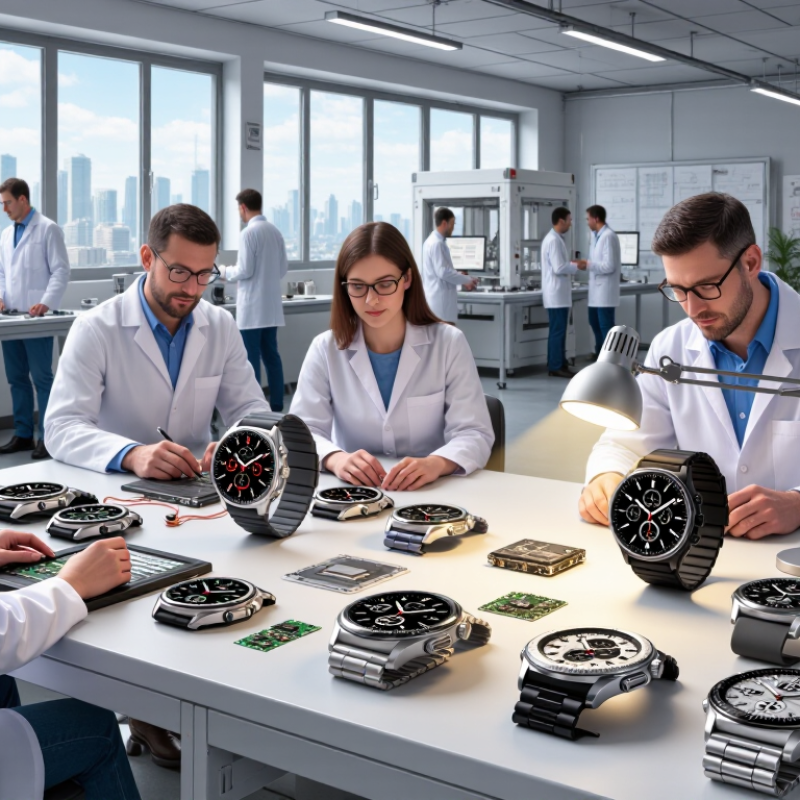
What Smart Watch OEM Means
Smart watch OEM means a manufacturer builds a watch to another company’s specifications. The buyer may define the case shape, display, sensors, interface, packaging, and target price. The factory typically manages sourcing, assembly, and quality checks. In practice, the boundary is not always neat. Some suppliers also help refine hardware or software, so the contract should spell out who owns designs, tooling, and firmware.
OEM is not simply “put a logo on a watch.” It is a production partnership with decisions about components, testing, and ongoing support. Counterpoint Research’s Global Smartwatch Shipments Tracker reported that global smartwatch shipments fell 7% in 2024. That shift makes careful demand estimates and inventory planning important for buyers. The figure describes the market, not the results any single OEM can guarantee. Details vary.
Tips: Request a working sample and a written component list. Ask how battery life is measured, which water-resistance tests are performed, and how software updates are handled. Small details matter. Check minimum order quantities and defect procedures before approving production. A polished prototype can still differ from a large production run.
What Is Smart Watch OEM and How Does It Work? — What Smart Watch OEM Means
| Stage or topic | Buyer provides or decides | OEM manufacturer typically does | Typical outcome |
|---|---|---|---|
| Meaning of OEM | Product requirements, such as target users, features, appearance, and sales market. | Manufactures a product according to agreed specifications; the buyer may sell it under its own name or product identity. | A smartwatch produced for a buyer rather than sold solely as the factory’s own retail product. |
| Requirements and feasibility | Defines intended functions, design preferences, estimated order volume, target cost, and destination markets. | Reviews technical feasibility, component availability, manufacturing constraints, and likely development needs. | An agreed product brief and an initial scope for development and production. |
| Design and customization | Chooses whether to use an existing platform or request changes to the case, materials, interface, packaging, or functions. | Adapts available designs or develops agreed elements, then checks that the proposed design can be manufactured. | A design specification and, when required, prototypes for review. |
| Components and software | Confirms required capabilities, such as display type, sensors, connectivity, battery expectations, and language support. | Sources or integrates compatible components and configures firmware and software within the agreed product scope. | A defined hardware and software configuration; actual capabilities depend on the selected components and implementation. |
| Sampling and verification | Reviews samples and provides feedback against the approved requirements. | Builds samples and performs agreed checks, which may include function, assembly, charging, and appearance checks. | A revised or approved sample before mass production; testing scope should be agreed in writing. |
| Compliance planning | Identifies where the product will be sold and clarifies applicable requirements with qualified compliance providers. | Provides product information and may support testing or documentation, depending on the agreement. | A market-specific compliance plan; required approvals vary by product features and destination. |
| Production and quality control | Approves the final specification, order quantity, packaging, and agreed inspection criteria. | Schedules production, assembles units, and carries out the quality checks specified in the production agreement. | Finished units made to the approved specification, subject to agreed acceptance criteria. |
| Delivery and ongoing support | Coordinates order, shipping, sales, customer support, and any agreed software or warranty responsibilities. | Ships the order and provides only the ongoing technical or service support set out in the agreement. | A delivered product and a documented allocation of post-production responsibilities. |
| OEM compared with ODM | For OEM, the buyer generally supplies or controls more of the product specification; for ODM, the buyer may select and customize a design developed by the manufacturer. | The division of design work varies by supplier and contract; the terms are not used identically by every business. | Confirm design ownership, customization limits, tooling, software rights, and production responsibilities in the written agreement. |
Note: Features, testing, lead times, order quantities, and responsibilities vary by product design, supplier, and contract.
FAQS
An OEM may supply the circuit board, display, battery, sensors, casing, charging contacts, and strap. Some projects include a microphone, speaker, or location module. Small details matter.
Services can include design reviews, prototype assembly, firmware setup, and basic app integration. Software support varies by supplier, so confirm what is included.
A product brief should define users, price target, screen size, battery life, sensors, and phone compatibility. Clear goals help guide design decisions.
Teams may check touch response, sensor readings, battery drain, charging, water resistance, drop tolerance, and wireless performance. A prototype can still hide problems.
The OEM may build a pilot batch using production tools. Workers inspect screen alignment, button feel, charging, and software installation before larger runs.
No. A report records specific checks, but individual watches may behave differently during daily use. That limitation is easy to forget.
A thicker battery may extend runtime but make the watch less comfortable. Slimmer cases, longer battery life, and lower cost can conflict.
Ask how substitutions are approved and which production-line checks are performed. A cheaper part may affect comfort or battery life. I may be overlooking other trade-offs.
Conclusion
A smart watch OEM partnership allows a company to offer a smartwatch developed and manufactured with support from an original equipment manufacturer. The OEM may provide product planning, engineering, hardware components, software integration, production facilities, and quality-control services. The arrangement helps a brand turn a product idea into a device without having to build every part of the manufacturing process from scratch.
The work typically begins with defining the watch’s features, appearance, and target users. The OEM then helps select components, develop or adapt the design, assemble prototypes, and test performance, reliability, and usability before production. After the product is approved, the OEM manufactures it to agreed specifications. The brand can customize suitable details—such as the case, display, interface, packaging, and product features—and prepare its own marketing and sales materials. Clear communication about requirements, testing, production schedules, and responsibilities helps both parties deliver a consistent smart watch OEM product.
