Choosing the best smart watch factory in China starts with evidence, not a polished showroom or a low quotation. Buyers should verify product engineering, component traceability, production capacity, and after-sales support. Ask to see a sample moving through assembly and testing. Look closely at charging contacts, screen alignment, and the test records beside the production line.
Market data shows why careful selection matters. IDC’s Worldwide Quarterly Wearable Device Tracker reported 506.7 million wearable-device shipments in 2023, down 0.9% from 2022. That figure covers more than smartwatches, so it should not be treated as smartwatch-only demand. It does, however, underline a practical point: suppliers need to manage changing volumes without sacrificing consistency. For any smart watch factory, Toyota production pioneer Taiichi Ohno’s principle is relevant: “Where there is no standard, there can be no kaizen.” Ask the factory to show its inspection standards, defect records, and corrective-action process—not just promise quality. A polished audit can still miss a weak production shift. I would not pretend one visit tells the whole story. Check a recent batch, speak with the engineers, and compare samples against written specifications. The right partner makes those details easy to verify.
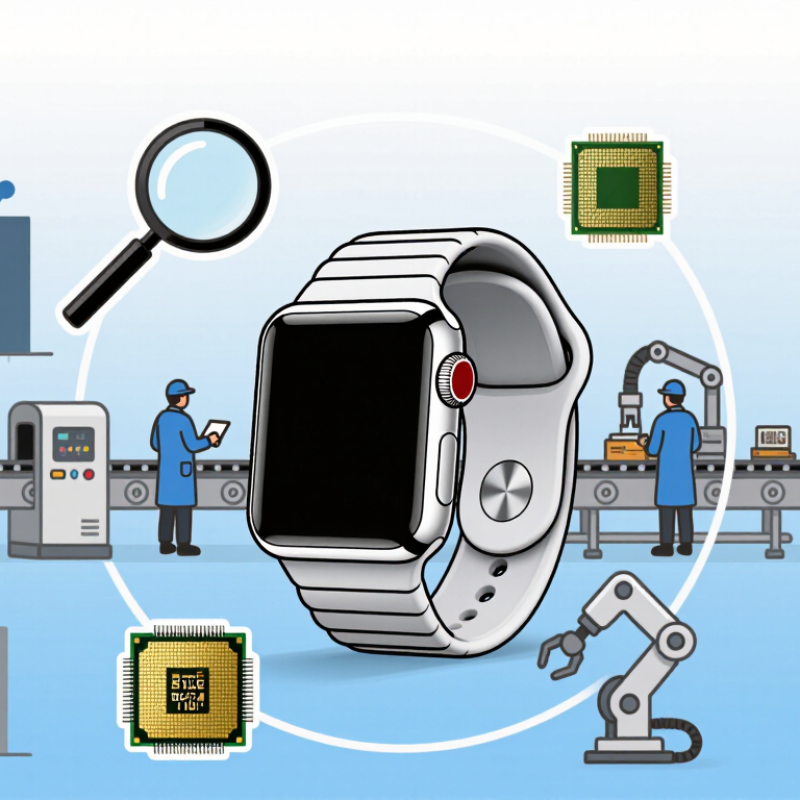
Understanding the Smart Watch Manufacturing Landscape in China
China’s smartwatch manufacturing landscape is a connected network, not a single factory floor. In coastal manufacturing hubs, component suppliers, mold makers, assembly teams, and testing services often operate within short shipping distances. That can speed up revisions, but it does not guarantee consistent quality. A supplier may assemble devices while relying on partners for screens, batteries, or sensor modules.
The factory label can be misleading. Ask which steps happen in-house and which are subcontracted. Request a sample, a clear component list, and records of battery, charging, and water-resistance tests. Look closely at the screen edges, button feel, charging contacts, and strap fit. Small details matter. A polished sample may not reflect ordinary production, so compare it with units from a pilot run. Ask how defects are recorded and traced by production batch. Not always easy. Some suppliers may answer vaguely, and that deserves follow-up rather than assumption. Factory visits or independent inspections can help verify equipment, workflow, and quality checks. Share expected volumes and product requirements early; otherwise, quotes may describe different scopes. A careful comparison takes time, and I would not treat the lowest price as the clearest signal.
How to Choose the Best Smart Watch Factory in China? — Understanding the Smart Watch Manufacturing Landscape in China
| Evaluation Dimension | What to Assess | Useful Evidence to Request | Practical Decision Signal |
|---|---|---|---|
| Product and engineering fit | Confirm experience with the required watch type, such as a basic fitness tracker, a GPS-enabled model, or a cellular smartwatch. Check whether the factory can support the required sensors, display, charging method, app integration, and operating system. | Technical proposal, component specifications, sample unit, development schedule, and a clear list of included and optional features. | Prefer a supplier that explains technical limitations and dependencies before quoting, rather than promising every feature without qualification. |
| Factory role and production control | Determine whether the supplier is the manufacturer, an assembly facility, a trading company, or a combination. Establish who controls design, firmware, component sourcing, assembly, and final testing. | Facility and process information, production-flow overview, subcontracting disclosure, and identification of the party responsible for quality and warranty issues. | Responsibilities should be transparent and consistent across the quotation, sample process, and purchase agreement. |
| Minimum order quantity and capacity | MOQ and available capacity vary by product design, component sourcing, customization, and production schedule; there is no universal industry-wide MOQ. Ask how the MOQ changes for standard models versus custom tooling or components. | Written MOQ by configuration, production lead-time estimate, capacity plan, and separate pricing for samples, tooling, and mass production. | Compare like-for-like configurations and confirm whether quoted lead times include component procurement, assembly, inspection, and packing. |
| Customization and intellectual property | Clarify available changes to the enclosure, strap, user interface, firmware, packaging, and companion app. Establish ownership and permitted use of custom designs, software, and tooling. | Customization scope, prototype approval process, tooling ownership terms, software and source-code terms where relevant, and written confidentiality and IP provisions. | Do not assume that paying for a custom tool or design automatically transfers ownership; state the agreed rights in writing. |
| Quality management | Review incoming-component checks, assembly controls, in-process inspection, final testing, defect handling, and traceability. An ISO 9001 certificate relates to a quality-management system and does not itself guarantee product performance. | Current certificate and its scope, inspection records, sample test reports, defect classification rules, corrective-action process, and batch-traceability method. | Look for documented checks tied to product requirements, with clear acceptance criteria and a defined process for nonconforming units. |
| Product testing and durability | Match testing to the intended use, including display, buttons, charging, battery behavior, connectivity, sensor performance, and wear conditions. Water-resistance claims should be supported by testing for the specified rating and product configuration. | Test plan and reports identifying the tested model, configuration, methods, pass criteria, and test date. For ingress-protection claims, ask whether testing was conducted against IEC 60529. | Verify that reports apply to the exact model and configuration being purchased; a similar-looking sample is not sufficient evidence. |
| Regulatory and market compliance | Requirements depend on the destination market, radio functions, materials, battery, and product claims. Examples to assess include EU RED and RoHS requirements, U.S. FCC requirements for applicable radio equipment, and Bluetooth SIG qualification obligations when Bluetooth technology is used. | Market-specific compliance plan, applicable test reports and declarations, certificate or qualification details where required, and confirmation that the documents cover the intended product configuration. | Confirm applicable requirements with a qualified compliance provider or the relevant authority; do not rely on a generic “CE” or “FCC” statement. |
| Battery and shipping documentation | Check battery specifications, protection design, charging behavior, and transport documentation. UN 38.3 concerns lithium-battery transport testing; it is not a general product-safety certification. | Battery datasheet, applicable UN 38.3 test summary, shipping classification information, and the documents requested by the carrier or destination market. | Ensure battery documents match the battery actually installed in the shipment and the shipping method being used. |
| Software, app, and data handling | Assess app compatibility, supported mobile operating systems, firmware-update process, language support, cloud dependencies, and how user data is handled. Features such as payments, messaging, and health tracking can introduce additional technical or legal requirements. | App demonstration, compatibility list, update policy, data-flow description, privacy documentation, and a written statement of ongoing software support. | Confirm which features work independently and which depend on a phone, third-party service, subscription, or continuing server support. |
| Commercial terms and after-sales support | Compare payment terms, quote validity, Incoterms, packaging, spare parts, warranty coverage, repair or replacement procedures, and responsibility for freight or inspection costs. | Itemized quotation, draft purchase agreement, warranty terms, service response process, spare-parts policy, and agreed pre-shipment inspection criteria. | Resolve exclusions and defect remedies before placing an order; avoid relying on informal promises not included in the written terms. |
| Supplier selection process | Evaluate several qualified suppliers using the same specification, sample criteria, compliance scope, and commercial assumptions. A factory visit or independent audit can help verify production and quality processes. | Completed comparison scorecard, approved reference sample, audit findings where available, and a signed specification with revision control. | Select the supplier with the strongest verified fit and communication, not simply the lowest initial unit price. |
Note: Costs, MOQs, lead times, certifications, and testing requirements vary by model, supplier, order terms, and destination market. Verify current requirements and documents for the exact product configuration before production or shipment.
FAQS
Ask which steps happen in-house and which are subcontracted. Request a component list and a sample. Check screen edges, buttons, charging contacts, and strap fit. Small details matter.
Not by itself. Compare the polished sample with units from a pilot run. Ask how defects are recorded and traced by batch. Not always easy.
Specify screen size, case material, battery target, sensors, water-resistance needs, and where the watch will be used. Mention practical details, like button use with gloves. A spreadsheet is fine.
Decide which features are essential. A standard case with a tailored interface may be enough. Custom molds can raise costs and extend development. I would leave room for revision; early plans often change.
Ask for incoming, in-process, and final inspection records. Review defect trends and corrective-action reports. Check whether test equipment is calibrated and failed units are tracked by batch.
Request test records for the exact model. Check charging performance and water-resistance results. A clear report is more useful than a confident promise.
Share expected volumes and product requirements early. Confirm which components, packaging, accessories, and tests are included. Different scopes can make prices hard to compare. Worth checking.
Confirm reports match the exact model, components, and intended sales markets. Verify validity with the issuing body when practical. Trace one finished watch back to its component lots. A document alone is not proof.
Conclusion
Choosing the right smart watch factory in China starts with understanding the manufacturing landscape and clearly defining your product specifications, target market, expected order volume, and production requirements. With these priorities established, you can compare factories based on relevant experience, production capabilities, quality-control systems, and the certifications needed for your intended markets. A factory’s ability to explain its processes and provide clear documentation can help you assess whether it is a suitable long-term partner.
Cost is important, but it should be considered alongside lead times, communication, and the consistency of the finished product. Request and evaluate samples before committing, and review contract terms carefully, including specifications, timelines, payment arrangements, and support after delivery. By comparing candidates systematically and confirming expectations at each stage, you can make a more informed decision and build a productive manufacturing relationship.
